

HDPE (High Density Polyethylene) piping systems are widely used in water supply, gas supply, sewage, mining transportation, and fire protection systems due to their corrosion resistance, high flexibility, reliable connections, and long service life. The sealing and pressure resistance of HDPE piping systems largely depend on the proper installation of pipe fittings. This article will systematically introduce how to install HDPE pipe fittings.
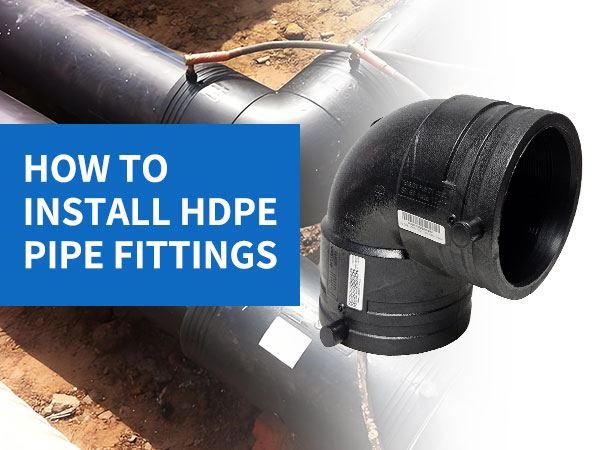
Common Connection Methods for HDPE Pipe Fittings
Before formal installation, it is necessary to understand several mainstream connection methods for HDPE pipe fittings:
1. Butt Fusion: Suitable for connecting HDPE pipes and fittings of the same diameter. This is the most common and strongest connection method. The pipe ends are heated, melted, and then pressurized and butt-jointed, forming a single integrated structure after cooling.
2. Electrofusion: Electrofusion fittings contain internal resistance wires. Heating is achieved by applying electricity to the electrofusion machine, melting both the outer wall of the pipe and the inner wall of the fitting simultaneously, resulting in a highly airtight connection. Suitable for confined spaces, maintenance, or complex working conditions.
3. Flange Connection: Used to connect HDPE pipes to valves, pumps, metal pipes, and other equipment, facilitating disassembly and maintenance. Commonly found at equipment ports.
Pre-installation Preparations
Proper installation begins with the preparation stage, and the following steps are essential:
Material Inspection
Confirm that the pipes and fittings are of the same material grade (e.g., PE100)
Inspect the exterior for scratches, deformation, or contamination
Ensure the end faces are clean, free of oil, and free of moisture.
Prepare Tools and Equipment
Heat fusion welding machine or electrofusion welding machine
Scraper (used to remove oxide layer before electrofusion)
Pipe cutter or saw
Cleaning cloth and alcohol
Environmental Requirements
Avoid construction in rainy or windy conditions
The recommended ambient temperature is between -10℃ and 45℃.

HDPE Hot-Melt Butt Installation Steps
Hot-melt butt welding is the most common method for large-diameter pipes. The standard procedure is as follows:
1. Fix the pipes
Place both pipe sections into the butt welding machine clamps, ensuring coaxial alignment. The misalignment should not exceed 10% of the wall thickness.
2. Mill the ends
Use a milling cutter to mill both ends, ensuring a smooth, oxide-free end face.
3. Heat and melt
Heat the heating plate to approximately 210°C, then heat the pipe ends together to create a uniform flange.
4. Butt welding and pressurization
Quickly remove the heating plate and apply butt welding pressure within the specified time to allow the molten surfaces to bond.
5. Cool and set
Maintain pressure cooling. The time depends on the pipe diameter. Do not move the pipe during cooling.
Electrofusion Fitting Installation Steps
Electrofusion connections are more suitable for maintenance or projects with limited space.
1. Remove Oxide Layer
Use a specialized scraper to remove the oxide layer from the pipe end surface. This is a crucial step to ensure weld quality.
2. Clean the Pipe
Wipe the connection surface with alcohol to ensure it is dust-free and oil-free.
3. Mark Insertion Depth
Mark the insertion depth on the pipe to avoid insufficient or excessive insertion.
4. Install the Electrofusion Fitting
Insert the pipe into the fitting to the marked position and secure it to prevent movement.
5. Welding
Connect the electrofusion welding machine, scan the barcode or manually enter the parameters, and begin heating and welding.
6. Cooling Completed
After welding, allow it to cool naturally. Manual cooling or movement is strictly prohibited.
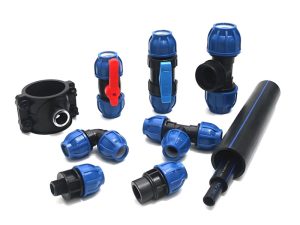
Flange Connection Installation Points:
Use HDPE flange fittings (stub ends) to mate with metal flanges.
Install rubber gaskets.
Tighten bolts evenly diagonally to avoid uneven stress.
Do not overtighten to avoid flange deformation.
Common Installation Mistakes
| Incorrect Practice | Possible Consequence |
| Electrofusion without removing oxidation layer | Leakage or joint failure |
| Insufficient cooling time | Reduced joint strength |
| Pipe ends not properly aligned | Internal stress concentration |
| Installation in excessively cold environment | Incomplete fusion |
Safety Precautions:
Operators must be professionally trained.
The heating plate temperature is high; avoid direct contact.
Keep the construction site dry and slip-resistant.
Electrofusion equipment must be grounded to prevent electric shock.
The installation quality of HDPE pipe fittings directly affects the sealing performance and service life of the entire piping system. Whether it’s butt fusion, electrofusion, or flange connections, strict adherence to specifications is essential, with precise control of temperature, pressure, and cooling time. Proper installation not only avoids leakage risks but also significantly improves system stability, truly leveraging the “maintenance-free, long-life” advantages of HDPE pipes.
If the construction environment is complex or requires high pressure ratings, it is recommended that professional technicians operate the equipment and that high-quality HDPE pipes and fittings conforming to international standards be selected to ensure the long-term safe operation of the project.


