

What are HDPE Socket Fusion Fittings?
HDPE Socket Fusion Fittings are a type of hot-melt fitting specifically designed for connecting HDPE (high-density polyethylene) pipes. They typically include elbows, tees, couplers, reducers, and flange adapters, meeting the needs of changing direction, branching, reducing diameter, or connecting other types of equipment within a piping system.
The core connection principle is socket fusion: a specialized hot-melt tool (such as a hot plate) simultaneously heats the socket inside the fitting and the outer wall of the pipe, melting the surfaces to the optimal temperature. The pipe is then quickly inserted into the socket of the fitting. After cooling, the material molecules at the fused interface diffuse and re-enter, forming a permanent, leak-proof, integral connection that is stronger than the pipe itself. This connection method is the cornerstone of the superior performance of HDPE piping systems.
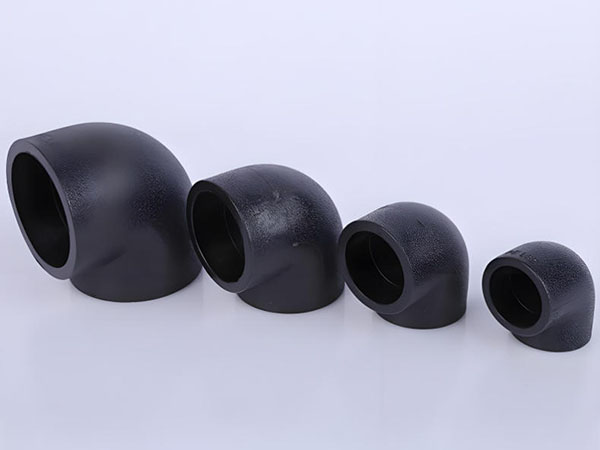
Core Working Principle and Advantages
Working Principle
Socket fusion joining is a precise yet efficient process:
Preparation: Cut the pipe to ensure the ends are flat and perpendicular. Clean the pipe ends and the socket of the fitting to remove any oxide and contaminants.
Heating: A precisely controlled heating plate (usually with a heating head adapted to the pipe diameter) is used to simultaneously heat the pipe socket and the outer wall of the pipe end.
Melting: When the material surface reaches a molten state (approximately 200°C – 230°C), the heating plate is quickly removed.
Butting: Immediately, smoothly and evenly insert the heated pipe end into the socket of the fitting until it is firmly seated (usually with a stop ring).
Cooling: Hold the pipe end in place and allow it to cool naturally. During the cooling process, the molten HDPE molecules fuse together, forming a solid, integrated structure. Significant Advantages
Compared to mechanical or other connection methods, HDPE socket fusion fittings offer unparalleled advantages:
Permanent seal, zero leakage: The fusion joint forms a homogeneous, integrated structure, virtually eliminating leak points. It is particularly suitable for conveying precious liquids, hazardous media, or applications requiring absolute sealing.
High joint strength: The tensile and burst strength of the fusion area are typically higher than the pipe itself, ensuring the structural integrity and reliability of the entire piping system.
Excellent corrosion resistance: Like HDPE pipe, the fittings are resistant to a wide range of chemicals, acids, and alkalis, eliminating concerns about electrochemical corrosion and rust, and offer a long service life, typically exceeding 50 years.
Excellent flexibility and stress resistance: The resulting joint can withstand a certain degree of ground subsidence, displacement, and vibration, and exhibits excellent earthquake resistance.
Low fluid resistance: The smooth inner wall perfectly matches the pipe’s inner diameter, resists scaling, and ensures efficient flow.
Economical efficiency: While the cost per unit may be higher than mechanical fittings, they are quick to install, require no additional seals or anti-corrosion treatment, and offer minimal long-term maintenance costs, resulting in significant lifecycle cost advantages. Sanitary and environmentally friendly: The material is non-toxic and odorless, meeting drinking water transportation standards (such as GB/T 13663.2-2018), and will not cause secondary water pollution. Furthermore, HDPE is recyclable and environmentally friendly.
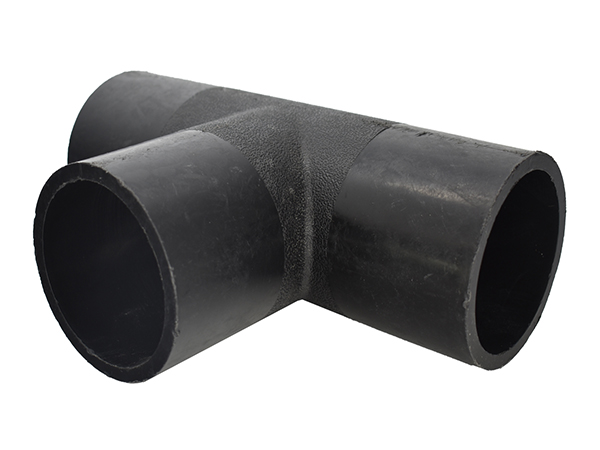
HDPE socket fusion fittings technical parameters and standards
Material: Typically manufactured from PE100 or PE100RC grade high-density polyethylene, ensuring high performance and long life.
Size Range: Available in a variety of sizes, from DN20mm to DN630mm and even larger, to meet diverse project requirements.
Pressure Rating (PN): Available in a variety of pressure ratings, including PN0.6MPa, PN0.8MPa, PN1.0MPa, PN1.25MPa, and PN1.6MPa, for use with HDPE pipes of the same pressure rating.
Temperature Range: Typically suitable for operating environments between -60°C and 60°C, ensuring suitability in most cold and warm regions.
Compliant Standards: Manufactured in accordance with relevant national and international standards, such as China’s GB/T 13663.2-2018, “Polyethylene (PE) Piping Systems for Water Supply – Part 2: Fittings.”
Color: Commonly available in black or black with a blue stripe (commonly used for water supply pipelines).

Wide Range of Applications
Municipal Water Supply and Drainage Systems: Connecting water distribution branches and main lines in urban water networks, as well as sewage collection and discharge piping systems.
Gas Transmission Systems: Safely and reliably connecting medium- and low-pressure gas pipelines.
Industrial Pipelines: Pipelines for transporting corrosive media in the chemical, chemical fiber, food, and pharmaceutical industries.
Agricultural Irrigation: Connecting pipes in large-scale water-saving irrigation systems.
Ground Source Heat Pump Systems: Connecting underground heat exchanger circuits.
Mining and Dredging: Connecting pipes for transporting abrasive media such as slurry and mud.
Pipeline Repair and Replacement: Connecting newly laid HDPE-lined pipe in trenchless pipeline repair projects.

Key Notes During the Installation Process:
Select qualified supporting products: Ensure that the fittings and pipes are made of the same material (e.g., both are PE100) and have matching SDR/pressure ratings.
Use Professional Tools: Use a dedicated hot melt welder with stable and precise temperature control. The heating plate temperature, heating time, and cooling time must strictly follow the specifications provided by the fitting and pipe manufacturers. Surface preparation is crucial: Before heating, thoroughly scrape off the oxide layer on the outer pipe wall and the inner wall of the fitting socket, and clean with alcohol to ensure the weld surface is clean and dry.
Strictly control heating and butt welding: Insufficient heating time will result in insufficient melting and a cold weld; excessive heating can cause material degradation and socket deformation. Butt welding should be smooth and quick, and rotation is strictly prohibited.
Sufficient cooling: During the cooling period, the joint must not be moved, stressed, or disturbed.
Operational safety: Operators must be trained and wear protective gloves to prevent burns.

Purchasing and Quality Identification Guide
Inspect the raw materials: Prefer products made from reputable brands of PE100 or PE100RC raw materials.
Appearance: High-quality fittings should have smooth, even inner and outer surfaces, free of bubbles, dents, or impurities, with uniform color and thickness.
Inspection Markings: Products should be clearly and permanently labeled, including specifications (e.g., DE110 x 90° Elbow), material (PE100), pressure rating (PN), production standards, manufacturer’s brand or trademark, and production batch.
Document Requests: Suppliers should provide quality certification documents such as product type inspection reports and health permits (for drinking water use).
Emphasis on brand and after-sales service: Choose reputable brands and suppliers, as they typically offer more professional technical support and quality assurance.
HDPE Socket Fusion Fittings are more than just components for connecting HDPE pipes; they are a core element in building a safe, reliable, efficient, and long-lasting modern fluid transportation system. Their unique fusion principle enables seamless integration into the piping system, perfectly inheriting the excellent properties of HDPE material.


