

Overview of HDPE electrical conduit fittings
HDPE electrical conduit fittings are key components of power and communication cable protection systems, mainly used for cable branching, turning and connection. Compared with traditional metal or PVC pipe fittings, HDPE pipe fittings have become the first choice for modern underground cable laying due to their flexibility, corrosion resistance and long life. Its core features include:
Material characteristics: PE80 or PE100 grade high-density polyethylene is used to ensure a service life of more than 50 years.
Connection method: Supports three mainstream connection technologies: electrofusion, butt fusion and socket fusion to achieve leak-free sealing.
Standard compatibility: Complies with international standards such as ISO 4427-3 and EN 12201-3. Some products have passed AASHTO R 63 certification and are suitable for harsh buried environments.
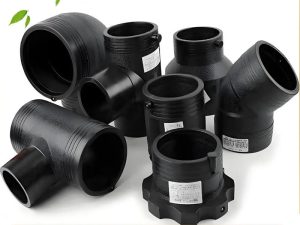
Core advantages of HDPE electrical conduit fittings
1. Excellent chemical corrosion resistance
HDPE pipe fittings can resist strong acid, strong alkali and salt corrosion, and are suitable for highly corrosive environments such as chemical areas and coastal areas. Experiments show that its performance is stable within the pH range of 2-12, which is much better than galvanized steel pipes (rusting in 3-5 years).
2. High mechanical properties
Compression resistance: Ring stiffness reaches 8-12kN/m² (reinforced type), which can withstand the dynamic load of road vehicles without deformation.
Flexibility: The bending radius can reach 20 times the pipe diameter, which can adapt to the displacement caused by foundation settlement or earthquake.
3. Electrical safety characteristics
Insulation performance: Volume resistivity>10¹²Ω·m, effectively preventing leakage accidents caused by damage to the cable sheath.
Flame retardant grade: Some products have passed UL94 V-0 certification to reduce the risk of fire.
4. Convenient construction
Lightweight: The density is only 0.95g/cm³, and the weight of the same specification is 1/8 of that of steel pipes, reducing transportation and installation costs.
Hot melt connection: No flange or threaded sealing is required, reducing leakage points and improving construction efficiency by 50%.
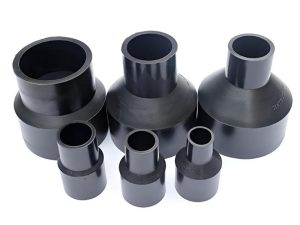
Main pipe fitting types and technical parameters
1. Electrofusion fittings
Working principle: built-in resistance wire, electric heating to fuse the pipe and fittings, suitable for pipe diameters of DN20-DN800mm.
Typical products:
Electrofusion Equal Tee
Electrofusion Elbow (90°/45° Elbow)
Electrofusion Sleeve (Coupler)
Pressure level: SDR11 corresponds to PN16 (water pressure), SDR17 corresponds to PN10 (air pressure).
2. Butt Fusion Fittings
Applicable scenarios: large-diameter (DN≥200mm) trunk pipeline connection, weld strength ≥90% of the parent material.
Key parameters:
| Pipe Diameter (mm) | Welding Temperature (°C) | Heating Time (s) |
| 110 | 210 ± 5 | 30–40 |
| 400 | 220 ± 5 | 120–150 |
3. Socket Fusion Fittings
Features: Built-in stainless steel or brass inserts, compatible with threaded interface equipment (such as valves, instruments).
Specification range: DN20×1/2″ to DN110×4″, suitable for a variety of international thread standards (BSP/NPT).
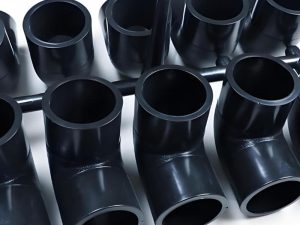
Engineering application case analysis
1. Urban power grid transformation project
A provincial capital city uses HDPE electric fusion tees (DN315) to build an underground cable network. Compared with traditional concrete conduits:
Shortened construction period: The hot melt connection speed is 3 times faster than concrete pouring.
Cost savings: The overall cost is reduced by 15%, and maintenance costs are reduced by 40%.
2. Transportation hub power system
The runway lighting system of an airport in Shanghai uses HDPE reinforced conduits (SDR11, ring stiffness 12kN/m²):
Compression performance: No deformation under the impact load of aircraft takeoff and landing.
Weather resistance: No cracking under a temperature difference of -30℃ to 60℃.
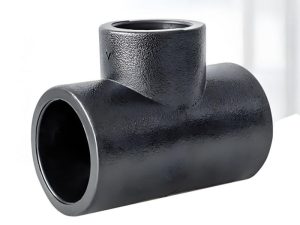
Selection and installation points
1. Selection recommendations
| Working Condition | Recommended Fitting Type | Reason |
| High-voltage cable trunk line | Butt Fusion Tee | High weld strength and excellent reliability |
| Corrosive soil environment | Electrofusion Coupler (PE100) | Good sealing and chemical corrosion resistance |
| Branch point requiring frequent maintenance | Socket Union Flange | Detachable and convenient for future maintenance |
2. Installation precautions
Welding quality control:
The pipe end is cut flat, with a deviation of <1mm
The heating plate temperature is controlled at 200-220℃ (PE100 material)
Buried requirements:
Non-motorized vehicle lane buried depth ≥0.8m, motor vehicle lane ≥1.2m
Sand cushion thickness ≥100mm to prevent sharp stones from damaging the pipe wall


