

PVC-U piping systems play a vital role in modern water supply and drainage, municipal engineering, industrial fluid transport, and agricultural irrigation systems. Within a complete piping system, besides the pipes themselves, PVC-U fittings are equally crucial. They are responsible for changing water flow direction, branching, connecting different pipe diameters, or providing equipment interfaces, and are a key component for the normal operation of the pipe network system. This article will systematically explain “What are PVC-U fittings,” providing a comprehensive overview from aspects such as material properties, classification, standard systems, application areas, and advantages.

What are PVC-U fittings?
PVC-U is an abbreviation for “Unplasticized Polyvinyl Chloride.” Unlike ordinary PVC, PVC-U does not contain plasticizers added during its production process, making the material harder, stronger, and more pressure-resistant.
PVC-U fittings refer to various pipe fittings made of PVC-U material, used for connecting, turning, branching, or sealing PVC-U pipes.
They are typically used in conjunction with PVC-U pipes to form a complete piping system.
PVC-U Material Properties
The widespread use of PVC-U pipe fittings is primarily due to their excellent material properties:
1. High Strength and Rigidity
PVC-U possesses high mechanical strength, making it suitable for pressure piping systems.
2. Excellent Corrosion Resistance
It exhibits good resistance to most acid, alkali, and salt solutions, making it suitable for chemical and wastewater environments.
3. Good Insulation
PVC-U is non-conductive, making it suitable for electrical conduit protection systems.
4. Lightweight
Compared to metal fittings, it is lighter, facilitating transportation and installation.
5. Long Service Life
Under normal operating conditions, its service life can reach 30–50 years or more.

Common Types of PVC-U Fittings
PVC-U pipe fittings come in many types; the following are some of the most common:
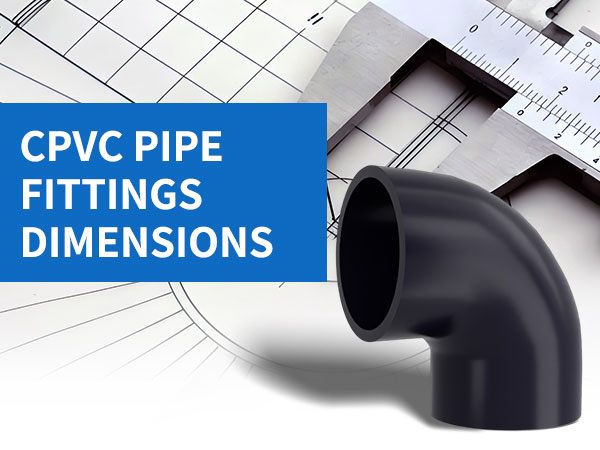
1. Elbow
Used to change the direction of pipes. Common angles:
45°
90°
2. Tee
Used for branch lines, allowing fluid to flow from the main pipe.
3. Coupling: Used to connect two pipe sections of the same diameter.
4. Reducer: Used to connect pipes of different diameters.
5. Flange: Used to connect to valves, pumps, or other equipment.
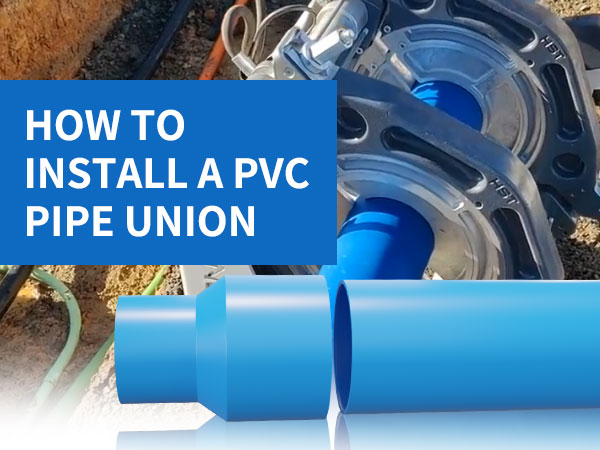
6. Union: Used for detachable connections, facilitating maintenance.
7. Cap: Used to seal the end of a pipe.
Size System
PVC-U pipe fittings are typically sized to match the nominal diameter of the pipe.
Common Imperial Sizes:
1/2 inch
3/4 inch
1 inch
1-1/4 inch
1-1/2 inch
2 inch
3 inch
4 inch
Maximum 8 inch or larger
Common Metric Sizes:
20mm
25mm
32mm
40mm
50mm
63mm
75mm
110mm
160mm
200mm
Note that the nominal size is not the actual outer diameter; the mating dimensions must be confirmed by referring to the technical data sheet.
Standards
PVC-U fittings are typically manufactured according to international or national standards, such as:
International Organization for Standardization (ISO)
ASTM International (USA)
British Standards Institution (British). Different markets have varying requirements for pressure ratings, dimensional tolerances, and material formulations.
Connection Methods
Common connection methods for PVC-U pipe fittings include:
1. Socket Bonding
The most common method, using PVC-specific adhesive for chemical bonding.
Advantages: Good sealing
Easy installation
Low cost
2. Rubber Ring Socket Bonding
Mostly used in large-diameter municipal drainage systems.
Advantages: Quick installation
Accommodates slight displacement
3. Threaded Connection
Used for small diameters or detachable parts.
Application Areas
PVC-U fittings are widely used in multiple industries:
1. Municipal Water Supply and Drainage Engineering
Urban water supply and drainage networks extensively utilize PVC-U systems.
2. Building Water Supply Systems
Cold water pipes in residential and commercial buildings.
3. Agricultural Irrigation
Drip irrigation and sprinkler irrigation systems.
4. Industrial Fluid Transportation
Chemical transportation and wastewater treatment.
5. Power Cable Protection
As cable protection conduit fittings.
Advantages Analysis
PVC-U fittings offer significant advantages over metal fittings:
Rust-free
Scale-free
Low maintenance costs
Easy installation
Economical cost
Low fluid resistance
Furthermore, PVC-U material is recyclable, aligning with environmental protection trends.
Usage Precautions
While PVC-U pipe fittings offer numerous advantages, the following precautions should be taken during use:
Avoid high-temperature environments (generally applicable temperature ≤60°C)
Select a matching pressure rating
Use qualified adhesives
Avoid prolonged exposure to direct sunlight (UV-resistant models are required)
PVC-U fittings are an indispensable and crucial component of PVC-U piping systems. Through various shapes and structures, they enable pipe connections, diversions, turns, and closures, ensuring the stable operation of the entire system.
With their excellent mechanical properties, corrosion resistance, and economic efficiency, PVC-U pipe fittings have become a key choice in municipal, construction, agricultural, and industrial sectors. Understanding their material properties, dimensional systems, and application specifications is crucial for ensuring project quality and system safety.
As global infrastructure construction continues to develop, the market demand for PVC-U fittings will maintain steady growth, playing an even more important role in the future piping industry.


