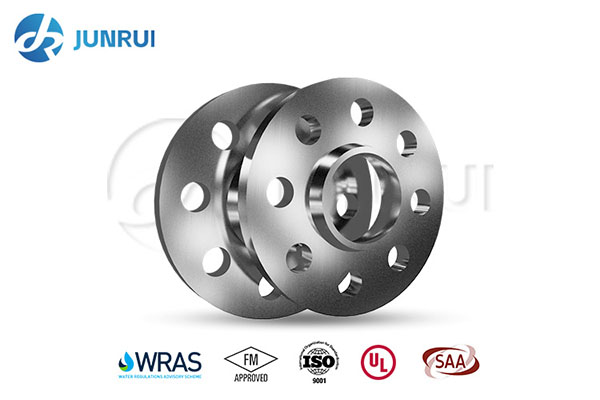
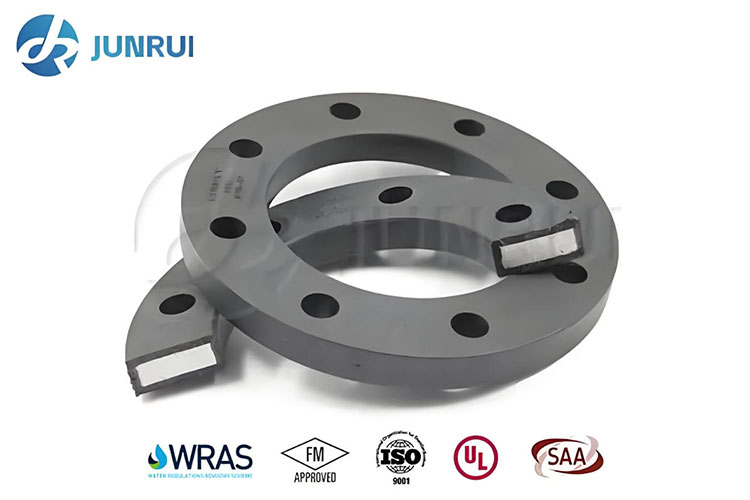
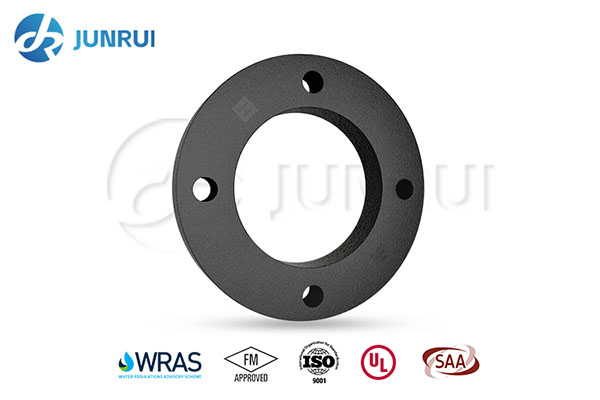
In industrial piping systems, the quality and reliability of flange connections are directly linked to the safety and efficiency of the entire system. Steel backing rings, as key components for high-quality flange connections, are designed and manufactured in accordance with the internationally recognized ANSI B16.5 standard, ensuring sealing performance and service life under demanding conditions such as high pressure and high temperature.
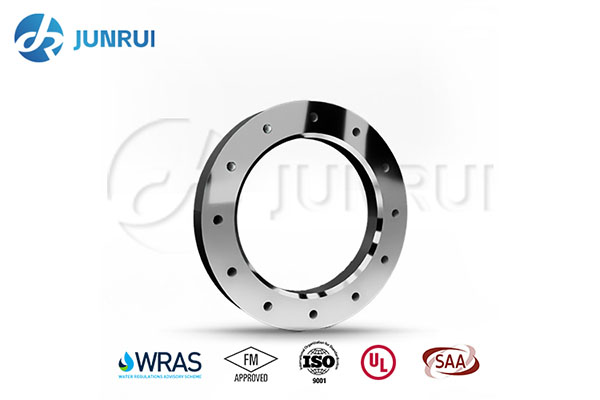
Overview of ANSI B16.5 Steel Backing Rings and Standard Basics
A steel backing ring is a metal ring-shaped component used in pipe flange connections, typically used in conjunction with sealing elements such as spiral wound gaskets. Installed within the flange sealing groove, its primary function is to provide support, prevent loosening or excessive compression of the sealing element, and enhance the structural integrity of the entire connection.
ANSI B16.5 (ASME B16.5), a widely used standard for “Pipe Flanges and Flange Fittings” developed by the American Society of Mechanical Engineers, is widely used in industry worldwide.
This standard specifies the design, dimensions, materials, manufacturing, and inspection requirements for steel pipe flanges and their associated components with nominal diameters ranging from 1/2 inch to 24 inches. As part of the flange connection system, the dimensions, tolerances and material selection of steel gaskets must comply with the relevant provisions of this standard to ensure wide interchangeability and reliability.
Design Features and Structures
The Steel Backing Ring is designed with the practical needs of pipe connections and diverse application scenarios in mind. Its most common construction is as part of a spiral wound gasket system with an outer ring, consisting of a basic spiral wound gasket and a steel outer ring (which can be considered a backing ring).
The outer ring (backing ring) serves the key function of reinforcing pressure and preventing loosening of the inner spiral wound gasket, thereby maintaining the integrity of the gasket and its sealing effectiveness. The backing ring material can be selected based on the application environment and media conditions for optimal compatibility and durability.
It is designed to accommodate various pressure classes covered by the ANSI B16.5 standard, from Class 150 to Class 900 (approximately corresponding to PN 10 to PN 150), to meet the needs of various pressure environments.

Critical Dimensions and Tolerance Control
The ANSI B16.5 standard has strict specifications for the dimensions and tolerances of flanges and their associated components (including backing rings). These regulations cover specific parameters such as the outside diameter, inside diameter, thickness, bolt hole location, number, and size. For gasket tolerances, refer to the relevant standards for spiral wound gasket assemblies. For example:
For gasket thicknesses (e.g., 4.5 mm or 3.2 mm), tolerances are typically within a range of +0.2 mm to -0.1 mm.
For ring thicknesses (e.g., 3.0 mm), the tolerance is approximately ±0.24 mm.
Diameter tolerances vary depending on the flange’s nominal pipe diameter (NPS) and pressure rating. For example, for larger sizes (e.g., >60 inches), the outside diameter tolerance may be ±2.2 mm.
Strict dimensional and tolerance controls ensure that the steel gasket fits precisely into the flange sealing groove, achieving the desired fit and seal.
Steel Backing Ring ANSI B16.5 Material Selection and Performance Requirements
The ANSI B16.5 standard specifies the materials used for flanges and their components, and provides specific requirements for the chemical composition and mechanical properties of each material. Common materials for steel backing rings include:
Carbon steel: Suitable for general operating conditions, offering good strength and cost-effectiveness.
Stainless steels, such as 304 and 316, offer excellent corrosion resistance and are suitable for chemical and marine environments.
Alloy steel: Suitable for more demanding operating conditions such as high temperature and high pressure.
For specialized applications, such as those requiring corrosion resistance or high-temperature environments, the backing ring material may need to comply with other relevant material standards, such as ASTM A182. The backing ring material selection must be compatible with the pipeline medium, operating temperature and pressure, and flange material to ensure safe and stable system operation.

Manufacturing Process and Quality Control
The manufacturing process for steel backing rings adheres to specific process requirements to ensure ultimate performance.
Main manufacturing steps include forging, heat treatment, and machining. Machining is particularly important, ensuring the dimensional accuracy and surface finish of the gasket.
Quality control is an integral part of the production process. Every flange product (and its associated components) manufactured in accordance with ANSI B16.5 must be clearly marked with manufacturer information, material grade, specifications, dimensions, standard number, and other relevant identification.
While the gasket itself may not necessarily require all of the required testing, relevant quality requirements typically include:
Dimensional inspection: Ensures the product meets the tolerances specified in the standard.
Material chemical composition and mechanical property analysis: Verifies that the material grade meets the requirements.
Surface quality inspection: Checks for defects such as cracks and burrs.
Applications and Scope of Application
Steel Backing Rings ANSI B16.5 are widely used in various industrial sectors requiring high-reliability flange connections, primarily including:
Oil and Gas Industry: Used in oil and gas pipelines and refining equipment, withstanding high pressures and flammable and explosive media.
Chemical Industry: Handling various corrosive media requires excellent corrosion resistance from the gasket material.
Power Industry: Especially used in high-temperature, high-pressure steam pipelines in thermal and nuclear power plants.
Metallurgy Industry: Used in piping systems for equipment such as blast furnaces and hot blast furnaces.
Shipbuilding: Ship piping systems have strict sealing requirements.
Mechanical Industry: Used for sealing flange connections in various pressure vessels, heat exchangers, condensers, towers, manholes, handholes, and other equipment.
They are suitable for the nominal diameters and pressure ratings covered by the ANSI B16.5 standard, meeting the needs of most industrial applications.
Selection and Installation Guide
Parameter Matching: Select a gasket of appropriate material and size based on the piping system’s design pressure, design temperature, media characteristics, and flange type (e.g., WN butt-weld flange, SO slip-on flange, BL blind flange, etc.), size (NPS), and pressure rating (Class).
Material Compatibility: Ensure the gasket material is compatible with the pipeline media to prevent corrosion.
Inspection and Preparation: Before installation, carefully inspect the gasket and flange sealing surfaces to ensure they are free of scratches, cracks, rust, or residual dirt. Clean all contact surfaces.
Proper Installation: Accurately position the gasket in the flange sealing groove or designated location, ensuring proper alignment. Then, tighten the bolts evenly and symmetrically to achieve the required preload pressure (for spiral wound gasket systems, the minimum preload pressure for metal spiral wound gaskets can reach 68 MPa).
Comply with Specifications: Always follow system design specifications, standards, and the manufacturer’s installation instructions.
Specification
| Pipe Size | DN | OD | PCD | ID | Bolt No. | Bolt Hole Dia | Thickness |
| 50 | 1 1/2″ | 127 | 98.6 | 63 | 4 | 16 | 17.5 |
| 63 | 2″ | 152 | 120.5 | 68 | 4 | 20 | 19.5 |
| 75 | 2 1/2″ | 178 | 139.5 | 80 | 4 | 20 | 22.5 |
| 90 | 3″ | 190 | 152.5 | 95 | 4 | 20 | 24 |
| 110 | 4″ | 229 | 190.5 | 116 | 8 | 20 | 24 |
| 125 | 5″ | 254 | 216 | 130 | 8 | 22 | 24 |
| 140 | 5″ | 254 | 216 | 150 | 8 | 22 | 24 |
| 160 | 6″ | 279 | 241.5 | 170 | 8 | 22 | 25.5 |
| 180 | 6″ | 279 | 241.5 | 188 | 8 | 22 | 25.5 |
| 200 | 8″ | 343 | 298.5 | 210 | 8 | 22 | 29 |
| 225 | 8″ | 343 | 298.5 | 235 | 8 | 22 | 29 |
| 250 | 10″ | 406 | 362 | 265 | 12 | 26 | 30.5 |
| 280 | 10″ | 406 | 362 | 290 | 12 | 26 | 30.5 |
| 315 | 12″ | 483 | 432 | 335 | 12 | 30 | 32 |
| 355 | 14″ | 533 | 476 | 365 | 12 | 26 | 35 |
| 400 | 16″ | 597 | 540 | 420 | 16 | 30 | 37 |
| 450 | 18″ | 635 | 578 | 470 | 16 | 33 | 40 |
| 500 | 20″ | 698 | 635 | 520 | 20 | 33 | 43 |
| 560 | 24″ | 813 | 749.5 | 575 | 20 | 36 | 48 |
| 630 | 24″ | 813 | 749.5 | 650 | 20 | 36 | 48 |
| 710 | 28″ | 927.1 | 863.6 | 740 | 28 | 35 | 52.4 |
| 800 | 32″ | 1060.4 | 977.9 | 830 | 28 | 41 | 57.1 |