Product Overview
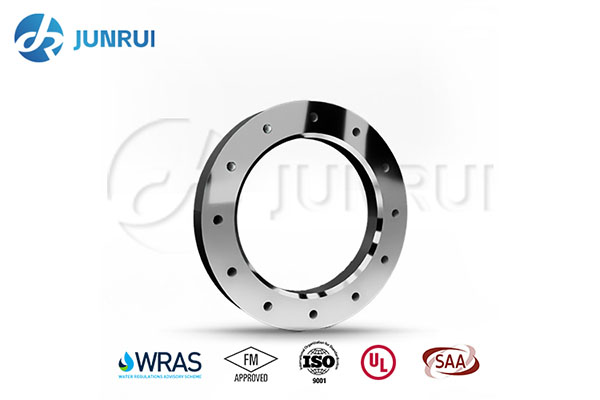
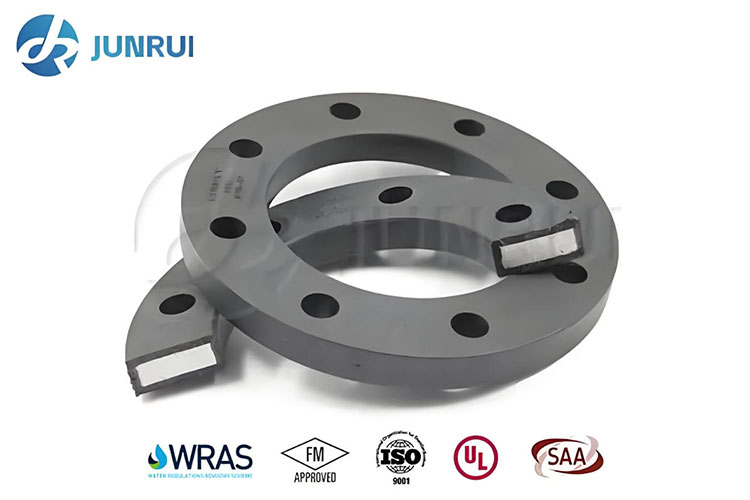
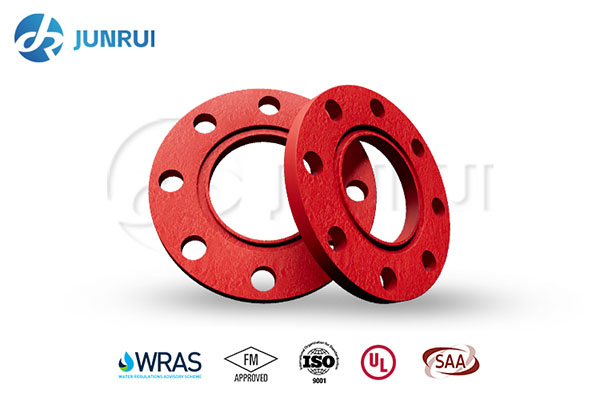
In modern industrial piping systems, flanges are essential connectors, fulfilling the critical task of connecting pipes, valves, pumps, equipment, and other components. Their core function is to provide a removable, reliably sealed interface, facilitating system installation, maintenance, and repair. Among the numerous flange standards, European standard EN 1092-1 and international standard ISO 7005-1 have become the gold standard in industries such as oil and gas, chemical, power generation, shipbuilding, and water treatment, due to their rigorous design, widespread global acceptance, and excellent interchangeability. This article provides a comprehensive introduction to products that comply with EN 1092/ISO 7005 Steel Flanges.
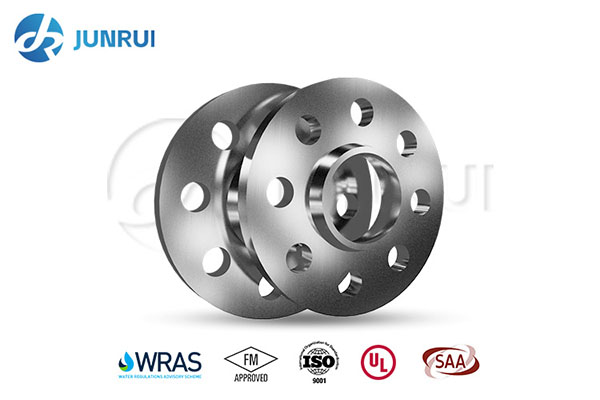
Steel Flanges EN1092/ISO7005 Standards
EN 1092-1, the cornerstone of European flange standards, is known as “Flanges and their fittings – Circular flanges for pipes, valves, fittings and accessories – Part 1: Steel flanges.” It specifies in detail the dimensions, tolerances, pressure ratings, surface finish, material designation, and sealing face configurations of steel flanges.
ISO 7005-1, a global standard developed by the International Organization for Standardization, is known as “Metal Flanges – Part 1: Steel Flanges.” Notably, ISO 7005-1 cleverly integrates the flange standards of Europe (EN), the United States (ASME/ANSI), and Japan (JIS), achieving full compatibility and interchangeability with EN 1092-1 in terms of pressure ratings and key dimensions. This means that an EN 1092 flange meeting the PN rating can be perfectly matched with an ISO 7005 flange of the same pressure rating, greatly facilitating global procurement and equipment matching. Pressure Rating (PN): Both standards use a nominal pressure (PN) rating system, such as PN 6, PN 10, PN 16, PN 25, PN 40, PN 63, PN 100, etc. The PN value indicates the maximum allowable working pressure (in bar) that the flange can withstand at 20°C. Selecting the correct PN rating is crucial to ensure safe operation of the system at specific temperatures and pressures.
Main Flange Types
The EN 1092-1 / ISO 7005-1 standard defines a variety of flange types to suit different installation needs, space constraints, and load-bearing requirements.
Plate-Type Slip-On Flange (Type 01, PL):
Features: The most common and economical type. The flange ring is welded to the outer pipe wall using a fillet weld.
Applications: Suitable for low-pressure, non-critical applications such as water supply, low-pressure steam, and air systems.
Neck-Type Slip-On Flange (Type 11, SO):
Features: The tapered neck provides better stress distribution from the flange ring to the pipe. It is stronger than plate-type flanges, but requires two internal and external welds.
Applications: It is widely used and suitable for medium and high-pressure services. It is a preferred choice in the petrochemical and power industries.
Neck-Type Welding Flange (Type 21, WN):
Features: It has a long tapered neck (butt-weld groove) and is connected to the pipe by butt welding. This construction provides the best strength, rigidity, and fatigue resistance of all flange types. Applications: Used in harsh environments with high temperatures, high pressures, severe fluctuations, or hazardous media, such as refineries, high-pressure steam pipelines, and chemical reactors.
Blind Flange (Type 05, BL):
Features: A solid flange without a center hole, used to seal pipe ends, manholes, or pre-installed joints.
Applications: Used for system isolation, future expansion, pressure testing, or maintenance.
Threaded Flange (Type 13, Th):
Features: The flange has a threaded inner hole, allowing direct connection to externally threaded pipes without welding.
Applications: Suitable for applications where welding is not permitted (such as certain explosion-hazardous areas) or galvanized piping systems. Not recommended for high temperatures or severe cyclic loads.
Loose Flange (Type 12 & Type 14):
Features: Consists of a flange ring and a stub end. The flange ring rotates freely, facilitating bolt hole alignment. The stub end is butt-welded to the pipe. Application: Ideal for areas where frequent disassembly or pipe alignment is difficult, such as ship piping and areas with limited space. Also commonly used with expensive corrosion-resistant materials to save costs (only the weld ring uses high-grade materials).

Sealing Surface Types
To ensure a seal, flange mating surfaces employ different configurations:
Raised Face (RF): The most commonly used type. A raised, annular surface contacts the gasket, creating a seal when compressed.
Flat Face (FF): The entire flange surface is flat. This is typically used with softer gaskets (e.g., non-metallic gaskets) and is used in low-pressure applications, such as cast iron flanges or PN 6/PN 10 steel flanges.
Male-Female (M/F) and Tongue-Groove (T/G): Two types of sealing surfaces must be matched. One flange features a raised ring (male/tenon), while the other features a matching groove (female/groove). The gasket rests in the groove, providing excellent restraint and is suitable for high-pressure, highly hazardous media.
Ring Type Joint (RTJ): A precision-machined groove is created in the flange surface to accommodate an oval or octagonal metal ring gasket. The metal-to-metal seal is achieved through the plastic deformation of the gasket within the groove. Used in extreme working conditions with the highest pressure and high temperature, such as oil and gas wellhead equipment.
Material Selection
The choice of flange material depends on the media, temperature, pressure, and corrosive environment. Common materials include:
Carbon steels such as S235JR, P265GH, and C22.8 are used for generally non-corrosive media (water, steam, air, and oil).
Stainless steels such as AISI 304 (1.4301) and AISI 316 (1.4401/1.4436) are used for corrosive media (acids, alkalis, and chloride environments).
Alloy steels such as ASTM A182 F11, F22, and F91 are used for high-temperature and high-pressure applications (power station boilers and high-temperature steam).
Duplex steels such as 1.4462 (2205) are used where both high strength and excellent chloride stress corrosion resistance are required.
All materials require a material certificate (such as EN 10204 3.1/3.2) to ensure that the chemical composition and mechanical properties meet the specified standards.
Applications of EN1092/ISO7005 Steel Flanges
Steel flanges complying with EN1092/ISO7005 are a pillar of global industry, with applications encompassing:
Oil and gas: from upstream extraction and midstream transportation to downstream refining and chemical processing.
Chemical and petrochemical: reactors, heat exchangers, and process piping.
Power generation: steam and feedwater piping for thermal power plants and auxiliary systems for nuclear power plants.
Water and wastewater treatment: large water pipelines and pump station connections.
Shipbuilding and offshore engineering: ship propulsion systems, ballast water piping, and offshore platforms.
Pharmaceutical and food industries (requiring special surface treatment).

Selection and Ordering Guide
Standard Number: EN 1092-1 or ISO 7005-1.
Flange Type: such as WN, SO, PL, BL, etc.
Nominal Diameter (DN): such as DN 50, DN 200, DN 500.
Pressure Rating (PN): such as PN 16, PN 40.
Sealing Face Type: such as RF, FF, RTJ.
Material Specification: such as P265GH, 316L.
Any Special Requirements: such as additional non-destructive testing (NDT), special coatings, or markings.
Steel Flanges compliant with EN 1092/ISO 7005 are more than just pipe connections; they are the cornerstone of safety for the entire industrial fluid transport system. Investing in high-quality flanges that meet high standards is crucial for ensuring personal safety, environmental protection, and production continuity. When selecting a supplier, be sure to choose a partner with relevant certifications and a strong reputation.
Specification
| Pipe Size | DN | PN | OD | PCD | ID | Bolt No. | Bolt Hole Dia | Thickness |
| 50 | 40 | 16 | 150 | 110 | 55 | 4 | 18 | 18 |
| 63 | 50 | 16 | 165 | 125 | 68 | 4 | 18 | 20 |
| 75 | 65 | 16 | 185 | 145 | 80 | 4 | 18 | 20 |
| 90 | 80 | 16 | 200 | 160 | 95 | 8 | 18 | 20 |
| 110 | 100 | 16 | 220 | 180 | 116 | 8 | 18 | 22 |
| 125 | 125 | 16 | 250 | 210 | 130 | 8 | 18 | 22 |
| 140 | 125 | 16 | 250 | 210 | 150 | 8 | 18 | 22 |
| 160 | 150 | 16 | 285 | 240 | 170 | 8 | 22 | 24 |
| 180 | 150 | 16 | 285 | 240 | 188 | 8 | 22 | 24 |
| 200 | 200 | 16 | 340 | 295 | 210 | 12 | 22 | 26 |
| 225 | 200 | 16 | 340 | 295 | 235 | 12 | 22 | 26 |
| 250 | 250 | 16 | 405 | 355 | 265 | 12 | 26 | 29 |
| 280 | 250 | 16 | 405 | 355 | 290 | 12 | 26 | 29 |
| 315 | 300 | 16 | 460 | 410 | 335 | 12 | 26 | 32 |
| 355 | 350 | 16 | 520 | 470 | 365 | 16 | 26 | 35 |
| 400 | 400 | 16 | 580 | 525 | 420 | 16 | 30 | 38 |
| 450 | 450 | 16 | 640 | 585 | 470 | 20 | 30 | 42 |
| 500 | 500 | 16 | 715 | 650 | 520 | 20 | 33 | 46 |
| 560 | 600 | 16 | 840 | 770 | 575 | 20 | 36 | 55 |
| 630 | 600 | 16 | 840 | 770 | 650 | 20 | 36 | 55 |
| 710 | 700 | 16 | 910 | 840 | 740 | 24 | 36 | 63 |
| 800 | 800 | 16 | 1025 | 950 | 830 | 24 | 39 | 74 |