

Flange connections are one of the most common and reliable piping connection methods in oil, gas, chemical, power, water treatment, and various industrial piping systems. Globally, one of the most widely used and recognized flange standards is ASME B16.5 – Pipe Flanges and Flanged Fittings.
For engineering companies, equipment manufacturers, and international traders, understanding the scope, technical aspects, and application value of the ASME B16.5 standard is crucial for ensuring the safety, interchangeability, and compliance of piping systems.
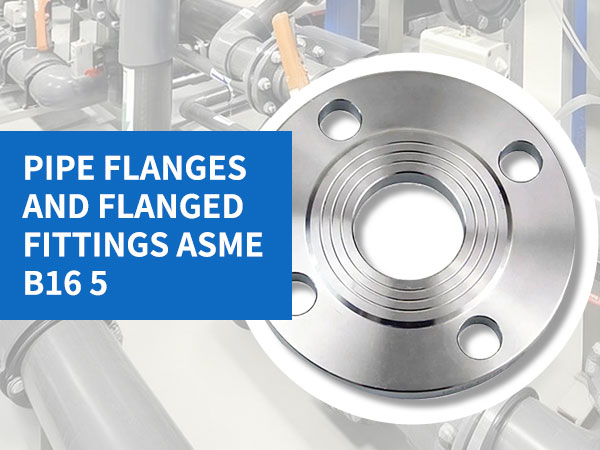
What is ASME B16.5?
ASME B16.5 is a flange standard developed by the American Society of Mechanical Engineers (ASME). Its full name is: ASME B16.5 – Pipe Flanges and Flanged Fittings. This standard primarily specifies the following:
Dimensions and construction of pipe flanges
End dimensions of flanged fittings
Pressure class
Facing types
Tolerances, marking, and inspection requirements. In simple terms:
ASME B16.5 does not specify “how to manufacture flange materials,” but rather how flanges and flanged fittings should be made to ensure a perfect fit and safe use.
Pipe Flanges Explained
1. Definition of Pipe Flanges
Pipe flanges are detachable connectors that achieve a seal using bolts and gaskets. They are typically used for:
Pipe-to-pipe connections
Pipe-to-valves, pumps, and equipment connections
Locations requiring frequent disassembly or maintenance
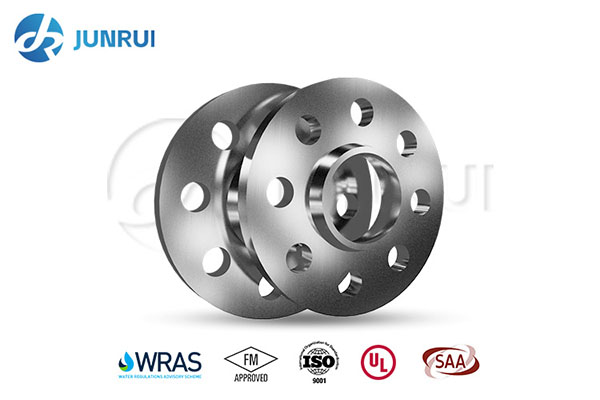
2. Main Flange Types Covered by ASME B16.5
The ASME B16.5 standard covers several common flange types, including:
Weld Neck Flange (WN)
Highest strength, suitable for high-pressure and high-temperature conditions
Slip On Flange (SO)
Easy to install, lower cost
Blind Flange (BL)
Used to seal pipe or equipment ports
Socket Weld Flange (SW)
Suitable for small-diameter, high-pressure pipes
Threaded Flange (TH)
Suitable for applications where welding is not possible
Lap Joint Flange (LJ)
Often used in conjunction with flanged short sections
Flanged Fittings Explained
1. What are Flanged Fittings?
Flanged fittings refer to pipe fittings with flanged connections at one or both ends, such as:
Flanged Elbow
Flanged Tee
Flanged Reducer
Flanged Spool. The flange ends of these fittings must fully comply with the dimensions and pressure ratings of ASME B16.5 to be interchangeable with standard flanges.
2. Advantages of Flanged Fittings
Fast on-site installation
Easy disassembly and maintenance
Reliable connection and good sealing performance
Suitable for complex piping systems
Key Technical Parameters of ASME B16.5
1. Nominal Size (NPS)
Range: NPS 1/2″ – 24″ Using the inch system
For NPS exceeding 24″, ASME B16.47 is typically used.
2. Pressure Class
ASME B16.5 uses Class to indicate pressure rating, commonly including:
| Pressure Class | Common Designation |
| Class 150 | 150LB |
| Class 300 | 300LB |
| Class 400 | 400LB |
| Class 600 | 600LB |
| Class 900 | 900LB |
| Class 1500 | 1500LB |
| Class 2500 | 2500LB |
It is important to note that:
Class is not equivalent to a fixed pressure value; the actual pressure resistance depends on the material and operating temperature.
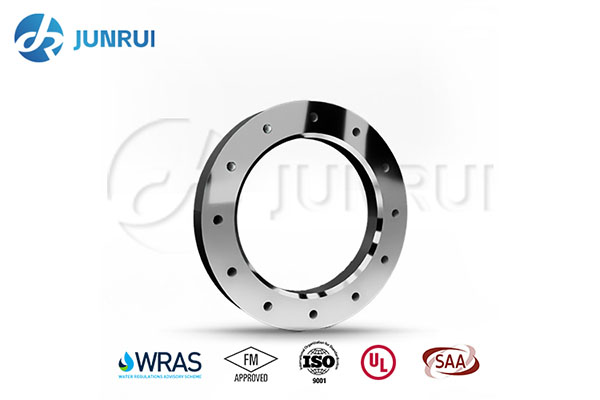
3. Facing Types
Common sealing faces specified in ASME B16.5 include:
RF (Raised Face): Most commonly used and with the widest range of applications.
FF (Flat Face): Commonly used for cast iron flanges.
RTJ (Ring Type Joint): Suitable for high-pressure and high-temperature conditions.
Relationship between Materials and ASME B16.5
ASME B16.5 itself does not specify a particular material grade, but it is typically used in conjunction with the following ASTM material standards:
ASTM A105 (carbon steel flanges)
ASTM A182 F304 / F316 (stainless steel)
ASTM A350 (low-temperature steel)
ASTM A694 (high-strength carbon steel)
Material selection directly affects the service limits of flanges under different temperature and pressure conditions.
Application Areas
Oil and gas pipelines
Chemical and petrochemical plants
Thermal and nuclear power systems
Industrial water treatment systems
Overseas EPC projects
Export market for pipeline fittings
Due to its strong global applicability and high acceptance, ASME B16.5 has become the preferred flange standard in international engineering projects.

Comparison of ASME B16.5 with Other Flange Standards
| Standard | Region | Features |
| ASME B16.5 | USA / International | Inch-based system, Class pressure ratings |
| EN 1092-1 | Europe | Metric system, PN pressure ratings |
| JIS | Japan | JIS pressure classification |
| GB/T | China | Chinese national standard system |
In international projects, ASME B16.5 offers greater versatility and interchangeability.
Pipe Flanges and Flanged Fittings: ASME B16.5 is not merely a set of dimensional standards, but a fundamental specification ensuring the safety, reliability, and global interchangeability of piping systems. Whether in design, procurement, installation, or export trade, a correct understanding and application of ASME B16.5 can significantly reduce engineering risks and improve the overall quality of the system.
In modern industrial piping systems, flanges and fittings conforming to ASME B16.5 have become a “passport” for international engineering projects.


