

High-density polyethylene (HDPE) pipe systems are widely used in municipal drainage, agricultural irrigation, industrial fluid transportation and other fields due to their excellent corrosion resistance, flexibility and long life. Among them, 110mm HDPE pipe fittings are the core connection components of medium-diameter pipes, and their performance directly affects the sealing, durability and construction efficiency of the entire pipe system. This article systematically introduces the types, connection technologies, application scenarios and future development trends of 110mm HDPE pipe fittings.
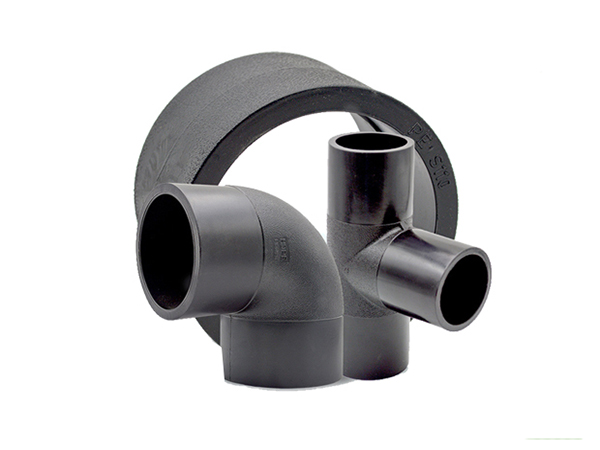
Main types of 110mm HDPE pipe fittings
110mm HDPE pipe fittings can be divided into the following categories according to their functions:
1. Connection fittings
Coupling: used for straight connection of pipes of the same diameter, common ones are electric fusion coupling and hot fusion butt coupling, suitable for high-pressure systems.
Reducer: used to connect pipes of different diameters (such as 110mm to 90mm) to reduce sudden changes in fluid resistance.
Flange adaptor: used to connect HDPE pipes with metal valves, pumps and other equipment, usually equipped with rubber gaskets to ensure sealing.
2. Pipe fittings for diversion and diversion
90° elbow/45° elbow: changes the flow direction of the pipeline, suitable for laying scenarios with complex terrain.
Tee and cross: used for diversion or confluence, commonly found in branch systems of municipal drainage networks.
3. Pipe fittings for maintenance and inspection
Repair Clamp: used for rapid repair of damaged pipelines, lined with stainless steel sleeves to restore pressure bearing capacity.
Manhole connector: docked with concrete or plastic manholes, usually sealed with socket rubber rings.

Connection technology and construction points
The connection method of 110mm HDPE pipe fittings directly affects the reliability of the system. The mainstream technologies include:
1. Electrofusion
Principle: The HDPE material is fused by heating the pipe fittings with built-in electric heating wire.
Advantages: Suitable for narrow space operations, weld strength ≥ pipe body.
Key parameters: welding voltage (39.5±0.5V), cooling time (≥30 minutes).
2. Butt fusion
Applicable scenarios: high-strength connection of large-diameter pipes (such as 110mm).
Steps: end milling → heating plate melting → pressurized butt → cooling and shaping.
3. Socket-type rubber ring connection
Features: No power supply required, relying on rubber ring compression sealing, suitable for non-pressure drainage systems.
Common problems: Rubber ring distortion leads to water leakage, and chamfering and centering need to be strictly checked.

Application scenarios and case analysis
1. Municipal drainage system
Case: A city drainage renovation project uses 110mm HDPE tees and elbows to replace traditional concrete pipes, which improves construction efficiency by 40% and reduces leakage by 90%.
2. Agricultural irrigation
Advantages: Resistance to fertilizer corrosion, low friction coefficient (0.009), and reduced pumping energy consumption.
3. Industrial fluid transportation
Chemical resistance: It can transport acid and alkali media with a pH of 2-12, and has a service life of 50 years.

Common problems and solutions
| Problem | Cause | Solution |
| Joint leakage | Misaligned rubber ring or incorrect fusion parameters | Recalibrate pressure / Replace electrofusion control module |
| Fitting cracking | Low-temperature brittleness or mechanical stress concentration | Use low-temperature resistant modified HDPE (e.g., PE100-RC) |
| Pipeline floating after installation | Poor backfill or high groundwater level | Use layered compaction + fix with concrete ballast |
110mm HDPE pipe fittings have become the core components of modern pipeline engineering due to their advantages of light weight, corrosion resistance, and reliable connection. In the future, with the development of intelligent and green manufacturing technology, their performance and application range will be further expanded.


