

In modern water supply and drainage engineering, industrial fluid transportation systems, and various building infrastructure, UPVC (Unplasticized Polyvinyl Chloride) pipes and fittings have become one of the most commonly used non-metallic pipeline materials. Compared with traditional metal systems, UPVC pipe fittings have advantages such as light weight, corrosion resistance, easy installation, and high cost performance. They are indispensable key connection components for residential, commercial, and industrial projects. This article will comprehensively introduce the characteristics, types, application fields, advantages, and installation key points of UPVC pipe fittings, helping readers fully understand their value in modern pipeline systems.
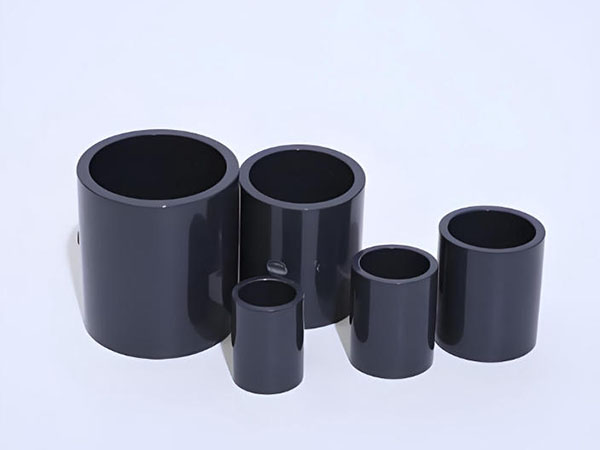
What is UPVC Pipe Fittings?
UPVC pipe fittings are hard plastic pipe fittings used for connecting UPVC pipes to achieve turning, diversion, transition or sealing. As an important component of the UPVC piping system, pipe fittings are connected by solvent bonding or rubber ring bonding to ensure that the pipeline has good sealing performance, pressure-bearing capacity and long-term stability.
Common UPVC pipe fittings include:
Elbow
Tee
Direct (Coupling
End Cap
Flange
Valve
Reducer joint
UPVC pipe fittings are usually gray, white or blue, with the color determined by regional standards and usage habits.
The material properties of UPVC pipe fittings
UPVC is a type of polyvinyl chloride material without plasticizers, featuring the following key characteristics
1. High strength and rigidity
The molecular structure of UPVC is stable, with high hardness and excellent impact resistance, and it is not prone to deformation due to external forces.
2. Excellent corrosion resistance
Compared with metallic materials, UPVC has extremely strong corrosion resistance to acids, alkalis, salts and various chemical media, and can avoid:
Rust
Scaling
Inner wall corrosion
It is particularly suitable for water treatment and the chemical industry.
3. Low thermal conductivity
UPVC itself has excellent thermal insulation properties and does not conduct heat as quickly as metal pipes. It can be used in cold water transportation, air conditioning drainage and other systems.
4. The inner wall is smooth and has low flow resistance
The inner wall of UPVC pipe fittings is smooth and flat, which is less likely to breed scale, effectively reducing pressure loss and improving conveying efficiency.
5. Non-toxic and safe, suitable for drinking water
UPVC contains no plasticizers or heavy metals and can meet the hygiene standards for drinking water pipes in many countries.

The main types and functions of UPVC Pipe Fittings
UPVC pipe fittings come in a wide variety of types, meeting various connection requirements of complex pipeline systems.
1. Elbow
It is used to change the direction of the pipeline, and common angles include 45° and 90°.
2. Tee
The pipe branch is realized, which is divided into equal diameter tees and different diameter tees.
3. Direct (Coupling
For the straight connection of two UPVC pipes of the same diameter.
4. End Cap
Block the end of the pipeline to ensure the system is sealed.
5. Reducer Joint
It is used for the connection of pipes of different diameters, such as the docking of UPVC pipes with pipes of other materials.
6. Flange
It is used in parts that require detachable connections, such as pump stations and the front end of valves.
7. Ball valves, check valves and other types of valves
It is used to control or block fluid flow, is corrosion-resistant and has smooth switching.
Application scenarios
The UPVC system is widely used in various projects due to its safety, corrosion resistance and stability.
1. Municipal water supply and drainage system
UPVC pipe fittings are suitable for:
Urban water supply
Drainage network
Rainwater pipe
Its high strength and corrosion resistance make it the mainstream material in municipal engineering.
2. Industrial fluid transportation
Including:
Chemical liquid
Low-temperature or normal-temperature process water
Wastewater treatment system
UPVC can effectively resist corrosive substances and extend the service life of equipment.
3. Agricultural irrigation and greenhouse systems
Lightweight and easy to install, it can quickly build a farmland irrigation network.
4. Internal drainage pipes of buildings
For residential, hotel and commercial buildings:
Sink drainage
Air conditioner condensate water
Kitchen drainage
Quietness, corrosion resistance and no scaling are its main advantages.
5. Seawater transportation or pond systems
UPVC is not corroded by salt and can be used in aquarium tanks and aquaculture systems.

Advantages and features
1. It has a long service life, which can reach over 50 years
UPVC material is stable and not prone to aging, especially capable of long-term operation in underground or normal-temperature environments.
2. Easy to install and highly efficient
UPVC pipe fittings are mostly bonded by solvent bonding.
No welding required
The tool is simple
Even non-professionals can quickly get started
Significantly reduce construction time and costs.
3. The cost advantage is significant
Compared with metal systems such as stainless steel and galvanized steel pipes, UPVC is more economical in terms of materials and maintenance.
4. Strong environmental protection performance
UPVC is recyclable and does not release harmful gases, which is highly in line with modern green building material standards.
Installation Precautions
1. Keep the end face clean and dry
When bonding, dust or oil stains can reduce the bonding strength.
2. Use special solvent glue
Make sure the bond is strong and avoid leakage.
3. Keep the insertion depth consistent
Marking the insertion depth with a marker pen can ensure the sealing effect.
4. Avoid construction in direct sunlight or high-temperature environments
High temperatures will accelerate the evaporation of solvents and reduce the bonding effect.
5. System pressure test
After installation is completed, a pressure test must be conducted to ensure there is no leakage.
As one of the most reliable and economical pipe fittings in modern pipeline systems, UPVC pipe fittings have been widely used in multiple fields such as municipal engineering, industrial systems, agricultural irrigation, and building water supply and drainage, thanks to their excellent corrosion resistance, high mechanical strength, light weight and easy installation, hygiene and safety, etc. With the increasing demand for environmental protection and the improvement of engineering quality standards, the importance of UPVC pipe fittings will become more prominent.
Whether it is large-scale projects or household pipeline systems, UPVC pipe fittings offer an efficient, economical and durable solution, representing an important development direction for future pipeline materials.


