

Overview of large diameter HDPE fittings
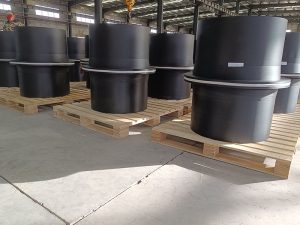
Large diameter HDPE fittings refer to pipe connection parts with a nominal diameter (DN) of 300mm and above. As a key component of modern pipeline systems, they have been widely used in municipal engineering, water conservancy construction, industrial transportation and other fields. With the advancement of material science and manufacturing technology, HDPE pipe fittings have made significant progress in terms of size range, performance indicators and application scenarios. HDPE material itself has excellent corrosion resistance, flexibility and welding performance. Compared with traditional metal pipes, it is lighter and has a longer service life (usually more than 50 years).
From the manufacturing process, large-diameter HDPE pipe fittings are mainly divided into three categories: injection molding pipe fittings, hot-melt butt fittings and winding structural wall pipe fittings. Injection molding is suitable for standard pipe fittings of DN300-DN800; larger diameter pipe fittings are mostly welded in sections by hot-melt butt welding; and winding structural wall technology is used to produce ultra-large diameter pipe fittings with special structures (such as HDPE carat pipes with a diameter of 1.5 meters). In recent years, through material modification technology, such as adding glass fiber or special toughening agent, the ring stiffness and impact resistance of HDPE pipe fittings have been significantly improved, which is particularly suitable for engineering environments with high requirements for mechanical strength.
Main types and structural features
Large diameter HDPE fittings can be divided into many types according to their functions, each with unique structural characteristics and scope of application:
Elbow fittings: used to change the flow direction of the pipeline, common 45 degree and 90 degree specifications. Large diameter elbows (such as DN300-DN750) are mostly manufactured by mitering process, and the hydraulic characteristics are optimized by accurately calculating the A/B size (projected length along the flow direction).
Tee fittings: used for diversion or confluence, divided into equal diameter and reducing diameter. The enhanced tee increases the wall thickness or strengthens the ribs at the branch connection, and the impact resistance can be improved by more than 30%.
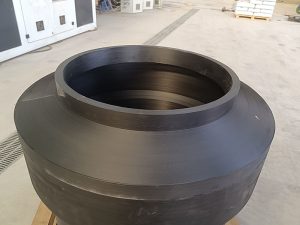
Reducing joints: connect pipes of different diameters, divided into concentric and eccentric reducer HDPE. The ultra-large diameter reducer adopts a steel-plastic composite structure, with an internal HDPE lining to ensure corrosion resistance and an external steel structure to provide mechanical strength.
Flange adapter: used to connect HDPE pipes to metal equipment, using an integrated injection molding process, integrated steel flange ring and pre-buried heating wire, with a working pressure of up to 1.6MPa.
Table: Comparison of large diameter HDPE pipe fitting types and characteristics
| Type | Size Range | Manufacturing Process | Features | Typical Applications |
| Elbow | Customizable | Bevel welding / Injection molding | 45°/90° turning, segmented design | Pipeline direction changes |
| Tee | Customizable | Filament winding / Reinforced injection molding | Reinforced branch structure, high ring stiffness | Flow splitting/merging points |
| Reducer | Customizable | Steel-plastic composite / Butt fusion | Concentric or eccentric design, pressure balancing | Pipe diameter transitions |
| Flange Adapter | Customizable | Injection molding with embedded metal | Integrated heating wire, flange connection | Equipment interface points |
Material properties and performance advantages
The reason why HDPE pipe fittings can widely replace traditional metal pipe fittings is mainly due to their excellent material properties:
Chemical corrosion resistance: It has strong tolerance to most chemicals such as acids, alkalis, salts, etc., and is particularly suitable for conveying corrosive media or burying in corrosive soils.
Mechanical properties: The tensile strength of ordinary HDPE is 20-30MPa, which can be increased to 51-55MPa through modification technology (such as adding 25-35 parts of glass fiber), and the bending modulus reaches 824MPa.
Environmental stress cracking resistance (ESCR): By adding ultraviolet absorbers and antioxidants, the service life of HDPE pipe fittings under outdoor exposure conditions is significantly extended.
Hydraulic performance: The inner wall is smooth and the friction coefficient is small (roughness coefficient n value is 0.009-0.011). The conveying capacity is better than concrete pipes and cast iron pipes, which can reduce energy consumption by 15%-20%.
Connection technology and construction points
Large diameter HDPE fittings mainly use two connection methods:
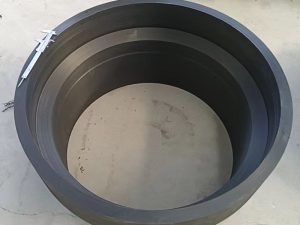
Hot-melt connection: by heating the end faces of the pipe and the pipe fitting to melt them and then pressurizing them, it is suitable for on-site installation of large-diameter pipes. The hot-melt connection process parameters of the system for DN1200-DN2500 pipes in the South-to-North Water Diversion Project are summarized.
Electric fusion connection: The heating wire is pre-buried in the pipe fittings, and the connection is achieved by electric heating. It is more suitable for occasions with limited space or rapid installation.
Note during construction:
Ultra-large diameter pipes should be hoisted at multiple points to avoid excessive local stress.
When laying underground, the foundation must be flat, and the backfill material should meet the design requirements.
When laying HDPE anti-seepage membrane on curved slopes, an innovative rotary cutting method can be used to reduce material waste.
Selection suggestions
Municipal water supply and drainage: Double-wall corrugated pipes are preferred, which have high ring stiffness and are easy to install.
High-pressure water supply: Select reinforced HDPE materials, and the working pressure can reach 1.6MPa.
Chemical transportation: Consider weather-resistant and antibacterial formulas to extend service life in corrosive environments.
Areas with complex terrain: Use PE100 grade pipes with better flexibility to adapt to foundation settlement.
Through scientific selection and standardized construction, large-diameter HDPE pipe fittings can provide long-term, safe and economical pipeline solutions for various projects.


