

PVC pipes are widely used in water supply and drainage systems, irrigation systems, air conditioning condensate drain pipes, and swimming pool piping due to their lightweight, corrosion resistance, low cost, and ease of installation. However, many PVC pipe leaks are not caused by material quality issues, but rather by improper fitting installation, particularly under-tightening or over-tightening. Therefore, mastering how to tighten PVC pipe fittings is crucial for ensuring system sealing and extending its lifespan.
This article will explain in detail how to properly tighten PVC pipe fittings, covering aspects such as fitting types, tool selection, glue application principles, correct tightening steps, common misconceptions and examples of errors, and leak detection methods.

Main Types and Connection Methods of PVC Pipe Fittings
Before understanding how to tighten them, we need to distinguish the connection methods of PVC pipe fittings, as the tightening methods differ for each method.
1. Slip/Socket Fittings
These are bonded using PVC-specific solvent adhesive (PVC Cement).
A permanent bond is formed through chemical dissolution and fusion.
This type does not rely on mechanical tightening but rather on the adhesive bond strength.
2. Threaded Fittings
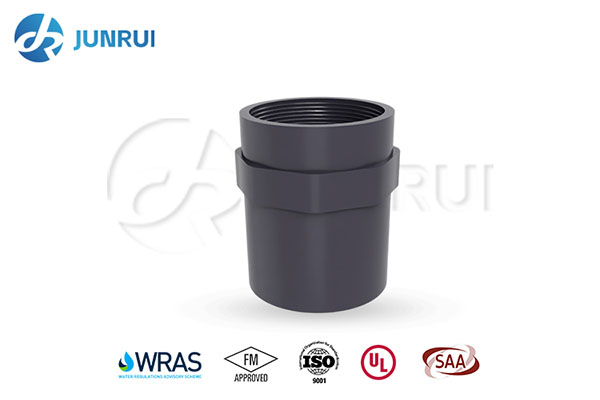
These fittings, with internal or external threads, are connected by rotating and tightening.
PVC adhesive is not required, but PTFE tape or thread sealant is commonly used.
Mechanical tightening force is crucial; overtightening or loosening can cause leaks or breakage.
This article focuses on the correct tightening method for threaded PVC pipe fittings and will also explain how to handle slip-on fittings to prevent leaks.
Required Tools and Materials
To properly tighten PVC pipe fittings, prepare the following commonly used tools:
Hand pipe wrench or rubber strap wrench
PTFE tape
PVC thread sealant (optional)
PVC solvent adhesive and primer (for spigot fittings)
Clean cloth and sandpaper (for cleaning pipe ends)
Notes on tool selection:
PVC is a plastic material and should not be directly clamped with metal pipe wrenches, otherwise it may crack or deform.
A rubber strap wrench is recommended, as it allows for proper tightening while protecting the pipe surface.
How to Properly Tighten Threaded PVC Pipe Fittings
Below are standard, reliable, and non-damaging tightening methods for pipe fittings.
Step 1: Clean the Threads
Wipe away dust, oil, or debris from the threads with a dry cloth.
If using older fittings, check for cracks or wear.
Clean threads ensure a better seal.
Step 2: Properly Wrap Teflon Tape
Teflon tape is a key material for sealing PVC threads.
Wrapping Method: Wrap the tape in the direction of thread rotation (clockwise) to prevent it from being pushed open when tightening.
Wrap 3–5 turns.
Overlap each turn by 1/2 width to ensure even coverage.
Too little tape will cause leaks; too much tape will overtighten or cause the threads to crack.
Step 3: Hand-tighten
First, hand-tighten the external threaded fitting completely until it feels noticeably tight or cannot be easily turned any further.
Hand-tightening generally achieves 70–80% of the maximum safe torque.
Step 4: Tighten with tools by 1/4 to 1/2 turn
Use a rubber band wrench to tighten by another 1/4 to 1/2 turn.
Note: Do not exceed 1 turn!
Reasons:
PVC material is brittle; overtightening will cause the joint to crack.
Threaded seals are non-metallic; overtightening will damage the threads, causing permanent leaks.
Empirical formula: Tighten by hand + tighten with tools by 1/4–1/2 turn = optimal seal
Tightening Principles for Socket-Type PVC Fittings
Although socket-type fittings do not require tightening, proper bonding methods are still essential.
Key points are as follows:
Clean and soften the socket and pipe end using PVC Primer.
Apply PVC Cement (solvent adhesive) evenly.
Insert the pipe into the fitting and rotate it 1/4 turn to distribute the adhesive evenly.
Hold the pressure firmly for 10–20 seconds to prevent it from springing back.
Initial curing takes 15 minutes; pressure testing can be performed after 2 hours (depending on temperature).
Socket-type leaks are usually related to:
Insufficient cleaning
Insufficient adhesive
Insufficient insertion depth
Insufficient curing time
and are not related to tightening.

Common Mistakes and Misconceptions
1. Over-tightening leading to cracking
The most common cause of PVC thread failure.
Typical symptoms:
Fine cracks appear in the joint
Sudden bursting after pressure application
Long-term chronic leakage
2. Insufficient or incorrect wrapping of PTFE tape
Wrapping in the wrong direction will cause it to unscrew, rendering the seal ineffective.
3. Using metal tools to apply excessive force
Easily damages the pipe fitting and causes invisible cracks.
4. Mixing metal and PVC threads
When using metal external threads with PVC internal threads, the metal threads are harder and can crack the PVC pipe fitting. Extra care is needed, and tightening force should be reduced.
How to check if it’s properly tightened:
After completing the connection, you can confirm it using the following methods:
1. Visual inspection:
The threads should be fully embedded, with no obvious large gaps.
The PTFE tape should not overflow or be shredded.
2. Pressure test (most reliable):
Pressure the system (water pump or water supply pressure).
Observe for 5–10 minutes.
If there is no leakage, dripping, or dampness, it is合格 (qualified).
If a slight leak occurs, you can:
Tighten it another 1/8 turn.
Or disassemble and re-wrap the PTFE tape.
Properly tightening PVC pipe fittings requires reasonable control of force, correct use of PTFE tape, and following the steps. Key points include: Cleaning the threads; Wrapping PTFE tape clockwise 3–5 turns; Tightening manually; Re-tightening with a tool by 1/4–1/2 turn; Avoiding overtightening; Performing a pressure test after completion. Mastering these techniques will not only prevent leaks but also improve the reliability and lifespan of the piping system, making PVC pipe installation safer, more durable, and more professional.


