

Flange connections are a crucial and widely used method in various industrial and municipal piping systems. Whether in water supply systems, sewage treatment systems, or oil, gas, and chemical pipelines, flanges play a vital role. Compared to welding or adhesive bonding, the biggest advantage of flange connections is their detachable nature, making pipeline maintenance, replacement, or expansion much easier and more flexible. Incorrect flange installation can lead to leaks, system pressure drops, and even safety incidents. Therefore, understanding how to connect flanges to pipes is essential for ensuring the long-term safe and stable operation of the entire piping system.
What is a flange connection?
A flange connection is a method of achieving a sealed connection between pipes or pipes and equipment by inserting a gasket between two flanges and tightening them with bolts. Simply put, a flange is like two perforated discs fixed together by bolts to form a strong and sealed interface. This connection method not only provides good sealing performance but also allows for easy disassembly and reinstallation as needed, making it very common in systems requiring frequent maintenance or repair.
A complete flange connection typically consists of three basic parts: the flange body, the gasket, and the bolts and nuts used for tightening. The gasket is located between the two flange faces. When the bolts are tightened, the gasket is compressed, filling the tiny gap between the flange faces and preventing liquid or gas leakage. Correct selection of the gasket material and proper tightening of the bolts are crucial to ensuring sealing performance.
Common Flange and Pipe Connection Types
Depending on the pipe material, pressure rating, and operating environment, the connection methods between flanges and pipes vary. The most common connection methods include welded connections, threaded connections, and flange connections specifically for plastic pipes.
Welded flanges are one of the most common methods in steel pipe systems. This method involves directly welding the flange to the end of the pipe, making the flange an integral part of the pipeline. Welded connections offer very high strength and reliability, capable of withstanding high pressure and temperature, and are therefore widely used in industrial piping systems. For example, oil pipelines, power plant steam pipelines, and chemical pipelines typically use welded flanges.
Threaded flanges connect via the pipe thread and the flange’s internal thread. This method does not require welding, is relatively simple to install, and is suitable for small-diameter and low-pressure piping systems, such as small water supply systems or compressed air systems. However, due to the limited sealing performance of threaded connections, they are generally not used in high-pressure or hazardous media systems.
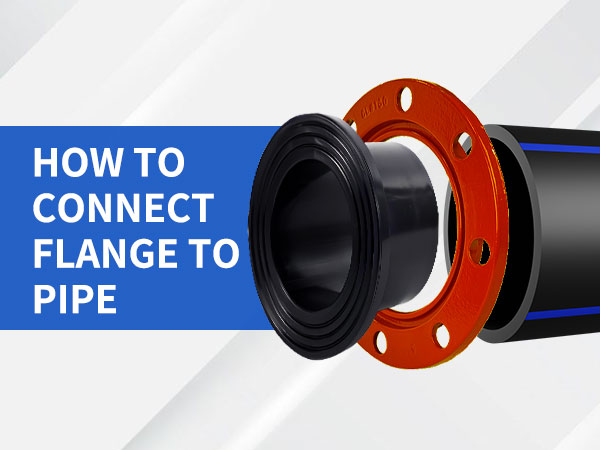
For HDPE and PVC plastic pipes, a stub end (flange joint) combined with a loose flange is typically used for connection. This method first connects the stub end to the pipe using heat fusion or adhesive bonding, and then uses the loose flange and bolts for the connection. This method maintains the sealing performance of plastic pipes while also achieving the detachable advantage of flange connections.

How to Connect a Flange to a Pipe
During actual installation, the correct steps must be followed to ensure a high-quality connection.
The first step is inspection. Before installation, carefully inspect the flange surface for flatness, cracks, scratches, or deformation. Also check that the pipe ends are straight and clean. Damage to the flange surface may lead to seal failure, so replace the flange if necessary.
The second step is connecting the flange to the pipe. For welded steel pipe flanges, fit the flange onto the pipe and then weld. During welding, ensure the weld is uniform, continuous, and free of porosity or cracks. For plastic pipes, use a heat fusion device to connect the stub end to the pipe.
The third step is installing the gasket. The gasket should be placed between the two flange faces, ensuring correct positioning. The gasket must not be misaligned, otherwise leakage may occur after pressurization. Different gasket materials should be selected for different systems; for example, EPDM gaskets are typically used for water supply systems, while PTFE gaskets may be used for chemical systems.
The fourth step is installing the bolts. Insert all bolts into the flange holes and initially tighten them by hand. At this stage, do not tighten any bolts at once; ensure all bolts are in place.
The fifth step is to tighten the bolts using a diagonal tightening method. This is a crucial step. The correct method is to tighten the bolts gradually in a diagonal sequence to ensure even stress on the flange face. Tightening in a clockwise sequence may result in uneven stress on the flange, affecting the sealing performance.
The final step is to check the connection quality. Confirm that there are no obvious gaps between the flange faces, the gasket is not exposed, and the bolts are securely tightened. If necessary, a pressure test can be performed to confirm that the connection is completely sealed.
Technical Standards for Flange Connections
To ensure the safety and interchangeability of flange connections, unified standards have been established worldwide. For example, the ASME B16.5 standard, developed by the American Society of Mechanical Engineers, specifies flange dimensions, pressure ratings, and the number of bolts. In addition, the International Organization for Standardization and ASTM International have also developed relevant standards.
These standards ensure that flanges manufactured by different companies are compatible with each other, while guaranteeing connection strength and sealing performance. Common pressure ratings include PN10, PN16, and Class 150, with different pressure ratings corresponding to different flange thicknesses and bolt counts.
Key Considerations During Installation
Several key factors must be considered when installing flanges. First is flange alignment. The two flanges must be parallel; otherwise, leaks may occur even with tightened bolts. Furthermore, the bolts must be tightened evenly, neither too tight nor too loose. Overtightening may damage the gasket, while undertightening may result in a poor seal.
The flange surface must be kept clean, free of dirt, oil, or other impurities. These impurities can affect the gasket’s sealing performance. Additionally, a gasket material suitable for the working medium should be selected. For example, when conveying chemicals, a corrosion-resistant gasket should be used.
Advantages of Flange Connections
Flanged connections offer numerous advantages, making them one of the preferred connection methods for industrial piping systems. Firstly, they are a detachable connection, facilitating pipe maintenance and replacement. Secondly, flanges provide excellent sealing performance, making them suitable for high-pressure systems. Furthermore, flanges are highly adaptable, compatible with pipes made of various materials, including steel, PVC, and HDPE.
Another significant advantage is their long service life. With proper installation and maintenance, flanges can last for decades without problems. This is why flanges are so popular in municipal and industrial systems.
Flanged connections are one of the most reliable and commonly used connection methods in piping systems. The correct installation process includes checking the flange, connecting the pipe, installing the gasket, installing the bolts, and diagonally tightening them. Each step must be strictly performed according to specifications to ensure the sealing and safety of the connection.
Flanged connections play a crucial role in water supply systems, sewage systems, and industrial pipelines. By selecting the appropriate flange type and using the correct installation method, the reliability and service life of the piping system can be significantly improved. Therefore, mastering flange connection techniques is essential for anyone engaged in pipeline installation or maintenance.


