

In modern water supply and drainage, municipal engineering, industrial pipe networks, and fire protection systems, HDPE (high-density polyethylene) pipes are widely used due to their advantages such as corrosion resistance, good flexibility, and long service life. However, in actual engineering projects, very few systems use 100% HDPE pipes.
When HDPE pipes need to be connected to steel pipes, PVC, uPVC, CPVC, cast iron pipes, or valves, pumps, and flanges, a crucial component—HDPE transition fittings—is essential.
Though small, they are “critical nodes” ensuring the safe and stable operation of the entire pipe network system.
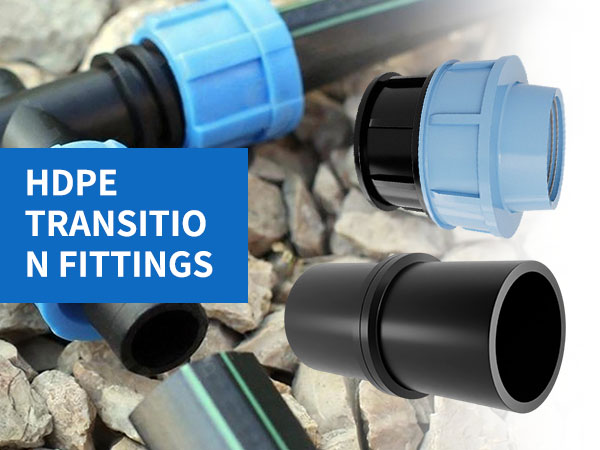
What are HDPE Transition Fittings?
HDPE transition fittings generally refer to specialized pipe fittings used for converting HDPE pipes to other materials or different connection methods.
Their core functions are:
Achieving reliable connections between different materials
Solving problems caused by welding methods, thermal expansion and contraction, and rigidity differences
Ensuring system sealing and long-term stability
Simply put: Without suitable HDPE transition fittings, even the best HDPE piping system cannot function properly.
Why are transition fittings indispensable in HDPE piping systems?
1. “Multi-material coexistence” is common in actual engineering projects.
HDPE must be connected to other materials in the following scenarios:
Municipal water supply main pipe (steel pipe) → branch line (HDPE)
Pump station, valve, and instrument interfaces (usually metal)
Renovation of old pipe networks (PVC/cast iron → HDPE)
Different media sections in industrial systems
This determines that HDPE transition fittings are a necessity, not an option.
2. Differences in material properties must be “absorbed” through transition structures.
| Comparison Item | HDPE | Metal Pipe |
| Flexibility | High | Low |
| Thermal Expansion Coefficient | Large | Small |
| Connection Method | Heat Fusion | Flange / Threaded |
Direct, rigid connections are highly susceptible to:
Interface leakage
Stress concentration
Loosening or cracking after long-term operation
The role of transition fittings is to buffer and adapt between two materials with “completely different characteristics”.

Common HDPE Transition Fittings Types
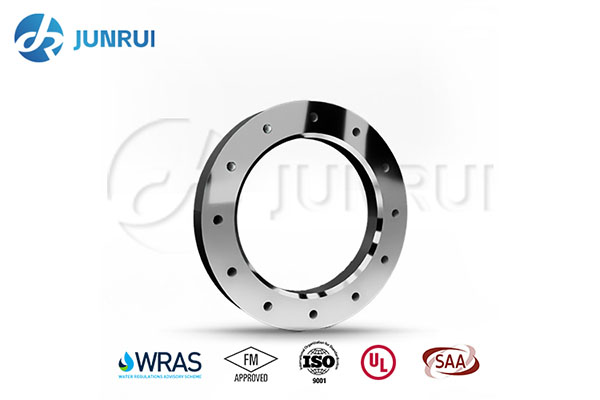
1. HDPE Flange Adaptor
The most widely used transition type
One end: HDPE heat fusion connection
The other end: Metal flange (carbon steel/stainless steel)
Advantages:
Easy installation and disassembly
Suitable for connection with valves, pumps, and equipment
Reliable sealing, high degree of standardization
Common applications:
Pump stations
Fire protection systems
Municipal main pipeline interfaces
2. HDPE Steel Transition
Typically an integrated HDPE + steel pipe transition fitting, pre-connected for reliable connection at the factory.
Features:
Factory prefabrication for more stable quality
Strong pressure resistance
Especially suitable for underground or high-pressure conditions
Typical applications:
Long-distance water transmission projects
Industrial pipelines
Oil and chemical industries
3. HDPE Threaded Transition Fittings
One end of the HDPE pipe is heat-fused
The other end is an internal or external thread (metal or plastic)
Advantages:
Compact structure
Suitable for small-diameter pipes
Flexible installation
Notes:
Not suitable for high-pressure or large-diameter systems
Strict control of thread sealing method is required
4. HDPE to PVC/uPVC Transition Fittings
Commonly used for:
Upgrading old PVC systems to HDPE
Building or agricultural irrigation systems
Connection methods include:
Flange transition
Union transition
Dedicated rubber ring structure
Core Performance Requirements for HDPE Transition Fittings
A qualified HDPE transition fitting must simultaneously meet the following requirements:
1. Reliable Sealing
No leakage due to temperature changes
Maintains stability during long-term operation
2. Pressure Capacity Matching the System
Clearly defined PN10/PN16/PN20 ratings
Does not become a “weak point” in the system
3. Good Material Compatibility
Adequate corrosion protection for metal parts
Raw material grades for plastic parts meet standards
4. Compliance with International Standards
Common standards include:
ISO
ASTM
EN
GB/T
Applications of HDPE Transition Fittings in Various Fields
1. Municipal Water Supply and Drainage Engineering
Connection of HDPE pipe to steel main pipe
Pump station, valve well interface
2. Fire Protection Systems
FM/UL certified HDPE pipe transition to metal equipment
High pressure, extremely high reliability requirements
3. Industrial Piping Systems
Chemical, mining, power plants
Strict requirements for corrosion resistance and safety
4. Agriculture and Irrigation
Connection of HDPE to PVC, metal valves
Frequent installation, complex environment

How to Choose the Right HDPE Transition Fittings?
When selecting, it is recommended to focus on the following:
What are the materials of the two ends of the connection?
What are the system’s operating pressure and temperature?
Is frequent disassembly and maintenance required?
Are there any certification or project specification requirements?
Remember this: If transition fittings are not chosen correctly, problems often don’t appear immediately, but rather erupt several years later.
HDPE transition fittings are a key guarantee of system reliability.
Although HDPE transition fittings account for a small percentage of the overall cost of a piping system, they directly determine:
System safety
Long-term sealing of joints
Easy maintenance of the piping network.
In high-quality HDPE piping systems, transition fittings are never “makeshift” accessories, but core components requiring careful design and rigorous manufacturing.
Choosing the right HDPE transition fittings is like buying insurance for the long-term stable operation of the entire project.


