

In various fluid transport systems, besides the pipes themselves, fittings are also crucial components determining the system’s safety and stability. Especially in pressure-bearing systems, ordinary connectors are far from meeting the strength and sealing requirements, necessitating the use of HDPE pressure pipe fittings.
With the rapid development of municipal construction, industrial transport, and agricultural irrigation, HDPE pressure pipe fittings are becoming an indispensable part of global pressure piping systems.
What are “Pressure Fittings”?
Pressure fittings are pipe fittings used to connect, divert, change direction, or seal pressure pipelines, and are designed for long-term safe operation at specified pressure levels. Their biggest difference from ordinary drainage fittings lies in: Pressure fittings must possess pressure-bearing capacity, long-term sealing performance, and structural strength stability.
Basic characteristics of pressure fittings include: Ability to withstand internal water or fluid pressure; Reliable, leak-proof joint seals; Impact and fatigue resistance; Long service life, suitable for long-term continuous operation.
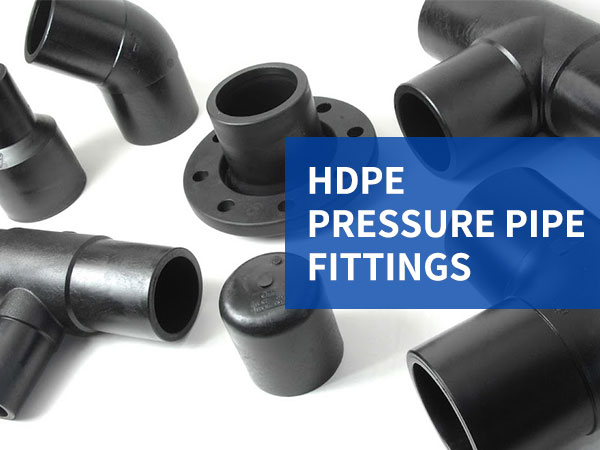
Common pressure fittings in HDPE piping systems include: Elbows; Tees; Crosses; Couplers; Stub Ends; Reducers; End Caps. These fittings form a complete, sealed integrated system with HDPE pressure pipes through methods such as butt fusion, socket electrofusion, or flange connections.
Why is HDPE suitable for pressure pipe fittings?
HDPE (High-Density Polyethylene) is a high-performance thermoplastic material, particularly suitable for pressure fluid transportation systems.
1. Excellent Pressure Bearing Capacity: HDPE material has a good balance of strength and toughness, and can operate stably under different pressure ratings (such as PN6, PN10, PN16, etc.). HDPE pressure fittings, after injection molding or compression molding, can achieve equal strength connections with pipes of the same rating.
2. Heat Fusion Connection Achieves “Zero Leakage”: One of the biggest advantages of HDPE pressure fittings is that they can be fused to the pipeline through heat fusion welding, forming a molecular-level fusion interface. This connection method:
Eliminates rubber ring aging issues
Eliminates the risk of thread loosening
Has virtually no leakage potential during long-term operation
This is especially crucial for underground installations or important water supply projects.
3. Superior Corrosion Resistance: HDPE has excellent resistance to various chemicals such as acids, alkalis, and salts. Unlike metal pipe fittings, it will not rust or be electrochemically corroded, making it particularly suitable for transporting complex water qualities and industrial media.
4. Impact Resistance and Environmental Stress Cracking Resistance
HDPE pressure fittings maintain good toughness and are not prone to brittleness even under low temperature or foundation settlement conditions, making them suitable for complex construction environments.
5. Lightweight and Easier Installation
Compared to metal pressure fittings, HDPE is lighter, facilitating transportation and installation, especially in large-diameter systems.
Main Types and Functions of HDPE Pressure Pipe Fittings
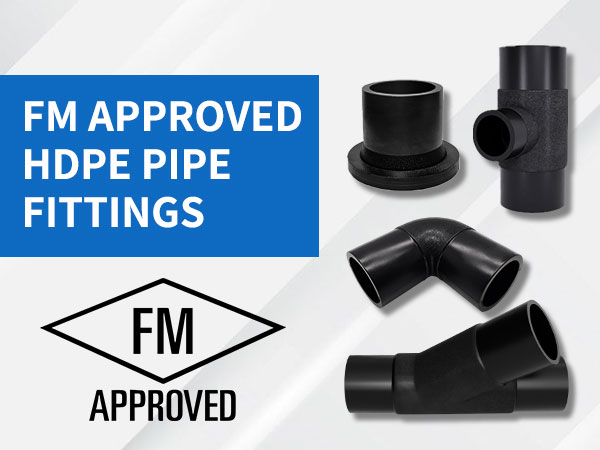
Elbow: Used to change the direction of pipes. Common angles are 45° and 90°. Widely used in water supply and industrial pipelines.
Tee: Used for branch connections of main pipes to achieve fluid diversion. A key node in municipal water supply and irrigation systems.
Reducer: Used for transition connections between different pipe diameters, ensuring smooth flow conversion.
Flange Connection (Stub End + Backing Ring): Used to connect to valves, pumps, or metal pipes, facilitating disassembly and maintenance.
End Cap: Used for sealing pipe ends or pressure testing.
Main Application Industries of HDPE Pressure Pipe Fittings
HDPE pressure pipe fittings are not limited to a single field but are widely used in many demanding industries.
1. Municipal Water Supply Systems
This is one of the most typical application areas for HDPE pressure pipe fittings.
Application Scenarios:
Urban water supply and distribution networks
Residential secondary water supply systems
Long-distance water transmission projects
Advantages:
Leak-free, reducing water loss
Corrosion resistant, adaptable to different water qualities
Long service life, low maintenance costs
2. Agricultural Irrigation Systems
In modern water-saving agriculture, pressure water transmission systems are widely used in sprinkler and drip irrigation.
Application Scenarios:
Main and branch pipe connections in farmland
Greenhouse irrigation systems
Orchard and cash crop irrigation
HDPE pressure pipe fittings are resistant to ultraviolet radiation and fertilizer corrosion, enabling stable operation in outdoor environments for extended periods.
3. Industrial Fluid Transportation
Many industrial media are corrosive or require stable pressure transmission, making HDPE pressure pipe fittings an ideal choice.
Applicable industries include:
Chemical industry (acid and alkali liquid transportation)
Mining industry (slurry transportation)
Power plant circulating water systems
Food and beverage industry (some non-high-temperature media)
HDPE’s chemical stability and abrasion resistance significantly extend system lifespan.
4. Firefighting water supply systems (specific certified products)
Some HDPE pressure fittings, after obtaining FM or other certifications, can be used in firefighting water systems, such as underground fire ring networks. These applications have extremely high requirements for the pressure resistance and reliability of the fittings.
5. Seawater and coastal engineering
HDPE has natural resistance to salinity and humid environments, making it suitable for:
Seawater transportation
Coastal water supply and drainage projects
Marine aquaculture systems
Metal fittings are prone to corrosion in these environments, while HDPE systems have lower maintenance costs.
The System Value of HDPE Pressure Fittings
Choosing high-quality HDPE pressure fittings is not just about replacing a material; it brings long-term benefits to the entire piping system:
Reduced leakage risk, ensuring system safety
Reduced maintenance and replacement costs
Improved overall project durability
Adaptable to complex environments and various media
Enhanced long-term operational reliability
As key connecting components in pressure piping systems, HDPE pressure fittings bear the important responsibilities of sealing, pressure bearing, and structural stability. With their excellent corrosion resistance, leak-proof heat fusion connection, and outstanding environmental adaptability, they are widely used in municipal water supply, agricultural irrigation, industrial transportation, fire protection systems, and marine engineering, among other industries.
In modern infrastructure construction, choosing high-quality HDPE pressure fittings not only means safer fluid transportation but also represents longer-lasting and more reliable system operation.


