

In modern fluid transportation systems, high-density polyethylene (HDPE) pipes are highly sought after for their superior performance. However, a complete, efficient, and reliable piping system requires not only high-quality pipes but also equally excellent fittings. Among the many connection methods, HDPE pipe unions play a crucial role, acting as the “joint” in a piping system, providing unprecedented flexibility, convenience, and maintainability.

What is an HDPE pipe union?
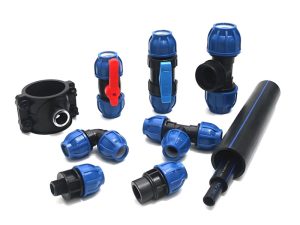
An HDPE pipe union is a removable mechanical pipe joint. Its core design concept is to enable quick connection and disconnection of two pipe sections without cutting the pipes. This differs from permanent connections such as butt fusion and electrofusion welding.
A typical union typically consists of three main parts:
Female end: Typically has internal threads or a sealing notch.
Male end: Typically has external threads or a matching female end. Lock Nut: By rotating the nut, the male and female connectors are tightened, compressing the seal within, thus creating a seal and connection.
A key feature of this type of nut is its central locking nut. Tightening the nut completes the connection, while loosening it disconnects it, making operation extremely simple.
Why are unions necessary? What are their core advantages?
In addition to permanent heat-fusion welding, unions offer a crucial alternative connection method, with advantages in several areas:
Repeatable disassembly and installation: This is the union’s greatest advantage. When replacing a pipe section, clearing a blockage, adding a branch line, or modifying the piping layout, there’s no need to cut and re-weld the pipe; simply loosen the union nut, significantly reducing maintenance costs and time.
Easy installation with minimal tools: Installing a union typically requires only a pipe wrench and a wrench, eliminating the need for expensive welding equipment (such as an HDPE Buttfusion Welding Machine or HDPE Electrofusion Welding Machine) or specialized welder qualifications. This is particularly advantageous in applications with limited space or where rapid water flow is urgently needed.
Adaptable to special working conditions:
Connecting pipes of different materials: Unions can conveniently serve as transition pieces between HDPE pipe and steel, PVC, or other pipe materials, resolving the challenge of heat-fusion welding.
Equipment interface connections: Commonly used to connect equipment such as pumps, water meters, valves, and filters, facilitating subsequent maintenance and replacement. Temporary Pipeline Installation: For temporary water supply/drainage systems that require frequent movement or disassembly, unions are the ideal choice.
Relieve System Stress: Although unions are not specialized compensators, their flexibility can slightly absorb stress caused by thermal expansion and contraction or foundation settlement, providing additional safety margins for the system.
Main Types of HDPE Pipe Unions
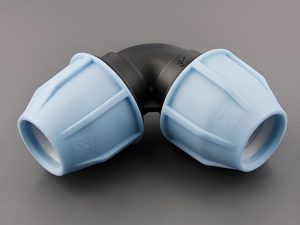
Threaded Union:
The most common type, tightening the internal and external threads tightens the joint and compresses the seal.
Advantages: Simple structure, low cost, and widespread application.
Note: Be careful when tightening to avoid overtightening, which can cause stripping or damage to the plastic threads. Generally not recommended for applications with a risk of subsidence, such as buried pipes.
Flanged Union:
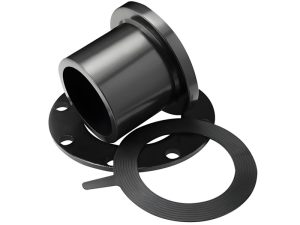
Essentially a pair of matching HDPE flanges bolted together. It combines the functions of a flange connection and a union.
Advantages: High connection strength, excellent sealing performance, and generally superior pressure resistance to threaded unions, making it suitable for larger diameter and higher pressure piping systems.
Applications: It is the standard method for connecting HDPE pipe to flanged interfaces on valves, pumps, or other metal equipment.
Push-in/Quick-fit Union:
Employs an O-ring seal and uses a mechanical mechanism such as a circlip or ferrule for quick locking. An audible click indicates the union is secure when inserted into the pipe.
Advantages: Extremely fast installation, a truly one-step installation requiring no tools.
Application: Widely used in low-pressure, small-diameter applications, such as laboratory waterways, agricultural drip irrigation systems, and equipment cooling water quick connectors.
Key Considerations for Selecting and Installing Unions
Correct Selection:
Size Matching: Ensure the nominal diameter (DN) of the union exactly matches the outer diameter of the pipe.
Pressure Rating: The nominal pressure rating (PN) of the selected union must be greater than or equal to the operating pressure of the piping system.
Material Compatibility: Ensure the HDPE material of the union matches the pipe, and that its sealing ring (usually EPDM or NBR) is compatible with the fluid being transported (e.g., drinking water, chemicals).
Proper Installation:
Inspection: Before installation, inspect all union components and sealing rings to ensure they are intact, clean, and free of damage or impurities.
Alignment: When connecting, ensure the two pipe sections are aligned. Avoid forcing them due to angular deviations, as this can cause stress concentration and leakage.
Tightening Force: For threaded unions, use a wrench to tighten the lock nut evenly. Tighten gently only after you feel noticeable resistance. Avoid using an extension wrench to forcefully tighten, as this can damage the threads. Support: Pipe clamps or brackets should be installed near unions to provide adequate support for the joints and prevent the weight of the pipe or water hammer from placing all stress on the unions.
Application Limitations:
Generally speaking, direct burial of unions is not recommended, especially in soft soil or areas prone to settlement. If burial is necessary, it should be located in a manhole for easy maintenance and tightening.
In pipelines subject to persistent strong vibration or severe water hammer, welded connections should be preferred, or additional vibration reduction measures should be implemented.
Although a small component, the HDPE pipe union embodies the principles of flexibility and maintainability in modern pipeline engineering. It overcomes the shortcomings of permanent welding and greatly facilitates system installation, commissioning, maintenance, and modification.


