

HDPE blind flange overview
HDPE blind flange (High-Density Polyethylene Blind Flange) is a pipe sealing component made of high-density polyethylene (HDPE) material, designed for temporary or permanent closed pipeline systems. Its core function is to block the flow of media, which is convenient for system maintenance, pressure testing or isolation of branch pipelines. Compared with traditional metal blind plates, HDPE blind flange is widely used in chemical industry, water supply and drainage, environmental protection and other fields due to its lightweight, corrosion resistance and long life.
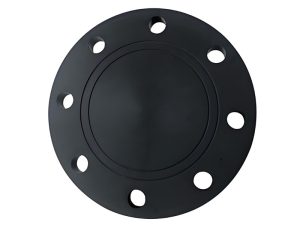
Product Features and Advantages
Excellent chemical resistance
HDPE material can resist corrosion from acids, alkalis, salts and most organic solvents, and is suitable for corrosive environments such as chemical wastewater and seawater treatment.
Lightweight and high strength
The density is only 1/8 of that of steel flanges, which is easy to install while maintaining high ring stiffness and impact resistance.
Zero penetration seal
After hot-melt connection with HDPE pipes, a molecular-level seal is formed to completely avoid the risk of media leakage.
Long service life
Excellent UV resistance and aging performance, underground service life can reach more than 50 years.
Economical and environmentally friendly
No anti-corrosion treatment is required, maintenance cost is low, and the material is 100% recyclable.
Typical application scenarios
Water treatment system: sewage plant pipeline inspection and isolation, sedimentation tank diversion control
Industrial pipeline: temporary closure of chemical plant reactor feed pipeline
Gas engineering: PE gas pipeline pressure test plugging
Mining engineering: slurry delivery pipeline end sealing
Agricultural irrigation: drip irrigation system partition control node

Technical parameter standards
| Item | Parameter Range |
| Diameter Range | DN50–DN1200 (non-standard customization supported) |
| Pressure Rating | PN6–PN16 |
| Operating Temperature | -40℃ to +60℃ |
| Connection Method | Butt fusion / Flanged bolt connection |
| Applicable Standards | ISO 4427, GB/T 13663 |
HDPE blind flange installation operation specification
1. Hot melt welding installation
Surface treatment: Use a special scraper to remove the oxide layer on the flange contact surface
Alignment: Ensure that the deviation between the pipeline and the flange axis is ≤1%
Heating welding:
The heating plate temperature is set at 210±10℃
Welding pressure is 0.15-0.3MPa
Pressure holding cooling time ≥ 1.5 times the specified welding cycle
2. Bolt connection installation
Sealing gasket selection: Use EPDM or NBR rubber gasket, thickness ≥3mm
Tightening sequence: Tighten the bolts evenly in 3 times in diagonal order
Torque control: M16 bolt recommended torque 45-60N·m

Solutions to common problems
Problem 1: Stress whitening on flange edge
Cause: Local stress concentration during installation
Countermeasure: Check the pipe support spacing and add shock-absorbing rubber pads
Problem 2: Sealing failure in low temperature environment
Cause: Insufficient gasket compression due to material shrinkage
Countermeasure: Use low-temperature silicone gasket instead, and increase bolt preload by 10%
Problem 3: Bolt hole alignment deviation
Cause: Accumulation of manufacturing tolerances of different batches of products
Countermeasure: Use oval hole flange or expand the hole (expansion amount ≤2mm)
Selection suggestions
Corrosive environment: Choose black HDPE material with anti-UV agent added
High-pressure working conditions: Prefer molded flange with reinforcing rib structure
Food industry: Choose white HDPE raw materials that meet FDA standards
HDPE blind flange is a key component of modern pipeline engineering. Its correct selection and installation directly affect the reliability of the system. It is recommended that users make a comprehensive selection based on actual operating parameters and the technical points provided in this article.


