

Short answer: It is generally recommended, but not “mandatory” in all cases. Whether to use it depends on the pressure rating, flange type, bolt material, stress requirements, and construction specifications.
The principles and practical engineering practices are explained in detail below.

First, distinguish three things: Washer ≠ Gasket
Many people mistakenly believe that the “sealing gasket in the middle of the flange” is the washer, but it is not.
| Name | Position | Function |
| Gasket | Between two flanges | Prevents medium leakage (core sealing component) |
| Washer | Under the nut or bolt head | Distributes pressure and prevents damage to the flange surface |
| Bolt/Nut | In the flange bolt holes | Provides clamping force |
Conclusion: Flanges always require a gasket, but a washer is an auxiliary component used for optimizing bolt stress.
The Main Functions of Washers
In flange connections, washers are not used for sealing, but rather to improve the stress distribution on the bolts.
1. Distribute Bolt Pressure and Protect the Flange Face
When you tighten the nut, the edge of the nut creates high point contact stress on the back of the flange. Without a washer:
The back of the flange may be damaged.
The coating or anti-corrosion layer may be damaged.
Soft flanges (such as plastic or rubber-lined flanges) are easily deformed.
Washers can diffuse pressure from a small contact surface to a larger area.
2. Ensure More Uniform Preload
Flange sealing relies on uniform bolt preload to compress the gasket.
Without a washer:
Unstable nut friction.
Uneven stress points.
Reduced efficiency in converting torque into axial force.
The result is: For the same tightening torque, the actual clamping force varies greatly, easily causing one side to be tight and the other loose, leading to leakage.
3. Reduce Friction Loss and Facilitate Precise Torque Control
In demanding operating conditions (pressure pipelines, steam pipelines, chemical systems), flange installation is often performed according to the torque value.
Washers allow for more controlled friction, resulting in a more accurate calculation of torque = preload.
This is especially important in the following scenarios: High-pressure flanges (Class 300 and above) High-temperature pipelines Hazardous media (flammable, corrosive fluids)
4. Preventing nuts from seizing or damaging threads
Especially stainless steel bolts or galvanized parts, when pressed directly onto flanges, are prone to:
Seizing
Difficulty in disassembly
Thread damage. Washers act as a “buffer layer.”

In which situations is the use of gaskets strongly recommended?
In the following operating conditions, engineering specifications almost always require flat washers:
1. High-pressure or high-temperature flanges
Under high preload, without a gasket, the back of the flange is easily damaged, affecting long-term sealing.
2. Soft or non-metallic flanges
For example:
PVC flanges
HDPE flanges
Rubber-lined flanges
FRP flanges
These materials have low pressure resistance and are easily deformed by nuts without a gasket, leading to:
Flange face warping → Uneven gasket stress → Leakage
3. Flanges with coatings or anti-corrosion layers on the back
Gaskets prevent damage to the coating, avoiding corrosion starting at the bolt position.
4. When using a torque wrench for installation
Gaskets are almost standard equipment to ensure reliable torque values.
In what situations might gaskets not be mandatory?
Some low-risk applications are not explicitly mandated by regulations:
Low-pressure, ambient-temperature water pipes: Such as ordinary water supply, drainage, and irrigation systems. Due to low pressure and low risk, gaskets may not be installed on some sites to save costs.
Small-diameter steel flanges (lower grade):
If it is:
Class 150, small diameter, low pressure, ordinary carbon steel flange. This may be omitted in some older installation practices, but it does not mean it is the best practice.
Note: This does not mean “correct,” but only “the risk is acceptable.”
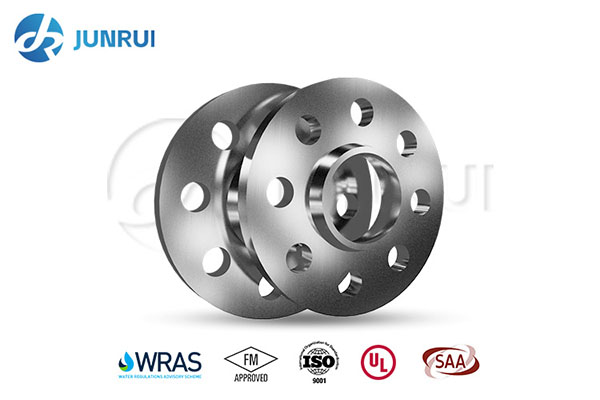
Is a spring washer necessary?
Spring washers are generally not recommended for flange connections.
Reason: Flange bolts rely on preload for sealing, not on anti-loosening measures.
Spring washers will flatten under high loads, rendering them ineffective.
This can actually affect the stability of the preload.
Correct practice:
Use flat washers.
Use double nuts or anti-loosening nuts when necessary.
Use hydraulic tensioners or specialized tightening procedures for critical systems.
How to interpret standards and specifications?
Although different standards may use different wording, mainstream engineering practice (ASME, EN, HG standard systems) generally follows this rule: Flat washers are recommended for flange connection bolts to ensure even load distribution and connection reliability.
Especially in pressure piping and industrial systems, “not installing gaskets” is often considered non-standard construction.
Potential problems arising from not using gaskets
| Problem | Consequence |
| Damage to the back face of the flange | Causes stress concentration and cracking |
| Uneven preload force | Uneven gasket compression leading to leakage |
| Coating damage | Accelerated corrosion |
| Nut galling / seizure | Difficult disassembly and increased maintenance cost |
| Plastic flange deformation | Flange face warping and sealing failure |
The standard answer from an engineering perspective: While gaskets are not “absolutely mandatory” in pipe flange connections under legal regulations, the use of flat gaskets is a strongly recommended and even default standard practice in the vast majority of industrial, pressure, and long-term operating systems.


