

8-inch (DN200) PVC pipe fittings are widely used pipe connection components in the industrial, municipal and construction fields, suitable for water supply and drainage, chemical transportation, agricultural irrigation and other scenarios. PVC (polyvinyl chloride) material has become an ideal substitute for metal pipes due to its advantages such as corrosion resistance, lightweight and easy installation.
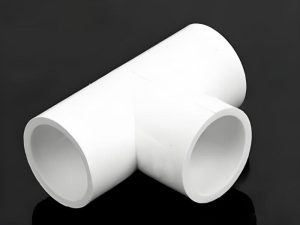
8 inch pvc pipe fittings types
Elbow: used to change the direction of the pipe, common angles are 45° and 90°.
Tee: used for diversion or confluence, divided into equal diameter tees and reducing tees.
Flange: used to connect with valves, pumps and other equipment, easy to disassemble and maintain.
Reducer: used to connect pipes of different diameters, such as DN200 to DN150.
Union: easy to disassemble and assemble the pipe, suitable for systems that require frequent maintenance.
Materials and standards
PVC-U (unplasticized polyvinyl chloride): suitable for normal temperature and low pressure environments, such as drainage systems.
PVC-O (biaxially oriented PVC): higher strength, suitable for high pressure water supply.
PVC-C (chlorinated polyvinyl chloride): resistant to high temperatures, suitable for the chemical industry.
Implementation standards: Common standards include GB/T 10002.1 (water supply), DIN 8061 (European standard), etc.

Application areas of 8 inch pvc pipe fittings
1. Municipal water supply and drainage
8 inch pvc pipe fittings are widely used in urban rainwater and sewage pipe networks. Their inner walls are smooth, reducing fluid resistance and can increase flow efficiency by 10%-15% compared to traditional concrete pipes.
2. Industrial fluid transportation
Chemical industry: acid and alkali resistant, suitable for liquid transportation with a pH value of 2-12.
Mining: used for tailings slurry transportation, wear-resistant design to extend service life.
3. Agricultural irrigation
The PVC pipe system is suitable for field irrigation, and is equipped with flanges or union fittings for easy maintenance and expansion.
4. Building drainage
High-rise buildings use PVC silencer pipe fittings to reduce drainage noise, in line with the “Design Code for Building Water Supply and Drainage”.
Advantages compared to other materials
| Comparison Item | 8 Inch PVC Pipe Fittings | Cast Iron Fittings (Same Spec) | HDPE Fittings |
| Corrosion Resistance | Excellent (Acid and Alkali Resistant) | Poor (Prone to Rust) | Excellent |
| Installation Cost | Low (Solvent/Rubber Ring Connection) | High (Requires Flange Sealing) | Medium (Requires Fusion Machine) |
| Maintenance Difficulty | Low (No Anti-corrosion Needed) | High (Regular Rust Prevention Needed) | Medium |
| Service Life | Over 50 Years | 20–30 Years | Over 50 Years |

Selection and Installation Guide
1. Key Parameters
Pressure level: PN0.6MPa (low pressure), PN1.0MPa (medium pressure), etc.
Ring stiffness: SN8 level is suitable for environments with a burial depth of 3 meters.
Sanitary certification: The water supply system must comply with the GB/T 17219 standard.
2. Connection method
Adhesive connection: Suitable for fixed installation, special PVC glue must be used.
Plug and socket: Allows a certain deflection, suitable for foundation settlement areas.
Flange connection: Easy to disassemble, suitable for industrial systems.
3. Construction precautions
Groove treatment: A sand cushion layer needs to be laid at the bottom to prevent sharp objects from damaging the pipe.
Backfill requirements: Layered compaction, each layer thickness ≤30cm.
Winter construction: When the temperature is below 5℃, the rubber ring needs to be preheated.
8 inch pvc pipe fittings have become the core components of modern pipeline engineering due to their economy, durability and ease of installation. When purchasing, users should select appropriate materials and connection methods according to working conditions (pressure, medium, burial depth), and strictly follow construction specifications to ensure long-term stable operation of the system. For more detailed technical parameters, contact us to obtain a test report


