

In piping systems, reducers are key components for connecting pipes of varying diameters. 6 inch to 3 inch PVC reducers are widely used in industry, construction, and municipal engineering. This article will comprehensively analyze the technical specifications, selection criteria, installation methods, and typical application scenarios of these reducers to help engineers make informed choices.

6-inch to 3-inch PVC Reducer Basics
1. Basic Definition and Function
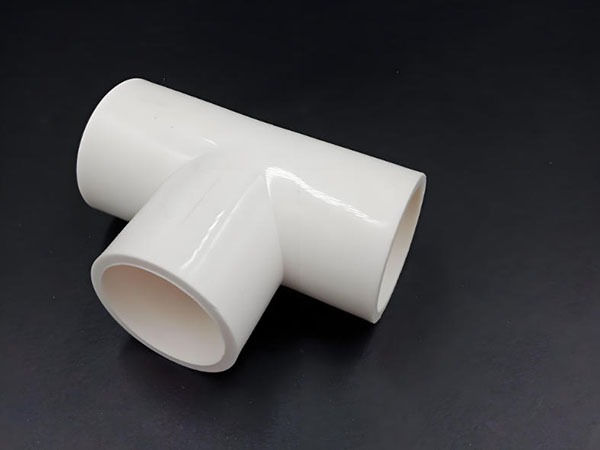
A 6-inch to 3-inch PVC reducer (also known as a reducer or reducer) is a fitting used to connect two PVC pipes of different diameters, gradually transitioning from a 150mm (6-inch) pipe to an 80mm (3-inch) pipe. Its tapered design allows for a smooth change in pipe diameter, effectively reducing fluid resistance and preventing turbulence and pressure loss.
2. Main Types
Based on their structural form, 6″ x 3″ PVC reducers are primarily classified as follows:
Concentric reducers: These reducers have aligned centerlines and are suitable for vertical piping systems.
Eccentric reducers: These reducers have one flat side and are suitable for horizontal piping systems, preventing gas accumulation.
Multi-stage reducers: These reduce the pipe diameter in stages (e.g., 6″ → 4″ → 3″) and are suitable for large-span pipe reductions.
3. Material Properties
Standard 6″ x 3″ PVC reducers are typically made from the following materials:
UPVC (unplasticized polyvinyl chloride): Suitable for conveying water and general chemical liquids at room temperature (0-60°C).
CPVC (chlorinated polyvinyl chloride): Offers higher temperature resistance (up to 93°C) and is suitable for hot water and corrosive media.
SCH40/SCH80: They vary in wall thickness, with SCH80 offering higher pressure resistance.
Technical Parameters and Specifications
1. Dimensions
The main dimensions of the standard 6-inch (150mm) to 3-inch (80mm) PVC reducer are as follows:
| Parameter | 6″ End | 3″ End | Overall Dimensions |
| Outer Diameter (OD) | 168.3 mm | 88.9 mm | Length (L): 150–200 mm |
| Inner Diameter (ID) | 154.1 mm (SCH40) | 77.9 mm (SCH40) | Taper: approx. 15° |
| 146.3 mm (SCH80) | 72.9 mm (SCH80) | Weight: 1.5–2.5 kg |
Note: Dimensions may vary slightly depending on the manufacturer and standards (e.g., ASTM, ISO, GB).
2. Performance Parameters
Pressure Rating:
SCH40: Operating Pressure Approximately 1.0 MPa (10 bar) @ 23°C
SCH80: Operating Pressure Approximately 1.6 MPa (16 bar) @ 23°C
Temperature Range:
UPVC: -10°C to +60°C
CPVC: -20°C to +93°C
Connection Methods:
Solvent Welding (Most Common)
Flange Connection (Large Diameter Applications)
Threaded Connection (Small Volume, Special Applications)

6 inch to 3 inch pvc reducer Selection Guide
1. Key Selection Factors
When selecting a 6″ x 3″ PVC reducer, consider the following factors:
Fluid Characteristics: including chemical compatibility, temperature, pressure, and the presence of abrasive particles
Installation Environment: Indoor/outdoor, underground/aboveground, UV exposure
System Requirements: Whether complete drainage is required (choose an eccentric type), and allowable pressure loss
Standard Compliance: Whether the project requires specific certifications (e.g., NSF, UL, ASTM)
Cost: SCH80 is approximately 30-50% more expensive than SCH40, but has a longer lifespan.
2. Common Mistakes and Avoidance Methods
Mistake 1: Ignoring the Effect of Thermal Expansion → PVC has a linear expansion coefficient of 5 × 10⁻⁵/°C; expansion joints are required for long pipes.
Mistake 2: Using SCH40 for High-Pressure Systems → For pressures exceeding 1.0 MPa, choose SCH80.
Mistake 3: Using a Concentric Reducer for Horizontal Installations → This may cause air blockage; an eccentric type should be selected.
Installation and Maintenance
1. Installation Steps
Solvent Bonding Installation Process:
Cutting Preparation: Use a dedicated PVC cutter to ensure the pipe ends are straight and free of burrs
Surface Cleaning: Use a cleaner to remove grease and dust from the inside and outside of the pipe and fittings
Marking Depth: Mark the insertion depth of the fitting on the pipe (approximately 1/2 the fitting length)
Apply Glue: Quickly and evenly apply the dedicated PVC glue to the outer wall of the pipe and the inner wall of the fitting
Insert and Rotate: Insert immediately and rotate 1/4 turn to ensure even distribution of the glue
Maintaining Pressure: Maintain pressure for 30-60 seconds, let it sit for 15 minutes, and then apply pressure again
2. Installation Precautions
Application is not recommended when the ambient temperature is below 5°C, as this will prolong the curing time of the glue
When installing an eccentric reducer, the straight side should face up (for gas systems) or down (for liquid systems)
For large-diameter (6″) fittings, it is recommended that two people work together to ensure accurate alignment
3. Maintenance Tips
Regularly check the fitting area for cracks, deformation, or leaks
Avoid hitting the PVC fitting with metal tools
When chemically cleaning, confirm that the cleaning agent is compatible with the PVC material
Drain the system in winter to prevent freezing and cracking
Typical Application Scenarios
1. Water Treatment Systems
Sewage Treatment Plants: Connecting Drain Pipes of Different Sizes
Water Supply Systems: Diversion Points from Main Pipelines to Branch Pipelines
Desalination: Applications for Corrosion-Resistant CPVC Reducers
2. Industrial Applications
Chemical Pipelines: Decompression of Systems Transporting Acids, Alkalis, and Other Chemical Media
Ventilation Systems: Connections Between Large Fan Outlets and Smaller Pipelines
Mining Projects: Reduced Diameter Connections for Tailings Pipeline Transport
3. Building and Municipal Services
High-Rise Building Drainage: Connections Between Main and Branch Pipelines
Municipal Stormwater Systems: Interfaces Between Collection Wells and Delivery Pipelines
Fire Protection Systems: Transitions Between Pump Outlets and Distribution Pipelines
Frequently Asked Questions
Q1: What pressure loss will a 6″ x 3″ reducer cause?
A1: The pressure loss depends on the flow rate and the angle of reduction. Generally, a well-designed reducer will produce a pressure loss of approximately 0.1-0.3 bar at normal flow rates (1-2 m/s). Accurate values can be obtained through CFD simulation or by consulting the manufacturer’s data.
Q2: Can SCH40 fittings be mixed with SCH80 pipe?
A2: Not recommended. Pipes of different schedules have different wall thicknesses, and direct connection may cause stress concentration. Instead, use a transition joint or select a reducer with the same schedule as the pipe.
Q3: Can PVC reducers be used in steam pipes?
A3: Standard UPVC is not suitable, as it has a maximum temperature resistance of only 60°C. For steam applications, CPVC (temperature resistance up to 93°C) must be selected or metal fittings must be considered.
As a critical transition component in a piping system, the 6-inch to 3-inch PVC reducer’s proper selection and installation directly impact the efficiency and safety of the entire system. By understanding its technical parameters, mastering the key points of selection, and following the installation regulations, engineers can fully utilize the performance advantages of this connector. With the advancement of materials science and manufacturing technology, PVC reducers will demonstrate their value in a wider range of fields in the future.


