

Basic Concepts and Classifications of High Pressure PVC Fittings
High pressure PVC fittings are polyvinyl chloride pipe connection components specifically designed to withstand higher operating pressures, typically exceeding 1.0 MPa (approximately 145 psi). These fittings differ from standard PVC fittings primarily in their material formulation, wall thickness, and manufacturing process. 1. Classification by Pressure Rating
Class 200: Working Pressure 200 psi (1.38 MPa)
Class 315: Working Pressure 315 psi (2.17 MPa)
Class 450: Working Pressure 450 psi (3.10 MPa)
Schedule 80: Thick-wall design, pressure rating between Class 200 and 450
- Classification by Connection Method
Threaded Connections:
NPT Standard Thread
BSPT Standard Thread
Maximum size typically does not exceed 6 inches
Flanged Connections:
ANSI Class 150/300 Flange
DIN Standard Flange
Suitable for large diameter pipes (4-24 inches)
Socket Bonding Connections:
Solvent Welding Connections
Suitable for small and medium diameters (1/2-12 inches)

Material Characteristics of High-Pressure PVC Fittings
Material Composition
Base Resin: PVC-SG5 or higher
Reinforcement Additives:
Impact Modifier (e.g., CPE, MBS)
Heat Stabilizer (Lead Salt, Calcium-Zinc Composite)
Processing Aid (ACR)
Filler: Calcium Carbonate (strictly controlled content ≤ 5%)
Key Performance Indicators
| Performance Parameter | Test Standard | Typical Value |
| Tensile Strength | ASTM D638 | ≥50 MPa |
| Impact Strength | ASTM D256 | ≥8 kJ/m² |
| Vicat Softening Point | ASTM D1525 | ≥80°C |
| Hydraulic Test | ASTM D1599 | 4 times the working pressure |
Temperature Effect Correction Factor
23°C: 1.00
40°C: 0.75
50°C: 0.62
60°C: 0.50
High-Pressure PVC Pipe Fittings
Common Fitting Types
Elbows:
45°/90° Standard Elbows
Long Radius Elbows (R=1.5D)
Short Radius Elbows (R=1.0D)
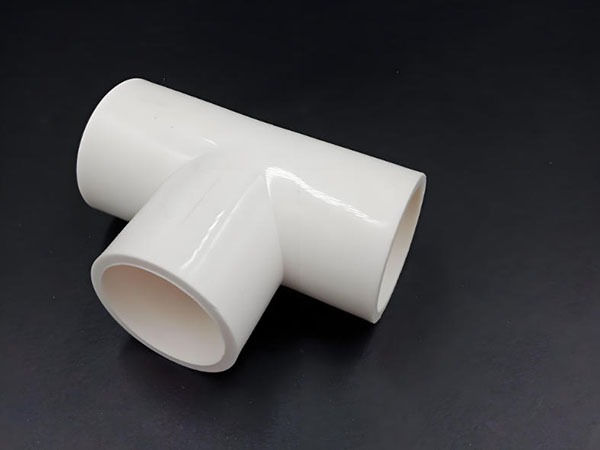
Tees:
Equal Diameter Tees
Reducing Tees
Reinforced Branch Tees
Reducers:
Concentric Reducers
Eccentric Reducers
Flange Adapters:
Neck Flanges
Blind Flanges
Specialty Fittings
Pressure Reducing Tees: Built-in Throttling Device
Energy Dissipating Elbows: Internal Spiral Guide
Seismic Connectors: With Rubber Seals
Test Port Assemblies: Integrated Sampling Valve
Design Standards for High-Pressure PVC Pipe Fittings
International Standards
ASTM D2467: Threaded PVC Pipe Fittings
ASTM D2466: Socket-and-Spigot PVC Pipe Fittings
ISO 4422: PVC Piping Systems for Water Supply
DIN 8061: German High-Pressure PVC Standard
Domestic Standards
GB/T 10002.2: Rigid PVC Pipe Fittings for Water Supply
GB/T 8801: Drop Test for PVC Pipe Fittings
CJ/T 272: Impact-Resistant PVC Pipe Fittings for Water Supply
Wall Thickness Calculation Formula
Use the ISO 4065 standard formula:
t = (P × D) / (2S + P) + C
Where:
t: Minimum design wall thickness (mm)
P: Design pressure (MPa)
D: Outside diameter (mm)
S: Allowable material stress (usually 20 MPa)
C: Additional thickness (usually 0.5-1.0 mm)
Installation Specifications
1. Pre-Installation Preparation
Environmental Requirements:
Ambient Temperature > 5°C
Relative Humidity < 80%
Pipe End Preparation:
30° Chamfer (socket connection)
Cleanliness Inspection of Threaded Sections
Support Spacing:
Horizontal Pipes: One support every 1.5 m
Vertical Pipes: At least one support per floor
2. Connection Technical Key Points
Solvent Bonding:
Use a dedicated PVC adhesive
Apply uniformly
Cure Time (24 hours at full load)
Thread Sealing:
Use PTFE Sealing Tape
Wrapping Direction Same as Thread Thread
Exposed Thread ≤ 2 Threads
Flange Installation:
Diagonal Bolt Tightening Sequence
Torque Control (typically 20-25 N·m)
3. Pressure Test Specifications
Test Medium: Clean Water
Test Pressure: 1.5 Times the Working Pressure
Pressure Holding Time: ≥ 1 Hour
Qualification Criteria: Pressure Drop < 1%

Applications
1. Industrial Applications
Chemical Processes:
Acidic and Alkaline Media Transport (pH 2-10)
Operating Temperature <50°C
Water Treatment Systems:
Reverse Osmosis High-Pressure Pipelines
Ultrafiltration Systems
Compressed Air:
Maximum Operating Pressure 1.0 MPa
Requires an Oil-Water Separator
2. Municipal Engineering
High-Pressure Water Supply:
Main Pipeline Booster Section
Secondary Water Supply Systems
Fire Protection Systems:
Sprinkler System Branches
Fire Hydrant Connection Pipes
3. Special Applications
Mariculture:
Salt Spray Resistant Formula
UV-Resistant Treatment
Mine Drainage:
Abrasion-Resistant Enhanced
Anti-Static Design
Maintenance and Troubleshooting
1. Daily Maintenance Key Points
Regular Inspections:
Check for Leaks at Connections
Check for Loose Brackets
Cleaning Requirements:
Chemical Cleaning Limitations
Mechanical Cleaning Precautions
2. Common Troubleshooting
| Fault Phenomenon | Possible Cause | Solution |
| Leakage at Joint | Inadequate Adhesion | Reapply adhesive or replace the fitting |
| Thread Cracking | Over-tightening | Replace the fitting and use a torque wrench |
| Fitting Deformation | Excessive Temperature | Check the medium temperature and use heat-resistant fittings |

High-pressure PVC fittings selection guide
1. Selection parameter matrix
| Working Condition | Recommended Type | Notes |
| High-pressure corrosive media | Flanged connection type | Optional PTFE lining |
| Frequent disassembly | Quick-release flange type | Check the material of the sealing ring |
| Vibration environment | Anti-vibration joint type | Add additional support points |
2. Economic Analysis
Initial Cost: 30-50% Lower Than Metal Fittings
Life Cycle: Designed for 20 Years
Maintenance Cost: Only 1/3 of Metal Systems
High-pressure PVC fittings, a crucial component of modern piping engineering, have established a comprehensive system for technological development and practical application. With advancements in materials science and increasing engineering demands, high-pressure PVC fittings will continue to evolve towards higher performance, greater environmental friendliness, and greater intelligence.


