

PVC pipes are widely used in modern buildings, municipal drainage, agricultural irrigation, and industrial piping systems. As an indispensable connection and turning component in piping systems, 160mm PVC pipe fittings play a crucial role in medium and large diameter pipeline projects. Whether changing flow direction, branching or converging, or connecting different pipe sections, the quality and matching degree of the fittings directly affect the sealing and stability of the entire system. This article will systematically introduce the types, technical characteristics, application scenarios, installation methods, and selection points of 160mm PVC pipe fittings.
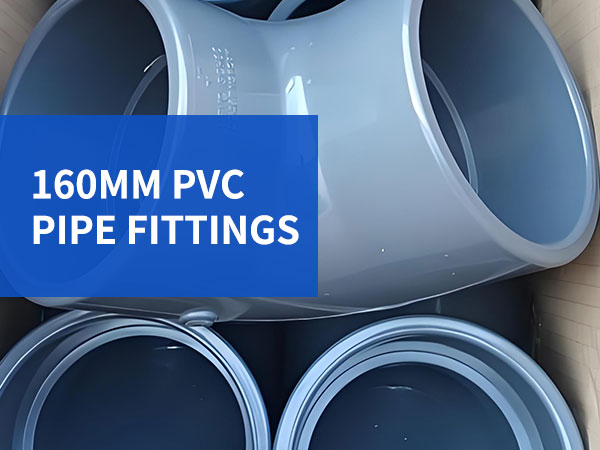
Basic Concepts of 160mm PVC Pipe Fittings
160mm typically refers to PVC pipe fittings with a nominal outer diameter of 160 millimeters, commonly found in municipal drainage systems and large-scale building projects. This specification is more common in European and Asian markets and is mostly manufactured according to metric standards, such as conforming to relevant ISO or EN standards.
In drainage systems, 160mm is considered a medium to large diameter, capable of meeting high flow discharge requirements, and is commonly used for:
Main building drainage pipes
Residential or factory rainwater trunk lines
Municipal sewage branch lines
Common Types of 160mm PVC Pipe Fittings
160mm PVC pipe fittings come in a variety of types and can be categorized according to their function:
1. Elbow: Used to change the direction of pipe flow. Common angles include:
45° elbow
90° elbow. In drainage systems, 45° elbows are more effective in reducing water flow impact and the risk of blockage.
2. Tee: Used for pipe branching or merging. Types include:
Equal diameter tee
Reducing tee. Suitable for connecting branch pipes to main pipes.
3. Coupling: Used to connect two sections of 160mm PVC pipe of the same size. It is one of the most basic connectors.
4. Reducer: Used for converting between different pipe diameters, such as 160mm to 110mm.
5. Cleanout: Used for later maintenance and cleaning of pipe blockages, especially important in underground drainage systems.
6. Flange: Used to connect to pumps, valves or other equipment for easy disassembly and maintenance.

Technical Performance Characteristics
1. Excellent Corrosion Resistance
The 160mm PVC pipe fittings are made of the same material as the PVC pipes, exhibiting excellent acid and alkali resistance. They are not easily corroded by sewage or soil, making them suitable for long-term underground use.
2. High Strength and Impact Resistance
Medium and large diameter pipe fittings need to withstand certain soil pressure and water flow impact. High-quality PVC pipe fittings use a high-strength formula, maintaining good structural stability.
3. Good Sealing Performance
Matching rubber sealing rings or adhesive connections effectively prevents leakage, ensuring the closed-loop operation of the drainage system.
4. Lightweight and Easy to Install
Compared to cast iron pipe fittings, PVC pipe fittings are lighter and easier to install, making them particularly suitable for large residential communities or municipal projects.
Connection Methods and Construction Procedures
The main connection methods for 160mm PVC pipe fittings include the following:
1. Socket Rubber Ring Connection
This is the most common connection method in drainage systems. Advantages include:
Quick installation
Some expansion and contraction compensation capability
Suitable for underground installation
During installation, ensure the sealing ring is correctly positioned and apply lubricant to the socket.
2. Adhesive Connection
Suitable for some pressure or indoor drainage systems. Uses PVC-specific solvent adhesive; simple to operate, but attention must be paid to the curing time.
3. Flange Connection
Used for equipment interfaces or locations requiring frequent disassembly and assembly; reliable sealing and convenient maintenance.
Main Application Areas
1. Building Drainage Systems
In high-rise buildings and commercial complexes, 160mm PVC pipe fittings are commonly used for:
Main drainage riser connections
Basement drainage systems
Rainwater pipe diversion
2. Municipal Sewage Systems
In residential areas or industrial parks, 160mm diameter is suitable for medium-sized sewage discharge systems and is an important specification for connecting branch lines to main lines.
3. Agricultural Drainage and Irrigation
In farmland drainage systems, 160mm pipe fittings are used for connecting main drainage ditches to improve drainage efficiency.
4. Industrial Plant Drainage
In chemical, food, and light industrial plants, this size of pipe fitting is suitable for discharging general corrosive wastewater.

Selection Considerations
When selecting 160mm PVC pipe fittings, pay close attention to the following factors:
Standard Matching: Ensure the fitting and pipe meet the same standards and are dimensionally consistent.
Wall Thickness Rating: Select matching products based on the pipe pressure rating.
Sealing Method: Rubber ring connections are preferred for underground projects.
Operating Environment: For long-term outdoor exposure, UV resistance is necessary.
Brand and Quality Certifications: High-quality products reduce future maintenance risks.
Comparison with Fittings of Other Materials
| Comparison Item | PVC Fittings | Cast Iron Fittings | Steel Fittings |
| Corrosion Resistance | Excellent | Prone to corrosion | Prone to corrosion |
| Weight | Light | Heavy | Relatively heavy |
| Installation Efficiency | High | Relatively low | Medium |
| Cost | Economical | Relatively high | Relatively high |
| Maintenance Cost | Low | Relatively high | Relatively high |
From a comprehensive performance and cost perspective, PVC pipe fittings offer significant advantages in medium-pressure and drainage systems.
160mm PVC pipe fittings, as a crucial component of medium to large-scale drainage systems, play a key role in the building, municipal, and industrial sectors. Their strong corrosion resistance, ease of installation, and reasonable cost make them an irreplaceable core component in modern drainage engineering. Through proper selection and standardized construction, the safety and service life of the entire piping system can be effectively improved, providing a stable and reliable solution for engineering projects.


