

In modern industrial piping systems, high-density polyethylene (HDPE) pipes are widely used in water supply, drainage, chemical industry, oil and gas transportation due to their excellent corrosion resistance, light weight, flexibility and long life. However, the connection between HDPE pipes and traditional metal pipes has always been a major challenge in engineering applications. HDPE stub ends combined with flange connection technology provide an efficient and reliable solution to ensure the sealing, stability and maintainability of the pipeline system. This article will explore in depth Why HDPE Stub Ends Are Essential for Flanged Piping Solutions.
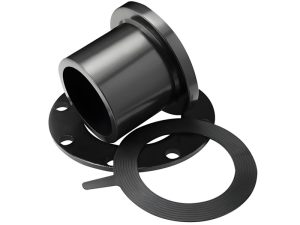
Definition and Structure of HDPE Stub Ends
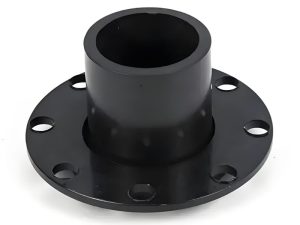
HDPE stub ends are a type of HDPE pipe fitting specially designed for flange connection. They are usually made of HDPE material, with a flat or beveled end at one end and a flange adapter structure at the other end. Its main function is to establish a transition connection between the HDPE pipe and the metal flange to ensure that the two pipes of different materials can be tightly and stably connected.
Structural features of stub ends
HDPE end: connected to the HDPE pipe by hot-melt or electric-melt connection to ensure no leakage.
Flange end: usually equipped with a stainless steel or carbon steel flange back ring, fixed to the metal flange by bolts to provide mechanical strength and sealing.
Why HDPE Stub Ends Are Essential for Flanged Piping Solutions
1. Solve the connection problem of pipes of different materials
The physical and chemical properties of HDPE pipes are quite different from those of traditional metal pipes (such as carbon steel and cast iron). Direct connection is prone to leakage or failure due to thermal expansion and contraction, vibration or pressure changes. As a transition piece, HDPE stub ends can effectively relieve the stress between different materials and improve the reliability of the system.
2. Enhance the sealing of the pipeline system
The combination of HDPE stub ends and metal flanges uses highly elastic sealing gaskets (such as EPDM or NBR) to adapt to pressure fluctuations and temperature changes in the pipeline system and prevent medium leakage. Compared with traditional mechanical connection methods, this design can significantly reduce the risk of leakage.
3. Improve the seismic and deformation resistance of the pipeline system
HDPE material itself has high flexibility, while metal flanges provide rigid support. The combined design of the stub ends enables the pipeline system to withstand high pressure and adapt to external loads such as foundation settlement and earthquakes, reducing the risk of pipeline rupture.
4. Easy maintenance and disassembly
When the pipe needs to be repaired or replaced, the flange connection can be quickly disassembled, and the design of the HDPE short pipe end allows the HDPE pipe section to remain intact, avoiding material waste caused by cutting or welding.
Application scenarios
1. Chemical and petroleum industry
In the transportation of corrosive media, HDPE pipes are acid and alkali resistant, and the short pipe end flange connection ensures compatibility with metal valves, pumps and other equipment.
2. Municipal water supply and drainage system
HDPE pipes are used for tap water and sewage transportation, and the short pipe end flange connection is convenient for docking with existing cast iron or steel pipe systems.
3. Marine and shipbuilding engineering
Seawater is highly corrosive, and HDPE short pipe ends can reduce the rust of metal parts and extend the life of the pipeline.
4. Mining and industrial pipelines
In high-pressure and high-wear environments, HDPE short pipe ends provide a reliable connection method to reduce leakage and maintenance frequency.
Advantages of HDPE short pipe ends over traditional connection methods
| Comparison Item | HDPE Short Pipe End + Flange Connection | Traditional Mechanical Connection (e.g., Clamp, Threaded) |
| Sealing Performance | High (elastic gasket + bolt tightening) | Moderate (depends on rubber rings or threaded seals) |
| Seismic Resistance | Excellent (HDPE flexibility + flange rigidity) | Poor (prone to loosening or cracking) |
| Corrosion Resistance | Excellent (HDPE chemical resistance) | Depends on metal material, prone to rust |
| Installation Ease | Requires professional fusion equipment, but highly reliable long-term | Simple installation, but prone to leakage |
| Maintenance Cost | Low (detachable, easy replacement) | High (frequent maintenance needed) |

How to correctly select and install HDPE short pipe ends
1. Choose the appropriate short pipe end specifications
Choose matching flange standards (such as ANSI, DIN, GB) according to the pipeline pressure level (such as PN10, PN16).
Ensure the welding compatibility of HDPE pipe and short pipe ends (such as SDR11, SDR17).
2. Installation steps
Cutting and beveling: Make sure the HDPE pipe end is flat and free of burrs.
Hot-melt butt: Use a special hot-melt machine to fuse the short pipe end with the HDPE pipe.
Flange assembly: Install the back ring flange and tighten it symmetrically with bolts to avoid eccentric loading.
Pressure test: After completing the installation, perform water pressure or air pressure test to ensure no leakage.
3. Common problems and solutions
Leakage: Check whether the gasket is aged and whether the bolts are evenly tightened.
Flange misalignment: Adjust the pipeline support to avoid external force distortion.
HDPE end cracking: Ensure that the hot-melt temperature and time meet the standards.
HDPE short pipe ends play a vital role in flange pipeline systems. They not only solve the connection problem between HDPE and metal pipes, but also improve the sealing, seismic resistance and maintainability of the system. With the increasing requirements for pipeline reliability in engineering applications, HDPE short pipe end flange connection technology will become one of the mainstream solutions for future pipeline systems. Correct selection, installation and maintenance of short pipe ends can significantly reduce pipeline failure rates, extend service life, and provide lasting protection for pipeline projects in industrial, municipal and special environments.


