

Definition of Standard Dimension Ratio (SDR)
Standard Dimension Ratio (SDR) is a core parameter in the pipeline manufacturing industry, specifically used to describe the ratio between the outer diameter and wall thickness of plastic pipes. Its calculation formula is:
SDR = Outer Diameter (OD) / Wall Thickness (WT)
In pipeline manufacturing, the SDR system provides a standardized wall thickness selection scheme, enabling manufacturers to:
Ensure the structural integrity of the pipeline at different pressure levels
Achieve interchangeability of pipes from different manufacturers
Simplify the engineering design selection process
Optimize material utilization efficiency
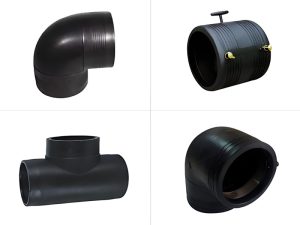
SDR application practice in pipeline manufacturing
1. Standard dimension ratio series of common pipes
Plastic pipes of different materials use standardized SDR sequences:
| Pipe Material Type | Common SDR Series | Typical Application Scenarios |
| HDPE Pipe | SDR11, SDR17, SDR26 | Water supply, gas transmission |
| PVC Pressure Pipe | SDR13.5, SDR21, SDR26 | Municipal water supply systems |
| PPR Pipe | SDR6, SDR7.4, SDR9 | Building hot/cold water systems |
2. The relationship between SDR and pressure level
The SDR value directly determines the rated pressure (PN) of the pipeline:
The smaller the SDR → the thicker the wall → the stronger the pressure bearing capacity
The larger the SDR → the thinner the wall → the lower the pressure bearing capacity
For example, HDPE pipe:
SDR11 corresponds to PN16 (1.6MPa)
SDR17 corresponds to PN10 (1.0MPa)
SDR26 corresponds to PN6 (0.6MPa)
Key Differences Between SDR and DR
While both SDR and Dimension Ratio (DR) represent the ratio of outside diameter to wall thickness, there are important differences:
| Comparison Item | SDR | DR |
| Standard System | ISO/EN Standards | ASTM Standards |
| Calculation Basis | Nominal Outer Diameter | Minimum Outer Diameter |
| Number Sequence | Preferred Number Series (e.g., 11,17,26) | Continuous Values |
| Application Region | International (Primarily Europe/Asia) | North American Market |
| Safety Factor | Includes Safety Margin | Based on Minimum Requirements |
Project impact:
Under the same value, the actual wall thickness of DR pipe is thinner than that of SDR pipe
American standard projects need to pay special attention to DR requirements
International projects usually give priority to the SDR system.

Method for determining pipeline standard dimension ratio
1. Design calculation method
According to ISO 12162 standard, SDR selection must meet the following requirements:
Copy
SDR ≤ 2×σs/(P×C) +1
Where:
σs: Long-term hydrostatic strength of material (MPa)
P: Design working pressure (MPa)
C: Overall service factor (safety factor)
2. Standard comparison method
Directly refer to industry specifications for selection:
GB/T 13663 (PE pipe for water supply): specifies SDR11/17/26 series
ISO 4427: gives SDR values corresponding to different pressure levels
EN 12201: European water supply pipe SDR selection standard
3. Working condition adjustment factors
Additional considerations are required:
Temperature correction (SDR needs to be reduced in high temperature environment)
Ring stiffness requirements for underground laying
Fluid properties (corrosive media need to increase wall thickness)
Key points of SDR control on the manufacturing side
Key measures to ensure SDR accuracy during pipeline production:
Mold management: Regularly check the wear of the die and core rod
Online monitoring: Use a laser diameter gauge to monitor the outer diameter/wall thickness in real time
Process control: Adjust the extrusion speed and the traction speed ratio (BUR)
Test verification: Conduct hydraulic tests on each batch to verify the pressure bearing capacity
Correctly understanding and applying the SDR system can not only ensure the quality of pipeline products, but also enhance the technical advantages of enterprises in the global market competition.


