

PVC pressure pipe fittings are an indispensable component in modern water supply, industrial transportation, and agricultural irrigation systems. They are used to connect, turn, divert, or seal pressure pipelines, ensuring the safe and stable transport of fluids under specified pressure.
Compared to ordinary drainage PVC fittings, pressure-grade PVC fittings have higher requirements in terms of structural strength, pressure resistance, and sealing performance, and are therefore widely used in water supply projects, industrial fluid systems, water treatment projects, and high-pressure irrigation systems.
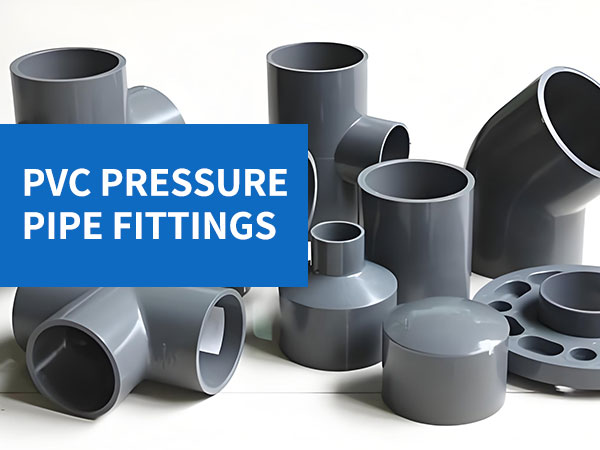
What are PVC Pressure Pipe Fittings?
PVC pressure pipe fittings refer to polyvinyl chloride fittings specifically designed for pressure-bearing pipeline systems. These fittings are typically used with pressure-rated PVC pipes (such as PN10, PN16, or Schedule 40/80) for transporting water or other liquids under pressure.
The biggest difference between them and drainage fittings is:
| Item | Drainage PVC Fittings | PVC Pressure Fittings |
| Pressure Rating | Non-pressure or low pressure | Specifically designed for pressure applications |
| Wall Thickness | Thinner | Thicker and more robust |
| Sealing Requirement | General sealing | High sealing performance required |
| Connection Methods | Mainly socket (push-fit) | Socket, flange, threaded, etc. |
Main Types of PVC Pressure Pipe Fittings
PVC pressure pipe fittings are diverse, meeting the connection needs of complex piping systems:
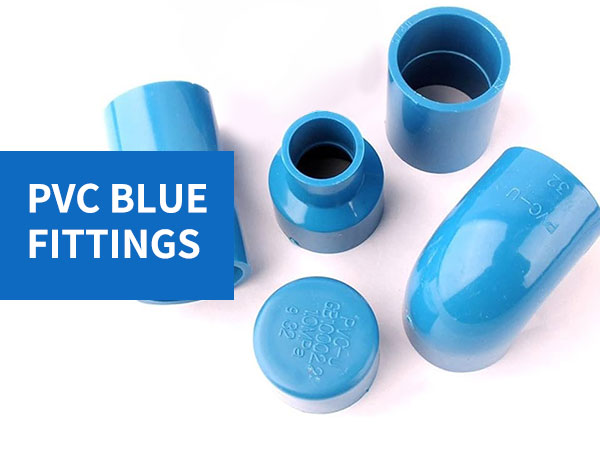
Elbow: Used to change the direction of water flow, commonly available in 45° and 90° angles.
Tee: Used to split a main pipe into two branch pipes, widely used in branch water supply systems.
Cross: Used for multi-directional flow splitting, more common in large systems.
Coupling: Used to connect two straight pipe sections, the most basic connector.
Reducer: Connects pipes of different diameters, achieving flow or pressure transitions.
Flange: Used for detachable connections, facilitating equipment maintenance and replacement.
Union: Facilitates pipe disassembly and maintenance, highly practical at equipment connections.
Key Advantages of PVC Pressure Fittings:
1. Excellent Pressure Resistance: PVC pressure fittings can withstand pressure ratings of PN6, PN10, PN16, and even higher, depending on the standard, making them suitable for medium to high pressure water transmission systems.
2. Outstanding Corrosion Resistance: PVC material exhibits excellent resistance to various acids, alkalis, salts, and chemical solutions, making it particularly suitable for:
Water treatment systems
Chemical liquid transportation
Agricultural fertilization systems
Compared to metal fittings, they will not rust or undergo electrochemical corrosion.
3. Smooth Inner Wall, Low Flow Resistance: The smooth inner surface of PVC fittings prevents scaling, helping to reduce head loss and improve transmission efficiency.
4. Lightweight and Easy to Install: PVC pressure fittings are much lighter than metal fittings, making transportation, handling, and installation easier and significantly reducing construction costs.
5. Long Service Life: Under normal operating conditions, PVC pressure fittings can last for more than 20 years, requiring minimal maintenance.
Common Connection Methods
Solvent Cement Joint: The most common connection method, using specialized PVC adhesive to fuse the pipe and fitting together. It offers good sealing and is suitable for permanent connections.
Rubber Ring Joint: Used in some large-diameter pressure systems. It offers quick installation and some flexibility.
Flanged Joint: Commonly used for connecting pumps, valves, or equipment, facilitating disassembly and maintenance.
Threaded Joint: Suitable for small-diameter systems, easy to assemble and disassemble, but requires high-quality sealing materials.

Application Areas
Urban Water Supply Systems: Used for tap water delivery and secondary water supply networks; safe and hygienic, does not affect water quality.
Agricultural Irrigation: Widely used in sprinkler, drip, and high-pressure water delivery systems; resistant to fertilizer corrosion.
Industrial Fluid Transportation: Used in cooling water systems, process water systems, and some chemical fluid transportation.
Water Treatment Engineering: PVC pressure fittings provide stable and reliable connections in filtration, dosing, and circulating water systems.
Comparison of PVC Pressure Fittings and Metal Fittings:
| Comparison Item | PVC Pressure Fittings | Metal Pipes |
| Corrosion Resistance | Excellent | Prone to corrosion, requires protection |
| Weight | Light | Heavy |
| Installation Difficulty | Low | High |
| Cost | Relatively low | Relatively high |
| Maintenance Cost | Low | High |
| Conductivity | Non-conductive | Conductive |
Therefore, PVC pressure pipe fittings are a more economical choice for most water supply and non-high-temperature industrial applications.
Selection and Usage Precautions
1. Confirm Pressure Rating: Select fittings with a matching PN rating based on the system’s operating pressure.
2. Avoid High-Temperature Environments: The applicable temperature for PVC is generally no more than 60°C.
3. Use Adhesive Correctly: Use PVC adhesive of the matching specification when using solvent bonding.
4. Prevent Prolonged Exposure to UV Rays: For outdoor use, a protective layer or shielding is recommended.
5. Select Standard Products: High-quality fittings should conform to ISO, ASTM, or national standards.
PVC pressure pipe fittings, with their advantages of high pressure resistance, corrosion resistance, light weight, easy installation, and low cost, have become the mainstream connection solution for modern pressure piping systems. Whether for urban water supply, agricultural irrigation, or industrial fluid transportation, PVC pressure pipe fittings provide long-term stable, safe, and reliable connection performance.
With proper selection and standardized installation, PVC pressure pipe fittings can not only improve system efficiency but also significantly reduce maintenance and replacement costs, making them a cost-effective piping connection solution.


