

Core Requirements for Pipe Fittings in the Oil and Gas Industry
The oil and gas industry is a typical high-risk, high-tech, and high-investment industry. Its transported media typically exhibit characteristics such as high pressure, high temperature, strong corrosiveness, and flammability/explosiveness. Therefore, pipe fittings for the oil and gas industry require extremely high standards. Pipe fittings not only serve the functions of connection, turning, branching, and flow control, but also directly affect the safety, sealing, and long-term operational stability of the entire pipeline system.
Commonly used pipe fittings in oil and gas exploration, production, gathering, transportation, storage, and terminal distribution include: Elbows, Tees, Crosses, Reducers, Flanges, Caps, and Couplings. The selection of pipe fitting materials varies significantly depending on the operating conditions and the media being transported.
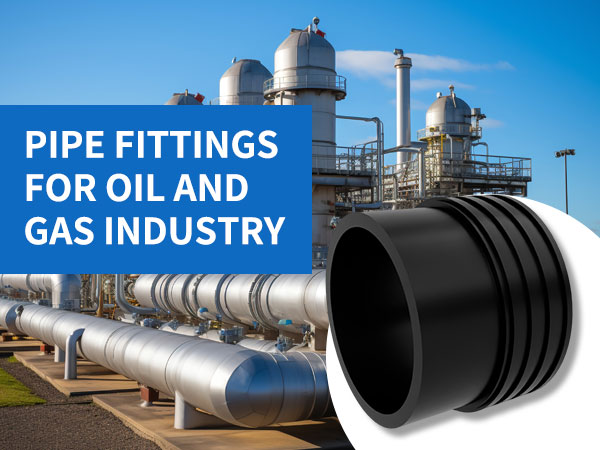
Overview of Traditional Oil and Gas Pipeline Materials
In high-pressure, high-temperature trunk oil and gas pipelines, carbon steel, stainless steel, and alloy steel pipe fittings still dominate, especially suitable for:
Long-distance transportation of crude oil and natural gas
High-temperature and high-pressure wellhead systems
Offshore oil and gas platforms
However, in auxiliary systems, non-trunk pipelines, and low-pressure applications in the oil and gas industry, non-metallic pipe fitting materials are rapidly developing, with HDPE and PVC pipe fittings becoming increasingly widely used.
Applications of HDPE Pipe Fittings in the Oil and Gas Industry
1. Material Advantages of HDPE Pipe Fittings
HDPE (High-Density Polyethylene) pipe fittings possess the following significant characteristics:
Excellent Corrosion Resistance
Unaffected by crude oil, natural gas associated water, salt, and acid/alkali media, making them particularly suitable for highly corrosive oilfield environments.
High Toughness and Impact Resistance
Maintaining good flexibility even at low temperatures, suitable for oil and gas projects in cold regions.
Leak-Free Hot-Melt Connection
Connected via butt welding or electrofusion, forming an integrated system, significantly reducing the risk of leakage.
Lightweight and High Construction Efficiency
Compared to metal pipe fittings, HDPE pipe fittings are faster to install, significantly reducing construction and maintenance costs.
2. Typical Oil and Gas Applications of HDPE Pipe Fittings
In the oil and gas industry, HDPE pipe fittings are commonly used in:
Oilfield produced water and reinjection water pipelines
Natural gas low-pressure gathering and transportation systems
Non-pressurized or medium-low pressure auxiliary pipelines in crude oil transportation
Chemical reagent transportation systems
Oil and gas field surface pipelines and temporary pipelines
Common HDPE pipe fittings include: HDPE elbows, HDPE tees, HDPE reducers, HDPE electrofusion fittings, etc.

Applications of PVC Pipe Fittings in the Oil and Gas Industry
1. Material Characteristics of PVC Pipe Fittings
PVC (polyvinyl chloride) pipe fittings are primarily used in low-temperature, low-pressure, and non-critical operating systems in the oil and gas industry. Their advantages mainly lie in:
Good Chemical Resistance:** Resistant to various acids, alkalis, and salts, suitable for oil and gas chemical supporting systems.
Significant Cost Advantage: Compared to metals and some engineering plastics, PVC pipe fittings offer higher cost-effectiveness.
Easy Installation: Adhesive or rubber ring connections are suitable for rapid construction.
Insulation and Corrosion Protection: Suitable for cable protection and auxiliary facility pipeline networks.
2. Main Uses of PVC Pipe Fittings in the Oil and Gas Industry
PVC pipe fittings are commonly used in the oil and gas sector for:
Oil and Gas Field Drainage and Sewage Systems
Cooling Water and Circulating Water Pipelines
Chemical Auxiliary Pipelines
Cable Protection Conduit Systems
Temporary Construction Pipe Networks
Common PVC pipe fittings include:
PVC Elbows,
PVC Tees,
PVC Straps,
PVC Flanges, etc. It is important to note that PVC pipe fittings are not suitable for high-temperature, high-pressure, and flammable gas main transmission pipelines; selection must strictly adhere to design specifications.
Comparison of HDPE and PVC pipe fittings
| Comparison Item | HDPE Pipe Fittings | PVC Pipe Fittings |
| Pressure Resistance | Medium (up to PN16 and above) | Relatively low |
| Temperature Resistance | -40°C to 60°C | Generally ≤ 45°C |
| Flexibility | Excellent | Poor |
| Connection Method | Butt fusion / Electrofusion | Solvent cement / Rubber ring |
| Suitability for Oil & Gas Industry | Wide application | Mainly for auxiliary systems |
| Cost | Medium | Lower |

How to choose the right pipe fitting material?
When selecting suitable pipeline materials for oil and gas projects, the following factors should be considered comprehensively:
Operating pressure and temperature
Corrosivity and chemical properties of the transported medium
Project lifespan and maintenance costs
Installation environment (onshore, offshore, low-temperature regions)
Relevant international standards (API, ISO, ASTM, etc.)
HDPE pipe fittings are more suitable for long-term operation and systems with high requirements for sealing and corrosion resistance; PVC pipe fittings have significant advantages in cost control and non-critical pipelines.
As the oil and gas industry continues to increase its requirements for safety, environmental protection, and cost control, the selection of pipeline materials is showing a diversified trend. In addition to traditional metal pipe fittings, HDPE and PVC pipe fittings have become an important supplement that cannot be ignored in the oil and gas industry. Reasonable selection, scientific design, and strict construction will help improve the overall reliability and economy of oil and gas pipeline systems.


