

Polyethylene (PE) pipes are widely used in water supply, irrigation, and natural gas transmission systems due to their corrosion resistance, lightweight nature, and good flexibility. Sealing pipe fittings is a critical step in ensuring the safe operation of the system; poor sealing can lead to leaks, pressure drops, and even safety hazards. Therefore, understanding how to properly seal polyethylene pipe fittings is essential.
This article will systematically explain “How to seal poly pipe fittings” from multiple perspectives, including sealing principles, commonly used materials, operating methods, precautions, and common problems, helping construction personnel and engineering technicians master the correct methods.
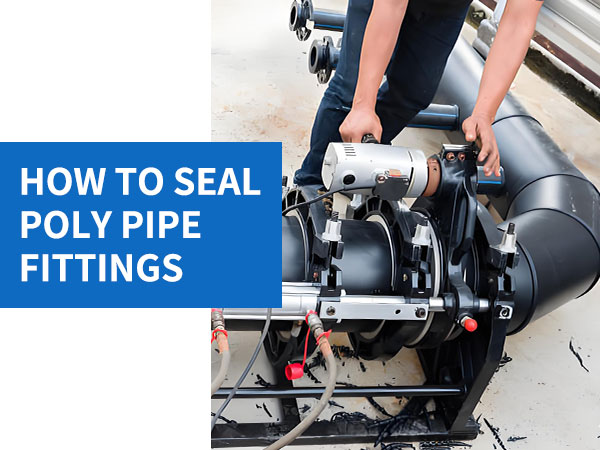
The Sealing Principle of Polyethylene Pipe Fittings
Polyethylene pipe fittings primarily rely on two sealing methods: mechanical seals and chemical seals.
Mechanical Seals: These utilize the fitting’s own rubber sealing ring (O-ring) or threaded connection, forming a seal through compression.
Commonly found in PE joints, quick-connect fittings, and socket fittings.
Chemical Seals: These use specialized adhesives or heat fusion welding to create an integral seal between the fitting and the pipe.
Suitable for PE heat fusion fittings, socket or flange connections.
The correct selection of the sealing method depends on the pipe type, working pressure, temperature, and medium.
Common Materials for Sealing Polyethylene Pipe Fittings
1. O-ring (O-ring)
Material is usually EPDM, NBR, or rubber composite material.
Features: Good elasticity, corrosion resistance, and resistance to temperature changes.
Application: Apply a small amount of lubricant (such as silicone grease) before installation to improve the sealing effect.
2. Chemical Sealant
Used for thermoforming welding or chemical bonding.
Features: High pressure resistance, corrosion resistance, and long-term reliability.
Note: Cannot replace mechanical seals; use strictly according to the manufacturer’s instructions.
3. PTFE Thread Seal Tape
Mainly used for threaded connections (such as PE threaded joints).
Features: Easy to operate and removable.
Application: Wrap 2-3 layers along the thread, clockwise, avoiding covering the sealing surface.

How to Seal Poly Pipe Fittings (Common Methods)
Method 1: Mechanical Seal (O-ring or Rubber Ring Seal)
Check that the pipe fitting seal is intact, without cracks or gaps.
Apply a suitable amount of lubricant to the seal.
Insert the fitting into the pipe port and push evenly to ensure the seal is fully engaged in the joint groove.
For pressure-bearing systems, gently tap or rotate to ensure a secure connection.
Advantages: Easy to install and disassemble.
Applicable Scenarios: Water pipes, irrigation systems, low-pressure gas pipelines
Method 2: Hot Melt Welding Seal
Clean the pipe and fitting ports, ensuring they are free of dust and oil.
Use a dedicated hot melt welding machine to heat the fitting joint and pipe port.
After heating to the specified temperature, immediately insert the fitting, maintain pressure, and wait for cooling.
After cooling, check that the joint is smooth and without visible gaps.
Advantages: Reliable seal, high pressure resistance, suitable for long-term use.
Applicable Scenarios: High-pressure water supply pipelines, gas pipelines, industrial liquid transportation
Method 3: Threaded Connection Seal
Clean the thread surface.
Wrap PTFE tape or threadlocker around the threads 2–3 times. First, screw the fitting clockwise and tighten until it feels stable to the touch.
For pressure systems, a torque wrench can be used to control the tightening force to prevent overtightening and damage to the seal.
Advantages: Simple operation, detachable.
Applicable scenarios: Detachable pipes, instrument interfaces.
Precautions for Sealing Polyethylene Pipe Fittings
Sealing Ring Selection: Select the appropriate material (EPDM, NBR, etc.) based on the medium, pressure, and temperature.
Lubricant Use: Use a lubricant compatible with the pipe material to avoid chemical corrosion.
Joint Cleaning: Clean the pipe ports and the inner surface of the fittings before installation.
Avoid Overtightening: Overtightening mechanical seals or threaded connections may cause fitting deformation or leakage.
Cooling and Curing: Allow the specified cooling time after hot-melt welding before applying pressure.
Pressure Testing: Perform a system pressure test after installation to ensure no leaks.

Common problems and solutions
| Problem | Cause | Solution |
| Joint leakage | Damaged sealing ring or improper installation | Replace the sealing ring and reinstall correctly |
| Threaded joint leakage | Insufficient PTFE tape or incorrect wrapping direction | Rewrap PTFE tape in a clockwise direction |
| Cracked heat fusion joint | Excessive heating temperature or over-insertion | Control fusion temperature and follow manufacturer’s guidelines |
| Pipe pressure drop | Poor sealing or loose connections | Inspect all joints and reseal or tighten as needed |
Sealing polyethylene pipe fittings is a crucial step in ensuring the safe operation of a system. Choosing appropriate sealing methods and materials, and strictly adhering to construction specifications, can effectively prevent leaks and extend the service life of the pipeline.
Mechanical seals: Simple to operate, suitable for low-pressure systems.
Thermofusion welding: High pressure resistance, suitable for high-pressure or hot water systems.
Threaded connections: Removable, suitable for instrumentation or temporary piping.
Understanding the methods and precautions for sealing poly pipe fittings can guarantee the long-term stable and safe operation of polyethylene piping systems and reduce maintenance costs.


