

Material properties of HDPE valves and fittings
HDPE (high-density polyethylene) is a thermoplastic with excellent chemical stability, corrosion resistance, high toughness and lightweight characteristics. It is widely used in water supply and drainage, gas transmission, chemical industry and other fields. The main advantages of HDPE valves and fittings include:
Strong corrosion resistance: HDPE has strong tolerance to acids, alkalis, salts and organic solvents, and is suitable for corrosive environments such as chemical industry and sewage treatment.
Lightweight: The density is only 0.94–0.96 g/cm³, which is easy to transport and install, reducing construction costs.
Good flexibility: It can adapt to foundation settlement and reduce the risk of rupture of the pipeline system due to external forces.
Long life: Under normal use conditions, the life of HDPE valves can reach more than 50 years, which is much higher than that of metal valves.
Main types of HDPE valves
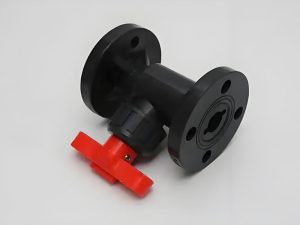
1. HDPE ball valve
Structural features: It adopts full-diameter design with low flow resistance and is suitable for large flow transmission systems.
Reinforcement method: Some HDPE ball valves adopt steel mesh reinforcement structure to improve creep resistance and mechanical strength.
Connection method: hot-melt butt, electric fusion connection or flange connection to ensure sealing.
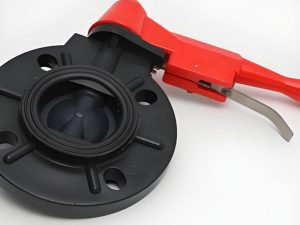
2. HDPE butterfly valve
Applicable scenarios: mainly used for large-diameter pipes (such as municipal drainage and irrigation systems).
Drive mode: manual, electric or pneumatic, can be selected according to needs.
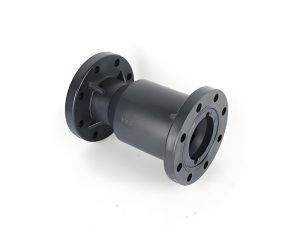
3. HDPE check valve
Function: prevent medium backflow, commonly used in pumping stations, sewage treatment plants, etc.
Structural optimization: Some new HDPE check valves adopt low water resistance design to reduce energy consumption.
4. Special purpose HDPE valves
Methane collection valve: used for biogas projects, with explosion-proof and corrosion-resistant characteristics, some designs are equipped with inert gas detection systems to improve safety.
Chemical special valve: suitable for strong acid and strong alkali media, made of high-purity HDPE materials.
Manufacturing process of HDPE valves
1. Injection molding
Applicable products: small HDPE ball valves, pipe fittings, etc.
Process optimization: Use CAE (computer-aided engineering) simulation to optimize injection molding parameters, reduce shrinkage deformation, and improve product precision.
2. Steel-plastic composite reinforcement
Reinforcement method: Embed a steel mesh or metal skeleton inside the HDPE valve to improve pressure bearing capacity.
Application case: The steel-plastic composite control valve is used in the maintenance of the HDPE unit of Sinochem Quanzhou Petrochemical to improve pressure resistance.
3. Hot melt welding
Connection technology: The connection between HDPE valves and pipelines is usually hot melt welding to ensure no leakage.
Quality control: The welding temperature, pressure and time must be strictly controlled to avoid false welding or over-melting.
Application scenarios
1. Municipal water supply and drainage
Advantages: corrosion resistance, water hammer resistance, suitable for urban water supply and rainwater drainage systems.
Case: The application of HDPE spiral silent drainage pipe system in building drainage to reduce noise pollution.
2. Petrochemical
Applicability: chemical corrosion resistance, suitable for acidic and alkaline medium transportation.
Case: Sinochem Quanzhou Petrochemical HDPE unit uses special control valves to improve system stability.
3. Gas transportation
Safety requirements: must comply with special gas standards, such as PE100 grade materials, to ensure long-term pressure resistance.
4. Agricultural irrigation
Lightweight design: easy to install and maintain, suitable for drip irrigation and sprinkler irrigation systems.
Economic comparison
| Indicator | HDPE Valve | Metal Valve (e.g., Cast Iron, Stainless Steel) |
| Initial Cost | Lower | Higher |
| Installation Cost | Low (heat fusion connection) | High (flange/threaded connection) |
| Maintenance Cost | Low (corrosion-resistant) | High (prone to rust) |
| Lifespan | Over 50 years | 20–30 years |
HDPE valves and fittings are widely used in municipal, chemical, agricultural and other fields due to their advantages of corrosion resistance, light weight and long life. In the future, with the progress of material science and manufacturing technology, HDPE valves will develop in the direction of high performance and intelligence, further expanding their application in high-end industrial fields. Enterprises should pay attention to the update of industry standards and optimize production processes to meet market demand.


