

As the key connection components in high-density polyethylene pipe systems, HDPE pipe flanges play a vital role in pipeline engineering. Different from traditional metal flanges, HDPE flanges are designed for plastic pipe systems, taking full account of the characteristics and connection requirements of polyethylene materials.
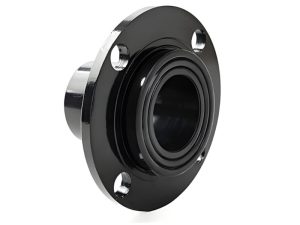
The basic structure of HDPE pipe flange
Flange: connecting body with bolt holes
Sealing surface: flat, convex, or ring joint design
Connection structure: connection method with HDPE pipe (hot melt, electric fusion or thread)
Reinforcement structure: some flanges have reinforcing rib design
Main classification methods
According to the connection method:
Hot melt flange: connected to the pipeline by hot melt butt
Electric fusion flange: built-in electric heating wire, electric fusion
Threaded flange: connected to the pipeline by thread
Loop flange: rotatable flange structure
According to the material:
All-plastic flange: made entirely of HDPE
Steel-plastic composite flange: plastic flange reinforced with metal
Transition flange: a connector with HDPE at one end and metal at the other end
According to the sealing surface form:
Flat flange (FF): the sealing surface is flat
Raised flange (RF): The sealing surface is a convex structure
Ring joint flange (RTJ): the sealing surface with an annular groove
Technical characteristics
1. Material performance characteristics
HDPE flanges are made of polyethylene materials (PE80 or PE100) of the same grade as the pipeline, and have the following characteristics:
Corrosion resistance: consistent with HDPE pipes, resistant to various chemical media such as acids, alkalis and salts
Low-temperature toughness: brittle temperature as low as -70°C, suitable for use in cold areas
Light weight: density 0.95g/cm³, only 1/8 of steel flanges
No electrical corrosion: non-conductive, no electrochemical corrosion
2. Mechanical performance indicators
Tensile strength: ≥22MPa (PE100 grade)
Flexural modulus: 800-1000MPa
Impact strength: ≥20kJ/m² (23°C)
Sealing pressure: usually up to PN10-PN16 grade
3. Long-term performance
Creep resistance: better than ordinary HDPE pipes
Environmental stress cracking resistance: F50≥1000h
Service life: matching the pipeline system, design life of 50 years
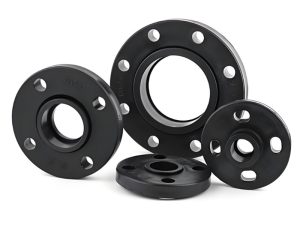
Connection technology of HDPE pipe flanges
1. Hot-melt flange connection process
Steps:
Milling treatment of the pipe end face
Heating the flange and pipe end face at the same time
Quickly dock and apply appropriate pressure
Maintain pressure until cooling and solidification
Parameter control:
Heating temperature: 200-220℃
Heating time: adjusted according to wall thickness (usually 30-60 seconds)
Docking pressure: 0.15- 0.3MPa
Cooling time: 10-15 minutes
2. Electric fusion flange connection process
Features:
Built-in resistance wire, electric heating to achieve welding
Easy operation, low construction space requirements
Stable and reliable connection quality
Operation points:
Scrape the oxide layer on the outer surface of the pipe
Install the centering fixture to ensure concentricity
Input set voltage (usually 39.5V±0.5V)
Maintain cooling time of not less than the specified value
3. Installation method of slip-on flange
Components:
Plastic flange backing ring
Metal slip-on flange
Sealing gasket
Bolt and nut assembly
Installation steps:
Hot-melt or electric-melt the backing ring to the pipe
Put on the slip-on flange
Mount the other side flange
Place the gasket and tighten the bolts evenly
Application areas
1. Water treatment engineering
Water supply system: pump station, valve, well connection
Drainage system: sewage treatment plant pipeline connection
Recycled water reuse: recycled water network connection point
2. Industrial pipeline system
Chemical pipeline: corrosive medium transportation system
Food industry: sanitary pipeline connection
Pharmaceutical engineering: clean pipeline system
3. Special application scenarios
Marine engineering: seawater transportation pipeline connection
Mining system: slurry pipeline flange connection
Nuclear power engineering: auxiliary system pipeline connection
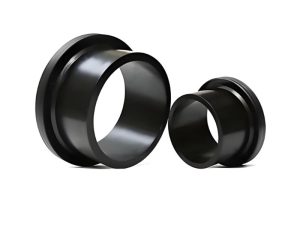
Selection and design of HDPE pipe flanges
1. Pressure level selection
PN6: low pressure system, non-critical connection
PN10: general water supply and drainage system
PN16: medium and high pressure system, industrial application
2. Sealing gasket selection
EPDM gasket: general purpose, aging resistance
Silicone rubber gasket: food grade application
NBR gasket: good oil resistance
PTFE gasket: strong corrosive medium
Installation specifications for HDPE pipe flanges
1. Preparation before installation
Check flanges: no deformation, cracks, and other defects
Check specifications: ensure matching with pipes
Prepare tools: special welding machine, torque wrench, etc.
Clean surface: remove impurities such as oil, dust, etc.
2. Flange alignment requirements
Concentricity deviation: ≤1mm
Parallelism deviation: ≤0.5mm
Uniform gap: gap difference around ≤0.3mm
3. Bolt tightening process
Tightening sequence: uniform tightening of a diagonal cross
Tightening times: tighten step by step at least three times
Torque control: operate according to a standard torque value
Final inspection: check the sealing surface gap with a feeler gauge
4. Installation precautions
Avoid deformation of plastic flanges due to over-tightening
Do not apply a bending moment at flange joints
After a hot-melt connection, sufficient cooling is required before pressurization
Make clear marks and records after installation
Maintenance and overhaul
1. Daily maintenance points
Regular inspection: bolt tightening status, sealing condition
Cleaning and maintenance: remove dirt from the flange surface
Anti-corrosion treatment: anti-corrosion protection of metal parts
Record management: establish complete maintenance files
2. Common problem handling
Leakage handling:
Minor leakage: re-tighten bolts
Severe leakage: replace the gasket or flange
Flange deformation:
Minor deformation: Reinstall after adjustment
Severe deformation: replace the new flange
Bolt corrosion:
Replace with stainless steel bolts
Apply anti-rust grease
3. Overhaul and replacement standards
Sealing surface damage: deep scratches exceeding 0.5mm
Flange deformation: flatness deviation exceeding 1mm
Material aging: obvious cracks or discoloration
Connection failure: leakage cannot be solved by tightening
Comparison between HDPE pipe flanges and traditional flanges
| Comparison Item | HDPE Flange | Steel Flange | Cast Iron Flange |
| Weight | Light (easy to install) | Heavy | Relatively heavy |
| Corrosion Resistance | Excellent, no anti-corrosion needed | Requires anti-corrosion treatment | Requires anti-corrosion treatment |
| Connection Method | Heat fusion / Electrofusion / Loose | Welding / Threaded | Bolt connection |
| Sealing Performance | Good (elastic sealing) | Average (rigid sealing) | Poor |
| Suitable Media | Corrosive media | General | Water / Gas |
| Service Life | Over 50 years | 20–30 years | 15–20 years |
| Maintenance Cost | Low | High | Medium |
| Environmental Performance | Recyclable | Recyclable | Recyclable |
As an important part of plastic pipe systems, HDPE pipe flanges are gaining recognition in more and more engineering fields for their unique advantages. With the continuous advancement of material technology and connection technology, HDPE flanges will play a more important role in pipeline engineering, providing reliable, economical, and durable connection solutions for various pipeline systems.


