

In modern fluid transportation, gas pipelines, and various industrial systems, high-performance polyethylene (HDPE) piping systems are highly sought after for their superior corrosion resistance, flexibility, long life, and cost-effectiveness. However, a complete piping system consists of more than just pipes; various fittings play a crucial role as connectors. HDPE female adaptors, in particular, serve as the crucial bridge between HDPE pipes and traditional valves and equipment made of metal or other materials.

What is an HDPE female adaptor?
As the name suggests, an HDPE female adaptor is a fitting used to connect HDPE pipe to other threaded connections.
Its basic structural features are as follows:
One end has an HDPE socket: This end is typically permanently and securely fused to the HDPE pipe through butt fusion or electrofusion, forming a leak-proof, integrated unit. The other end features a metal (usually brass or stainless steel) internal threaded connector. This end features standard metric or imperial (NPT, BSP) female threads for use with male-threaded metal valves, faucets, flow meters, or other devices.
This “half-plastic, half-metal” hybrid design makes it a perfect transition piece between different materials and connection methods.
Core Features and Advantages
Excellent Sealing Performance: The fusion joint with the HDPE pipe achieves a perfect seal through molecular fusion, eliminating the risk of leakage. The metal threaded end is typically used with PTFE tape or sealant to ensure a tight seal.
Excellent Corrosion Resistance: The HDPE portion inherits all the advantages of polyethylene and is highly resistant to most chemical solvents, acids, and alkalis, making it suitable for conveying a variety of corrosive media.
High Strength and Durability: The built-in metal insert is typically made of high-quality brass or stainless steel, offering high strength and corrosion resistance, capable of withstanding high system pressures and torques, ensuring long-term reliability.
Easy and Efficient Installation: The HDPE end fusion process is highly standardized and easy to master. The metal end threading is a traditional and simple mechanical connection method, significantly reducing installation time and labor costs.
Wide Application: Available in a wide range of sizes, from DN20 to DN200 and even larger, with a full range of thread standards (NPT, BSP, Metric), to meet the needs of various pressure levels and application scenarios.
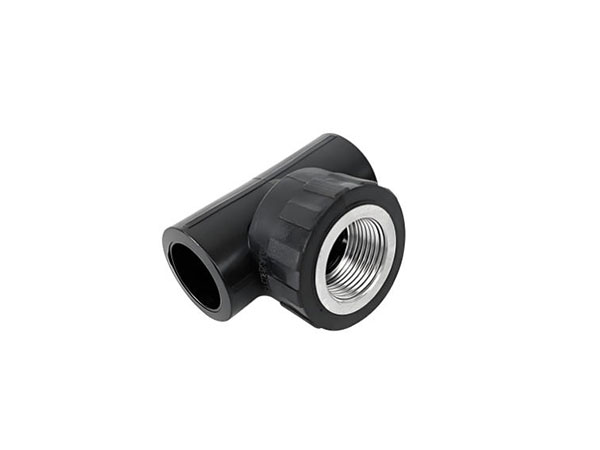
HDPE female adaptors are used in various applications.
Water supply and drainage systems: Connect HDPE main pipes to metal fire hydrants, water meters, valves, or metal branch pipes entering residential areas.
Gas distribution systems: Used in HDPE gas pipes to connect pressure regulating equipment, valves, and metering devices, requiring extremely high safety.
Industrial piping: Used in the chemical, mining, and papermaking industries as metal connectors to connect HDPE process piping to equipment such as reactors, pumps, and filters.
Agricultural irrigation: Connects main pipes to metal control valves and fertilizer application devices required for drip and sprinkler irrigation.
Telecommunications: Used to connect and seal HDPE tubing protecting fiber optic cables to junction boxes.
Installation Steps and Precautions
Installation Steps (using butt fusion welding as an example):
Preparation: Check that the pipe and fitting specifications match, and ensure the ends are clean and free of oil. Scrape off the oxide layer on the outer wall of the pipe.
Clamping and Alignment: Clamp the HDPE pipe and fitting ends onto the hot melt welding machine fixture, ensuring they are aligned and allowing ample space for milling and heating.
Milling the Ends: Use a milling cutter to mill the pipe and fitting ends, ensuring both contact surfaces are flat, smooth, and perpendicular.
Heating with a Hot Plate: Move the hot plate to the center and apply pressure to both the pipe and fitting ends simultaneously, heating them until the flange reaches the specified height.
Releasing Pressure: Quickly remove the hot plate and release the pressure.
Maintaining Pressure: Immediately bring the pipe and fitting ends into contact, apply the specified welding pressure, and allow cooling. The pressure must be maintained until the weld zone is completely cooled and formed. Threaded Connections: After the welded joint has completely cooled, wrap the metal threads with PTFE tape or apply sealant. After manually threading into the externally threaded device, tighten to the appropriate torque using a tool. Avoid overtightening, which may damage the threads or crack the plastic.
Important Notes:
This operation must be performed by trained professionals: The quality of the butt fusion process directly impacts system safety.
Select the correct pressure rating (SDR): Ensure that the pressure rating of the joint matches the piping system.
Avoid torsional loading: When tightening the threads, use a tool to secure the HDPE end of the joint to prevent torsional damage to the weld.
Inspection: After installation, perform a rigorous visual inspection and, if necessary, a pressure test.

Common Specifications and Selection Guide
HDPE pipe outer diameter: such as DN50, DN100, etc., must match the socket size of the fitting.
Pressure rating: This is usually related to the pipe’s SDR value, such as SDR11 (pressure rating of 1.0 MPa or 1.6 MPa).
Thread Standards and Sizes:
Common thread standards include Imperial (NPT, BSP) and Metric. NPT threads are tapered, providing improved sealing; BSP threads are available in straight (BSPP) and tapered (BSPT) thread types. Make sure the thread standard matches the equipment being connected, otherwise it will not fit.
Thread Sizes: Examples include 1/2-inch, 3/4-inch, 1-inch, and NPT 3/4.
Material: Metal components are typically brass or stainless steel. Stainless steel is preferred in highly corrosive environments.
Brand and Quality: Choose a reputable brand and ensure that the product complies with relevant international standards (such as ISO) or national standards (such as GB) to ensure material purity and processing accuracy.
Although a small fitting, the HDPE Female Adapter is a key component in achieving system integration and diversification in modern pipeline engineering. It perfectly solves the connection challenges between pipe systems made of different materials. Its robustness, durability, and reliable sealing properties silently support numerous critical areas, from the delivery of tap water in our daily lives to the lifeblood of industrial production and even energy supply security.


