

When selecting and installing piping systems, PVC (polyvinyl chloride) and CPVC (chlorinated polyvinyl chloride) pipe and fittings are often mentioned. Both belong to the plastic piping family and are widely used in residential, commercial, and industrial distribution systems. However, in practice, many people raise a question: Are PVC and CPVC fittings interchangeable? This article analyzes these two types from multiple perspectives to help readers better understand their differences and compatibility.

Material Differences Between PVC and CPVC
Although both PVC and CPVC are vinyl chloride base materials, they differ in their chemical structures. PVC is made from the polymerization of vinyl chloride monomer and offers excellent corrosion resistance, primarily used in cold water, drainage, and ventilation systems. CPVC, on the other hand, is chlorinated PVC, increasing the chlorine content in its molecular structure, significantly improving its temperature and pressure resistance.
Temperature Resistance: PVC is typically suitable for temperatures between 0°C and 60°C, while CPVC can withstand hot water environments up to 90°C or even 93°C. Pressure resistance: CPVC maintains good strength even under high-temperature conditions, while PVC tends to soften and deform at high temperatures.
Thus, based on their material properties, there are significant differences in their application scenarios, which is also a key factor in determining whether their fittings are interchangeable.
Differences in Sizes and Standards
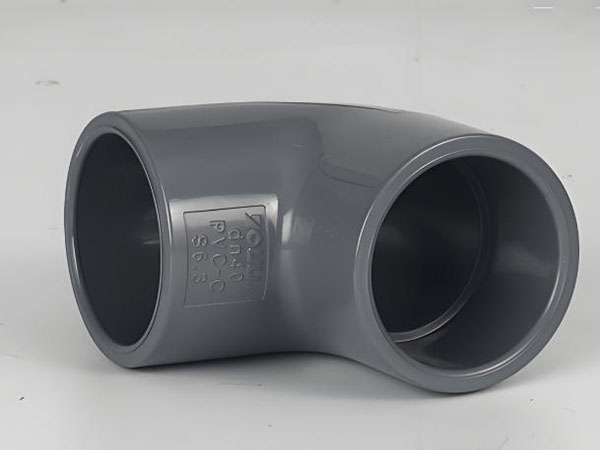
PVC and CPVC fittings appear very similar, but they adhere to different dimensional standards.
PVC fittings primarily use the Imperial pipe diameter standard, such as Schedule 40 or Schedule 80, and are widely used for drainage and low-pressure piping.
CPVC fittings often use the CTS (Copper Tube Size) standard, particularly in hot water systems. Their outer diameters are not exactly the same as those of similarly named PVC pipes.
For example, PVC and CPVC pipes labeled “1/2-inch” may have slightly different outer diameters, resulting in a tight fit when directly spliced. This dimensional mismatch means they are generally not directly interchangeable.
Compatibility of Connection Methods
PVC and CPVC fittings are typically bonded using solvent-based adhesives. However, the two materials use different adhesives:
PVC adhesive: Suitable for regular PVC fittings, providing reliable bonding at lower temperatures.
CPVC-specific adhesive: High-temperature resistant, suitable for bonding CPVC, and maintaining long-term stability in hot water systems.
Using PVC adhesive on CPVC fittings, or vice versa, can result in a weak bond or even leakage. Therefore, even if the two fittings appear physically compatible, a reliable connection cannot be guaranteed without using the correct adhesive.
Differences in Application Scenarios
PVC and CPVC are designed for different purposes:
PVC pipe fittings are primarily used in cold water systems, drainage systems, agricultural irrigation, and ventilation ducts.
CPVC pipe fittings, due to their heat resistance, are widely used in hot water systems, industrial fluid transport, and certain chemical environments.
Using PVC pipe fittings in high-temperature hot water piping, even if they are dimensionally compatible, can cause system failure due to temperatures exceeding their tolerances. Conversely, using CPVC in low-temperature cold water systems is feasible, but due to the higher cost, it is generally not economical.
Are PVC and CPVC fittings interchangeable?
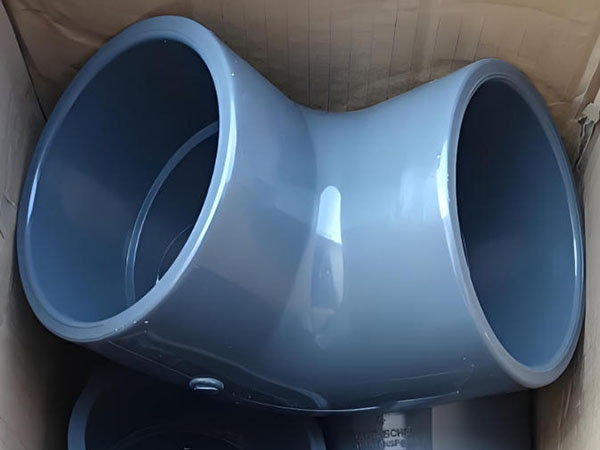
In summary, PVC and CPVC fittings are not directly interchangeable in most cases. However, if connecting the two pipe materials is necessary, the following methods can be used:
Use transition joints: Specialized transition fittings are commercially available that can connect PVC and CPVC pipes of different standards.
Confirm dimensional compatibility: Some small-diameter pipes may have similar outer diameters, but careful measurements and the use of appropriate adhesives are essential.
Be mindful of the operating environment: PVC should never be substituted for CPVC in systems involving high temperatures or high pressures to avoid safety hazards.
Although PVC and CPVC fittings appear similar, they differ in material, temperature and pressure resistance, dimensional standards, and bonding methods. These differences prevent direct interchangeability in most cases. CPVC fittings are particularly important in hot water or high-temperature piping systems; PVC is a more economical choice for standard cold water or drainage systems. If a project requires connecting the two, specialized transition joints or appropriate installation methods should be used to ensure system safety and stability.
Thus, PVC and CPVC fittings are not directly interchangeable. During the design and construction process, appropriate pipe fittings must be selected according to specific application scenarios, temperature requirements and standard specifications to ensure the durability and safety of the pipeline system.


