

In modern piping systems, PVC (polyvinyl chloride) pipes are widely used due to their advantages such as corrosion resistance, lightweight, easy installation, and low cost. PVC pipe fittings, as key connecting components in piping systems, directly determine the sealing performance, stability, and service life of the entire piping network. For specific drainage, ventilation, or industrial conveying systems, 3 1/2-inch (3.5-inch) PVC pipe fittings are a common large-size connection specification, suitable for medium-flow liquid or gas conveying.
This article will systematically introduce the characteristics, common types, application areas, installation methods, and purchasing recommendations of 3 1/2-inch PVC pipe fittings to help you gain a deeper understanding of this size of fitting.

What are 3 1 2 inch PVC pipe fittings?
3 1 2 inch PVC pipe fittings refer to connection components used to fit PVC pipes with an outer diameter of approximately 3.5 inches. Their main functions include: connecting pipes in different directions; changing pipe size or specifications; branching, merging, or controlling flow direction; and achieving end closure or equipment interface connection. These fittings typically conform to international standards such as ASTM and ANSI, and can also be manufactured according to drainage or pressurization pipe standards.
Key Features
1. Strong Corrosion Resistance
PVC exhibits exceptional resistance to acids, alkalis, and salts, boasting a longer lifespan than metal pipes and preventing leaks due to rust or corrosion.
2. Lightweight and Easy to Install
PVC’s low density and lightweight nature allow for easy installation even with large pipe sizes. Compared to metal pipes, it is easier to handle, cut, and bond, significantly reducing construction costs.
3. Smooth Inner Wall
The smooth inner wall prevents scale buildup, ensuring low fluid flow resistance, improving transport efficiency, and reducing energy consumption.
4. Stable Sealing Performance
When used with PVC adhesive (solvent-based adhesive) or rubber rings, it forms a strong seal, reducing the risk of leaks.
5. High Cost-Effectiveness
Significantly cheaper than steel, stainless steel, or copper pipes, it is an ideal choice for projects with limited budgets but requiring a reliable piping system.
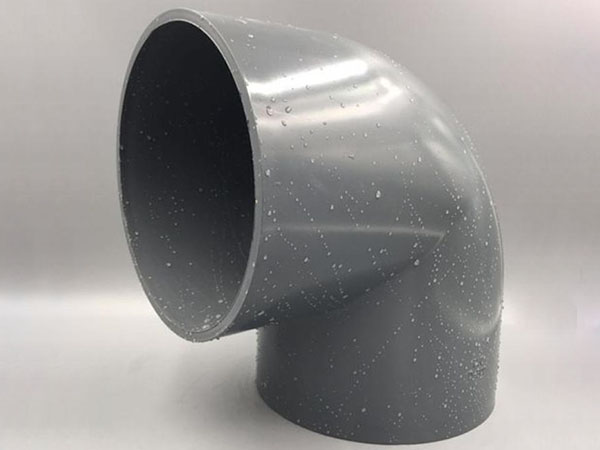
Common 3 1/2 inch PVC Pipe Fittings
While 3.5 inch fittings are not as common as 3-inch or 4-inch fittings, several common models still exist:
1. Elbows
Used to change the direction of pipes, including:
90° elbows
45° elbows
Long radius/short radius elbows
Suitable for drainage, ventilation, or pump system detours.
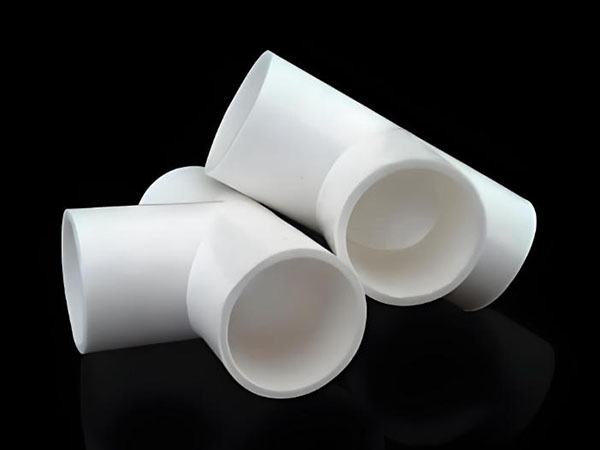
2. Tees
Used for pipe branching or merging, including:
Equal diameter tees
Reducing tees (3.5″ × 3″ / 3.5″ × 2″)
Suitable for complex pipe network layouts.
3. Couplings: Used for straight connections between two pipe sections. They can be categorized as: Standard couplings and repair couplings (without a stop).
4. Reducers: Used for transitions between 3 1/2″ pipes and other pipe diameters, such as: 3.5″ to 4″ and 3.5″ to 3″. Commonly used in pipe replacement projects or equipment matching.
5. End Caps: Used to seal the ends of pipes, suitable for testing or permanent sealing.
6. Flanges: Used for connecting pumps, valves, or equipment interfaces, facilitating disassembly and maintenance.
7. Functional fittings such as check valves and ball valves: Suitable for systems requiring flow control, pressure control, and backflow prevention.
Application Areas
Although the 3.5″ size is relatively niche, it is widely used in the following areas:
1. Building Drainage Systems
Such as roof rainwater drainage, underground drainage, and surface sewage discharge.
2. Wastewater and Sewage Treatment Systems
Because PVC is resistant to most chemicals, it is suitable for sewage and low-corrosive chemical liquid discharge.
3. Agricultural Irrigation Systems
Used for medium- to high-flow irrigation main pipelines.
4. Industrial Fluid Transportation
Including cooling water pipes, biological liquids, and low-corrosive chemical fluids.
5. Ventilation Systems (PVC Ventilation Pipes)
Suitable for exhaust ventilation and waste gas diversion.
6. Water Treatment Equipment and Piping Connections
Such as filtration systems, pump stations, and storage tank inlets/outlets.
Installation Points for 3 1/2 Inch PVC Pipe Fittings
1. Use Special PVC Adhesive
PVC pipe fittings are typically soldered using solvent welding and require the use of:
PVC-specific adhesive
Ensure the bonding strength meets specifications.
2. Clean Contact Surfaces
Dust and oil can affect the bonding effect. Thoroughly clean the pipe ends and the inside of the fitting before installation.
3. Pre-installation Test
Ensure the insertion depth is appropriate to avoid stress concentration caused by angle or length errors.
4. Align and Quick Insertion
The adhesive dries quickly; adjust the position within 5-10 seconds.
5. Curing Time
Allow at least 15 minutes to set. For pressure systems, wait 24 hours before turning on water.
How to Choose High-Quality 3 1/2 Inch PVC Pipe Fittings?
1. Check Standard Certifications
Recommended brands meet the following standards:
ASTM D2466 (Drainage/Fittings)
ASTM D1785 (Pressure Piping)
NSF Certification (Drinking Water Safety)
2. Pay Attention to Wall Thickness and Type
For pressurized systems, choose Schedule 80 (thick-walled) fittings;
Schedule 40 is sufficient for drainage systems.
3. Inspect Appearance
High-quality pipe fittings should have:
Smooth surface
No bubbles
No cracks
No deformation
4. Ensure Size Match
The 3.5″ size may vary slightly between different brands; ensure compatibility with existing pipes.
3 1 2 inch PVC pipe fittings, as an important component of medium and large diameter piping systems, play a crucial role in building drainage, industrial transportation, agricultural irrigation, and water treatment facilities. Their corrosion resistance, ease of installation, long service life, and cost-effectiveness make them the preferred connection method for many projects. Correctly selecting standardized, high-quality pipe fittings and installing them according to specifications can effectively improve the safety and reliability of the piping system, laying a solid foundation for long-term operation.


