

In modern construction, water conservancy projects, electrical installations, and even agricultural irrigation, PVC piping systems dominate due to their superior corrosion resistance, lightweight design, ease of installation, and affordability. A complete and reliable piping system relies on a seemingly insignificant yet crucial component: fittings. 25mm PVC fittings, one of the most widely used sizes in small and medium-sized piping systems, are key to connecting, redirecting, diverting, and controlling fluids. This article will provide a comprehensive understanding of 25mm PVC fittings, providing a complete guide from basic understanding to practical application.
What are 25mm PVC fittings?
First, it’s important to understand the meaning of “25mm.” 25mm here generally refers to the nominal outside diameter (OD) of PVC pipe. This standardized size means that all fittings designed for 25mm OD pipe have a matching socket inside diameter to ensure tight connections and interchangeability.
Important note: In the imperial system, 25mm pipe typically corresponds to 1-inch pipe. The standard outer diameter of 1-inch pipe is 33.4mm, while 25mm outer diameter pipe is another standard series (commonly used in low-voltage applications such as electrical conduit). However, in domestic and international standards, it is more common to directly identify pipes by nominal outer diameter (such as 20mm, 25mm, and 32mm). Therefore, when purchasing, be sure to confirm that your pipe is the “25mm outer diameter” series, not the other standard “1-inch” pipe, to avoid purchasing the wrong pipe and having trouble installing it.
Common Types and Uses of 25mm PVC Pipe Fittings
1. Connectors
Straight Fittings/Sleeves: Used to connect two 25mm straight pipes of equal length to extend the length of the pipe.
Reducing Fittings: Used to connect two pipes of different diameters (e.g., 25mm to 20mm) to achieve a transition between pipes.
2. Elbows
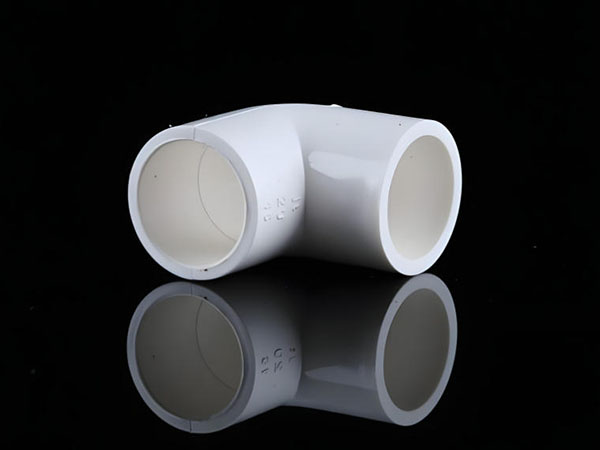
90° Elbows: Create a 90-degree vertical turn in the pipe direction. They are the most commonly used fittings for changing direction.
45° Elbows: Create a 45-degree turn in the pipe direction. They are often used where a smooth transition and reduced flow resistance are required.
Sex-Thread Elbows: One end has a PVC socket and the other has a metal threaded connection. They are used to connect threaded devices such as faucets and valves.
3. Tees and Crosses
Equal-Diameter Tees: All three connections are 25mm. They are used to branch off a main pipe to divert fluids or cables. Reducing Tee: The main pipe connection is 25mm, and the branch connection is smaller (such as 20mm), used to create a smaller branch.
Cross: Provides four-way connection for complex flow diversion, but increases fluid resistance.
4. Plugs and Caps
Pipe Plugs: Screw or glue onto the threaded end of a pipe fitting to permanently seal a port.
Caps: Slip onto the end of a pipe to temporarily or permanently seal the end, facilitating later opening for inspection or expansion.
5. Adapters
PVC-to-Threaded Fittings: One end has a PVC socket and the other has internal or external threads. They are used to connect PVC pipe to metal pipe or threaded equipment, acting as a translator between different material systems.

Applications
Electrical wiring systems: Serves as protective conduit for wires and cables, protecting them from corrosion, crushing, and rodent damage. Elbows and tees are used to bypass obstacles and divide wires.
Low-pressure water supply and irrigation systems: Used to distribute water in drip irrigation systems in home gardens and small sprinkler systems.
Drainage systems: Used as drainage branches for non-main sewage pipes in areas such as balconies, kitchens, and bathroom sinks.
Aquaculture and waterscape projects: Used as piping for water circulation systems in fish ponds and rockery landscapes.
Ventilation systems: Used for connecting small exhaust and ventilation ducts.
Industrial applications: Used for transporting non-corrosive chemicals, compressed air, etc.

How to choose and purchase
Material verification: Ensure it is UPVC (unplasticized polyvinyl chloride) or PVC-U. It is strong and corrosion-resistant, making it suitable for most applications. Avoid using soft PVC fittings.
Pressure rating: Check the fitting for the pressure rating (e.g., PN1.0, PN1.6). For water supply systems, it’s essential to select fittings that meet pressure requirements.
Appearance Inspection:
Color: Typically white (for water supply and electrical work) or gray (common for electrical work), and should be uniform and consistent.
Surface: Smooth and flat, with no noticeable scratches, dents, or bubbles.
Wall Thickness: Thick and uniform, with no uneven thickness. It should feel substantial in the hand; inferior products are often light and thin.
Dimensional Accuracy: Test the connection with a short section of 25mm pipe. It should be able to be inserted smoothly to a certain depth without noticeable looseness, ensuring a tight connection.
Brand Selection: Choose a reputable brand. Their raw materials, production process, and dimensional accuracy are more reliable, ensuring long-term, stable operation of the system.
Though small, 25mm PVC fittings are the “joints” and “bones” that build countless functional systems. From the conduit that protects electrical current to the trickle of water that nourishes plants, their value is everywhere.


